 Clearwater Window
 Sunset Point is one of the older bayfront pockets of Clearwater, and homes here take a version of the Florida climate that's more concentrated than what you'll find a mile or two inland. Water is close on multiple sides, which means salt air, wind-driven rain, and hurricane-force gusts all reach these houses with less to slow them down first. When siding damage shows up here — a cracked board, a soft spot near the foundation, a section that's pulling away at a seam — it usually isn't cosmetic for long. This page covers what siding repair actually needs to look like on a Sunset Point home: what the climate does to different materials, how a repair should be diagnosed and done, and when a patch is the right call versus when it's just delaying a bigger job.
What Sunset Point's Location Does to Siding
Every siding material eventually shows wear, but the timeline in Sunset Point is compressed compared to a typical Clearwater lot set back from the water. Hurricane-force winds during named storms put direct pressure on panels and fasteners, and even outside of storm season, sustained onshore gusts work fastener lines loose over years of cycling. Wind-driven rain doesn't fall straight down here — it gets pushed sideways into seams, corner boards, and trim joints, which is a harder test than a typical rain event puts on a wall. Intense, near year-round UV breaks down lower-grade finishes and sealants faster than in a milder climate, leading to chalking, fading, and brittle caulk lines. And salt air off the harbor is a constant, quiet process — it corrodes fasteners, flashing, and hardware whether or not a storm ever makes landfall.
None of that means siding here is doomed to fail — it means repair work has to account for all four factors at once, not just patch the visible damage and move on.
Where Damage Actually Starts
On most Sunset Point homes, the first sign of trouble isn't a big crack in the middle of a wall — it's small failures at the transition points. Corner boards separating slightly from the wall behind them, caulk joints around windows and trim going brittle and pulling away, fastener heads working loose along a course line, or a bottom course near grade staying damp longer than the rest of the wall after rain. Those small failures are exactly where wind-driven rain and salt-laden moisture get behind the siding and start working on the sheathing underneath, which is why they deserve attention well before they turn into a soft, spongy section of wall.
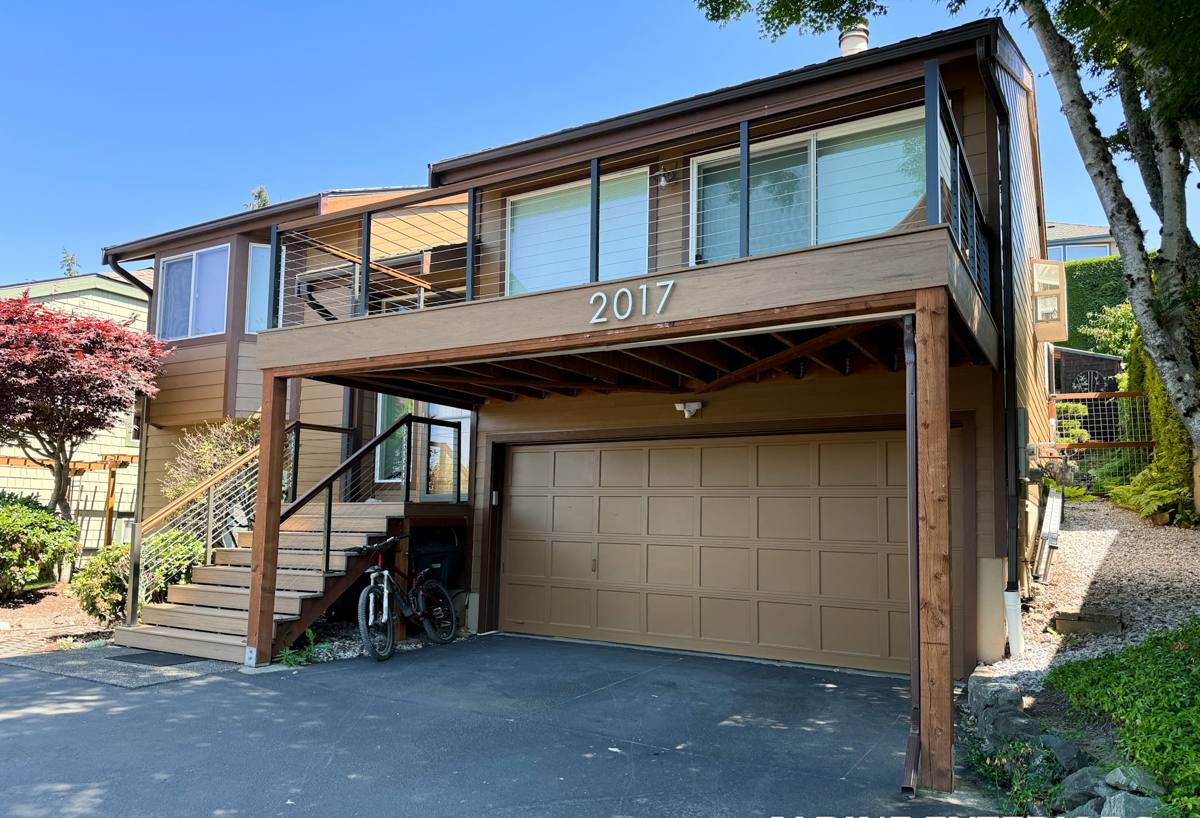
Common Siding Repair Issues We See in Sunset Point
- Cracked or split boards — from wind stress, impact, or a material that was never well-suited to this level of moisture and UV exposure
- Corner and trim separation — caulk and fastener failure at the joints where two surfaces meet, often the first place water gets behind the cladding
- Soft or spongy sections — usually near the bottom courses, around penetrations, or close to grade, indicating moisture has reached the substrate
- Fastener pops and loose panels — sustained wind cycling working nails or screws loose over time
- Chalking, fading, or finish breakdown — UV degrading a lower-grade or aging factory finish faster than it would in a milder climate
- Failed caulk and sealant joints — brittle, cracked, or missing sealant around windows, doors, and panel seams
- Storm-related damage — impact marks, torn or missing sections, and wind-lifted panels after a named storm or a hard squall line
What a Correct Siding Repair Job Actually Involves
Diagnosis Before Any Repair Starts
The visible damage is rarely the whole story. Before we touch a single board, we check what's happening behind it — whether moisture has reached the sheathing, whether the damage is isolated or part of a wider pattern along that wall, and whether the cause is a one-time event like storm impact or an ongoing issue like a flashing detail that's been letting water in for years. Repairing the surface without answering those questions just means doing the same repair again in a couple of seasons.
Matching Material and Finish
A repair that doesn't match the surrounding siding in profile, thickness, and finish stands out and can create a new water path at the seam between old and new material. On James Hardie fiber cement, matching an existing ColorPlus finish gets harder the longer the original siding has been up, since factory finishes weather slightly over many years of Florida sun. We're honest with homeowners about when a color match will be close versus when a section, elevation, or the whole house is the more sensible unit to repaint or reside for a consistent look.
Addressing What's Behind the Siding
If moisture has reached the sheathing or framing, patching the visible siding without dealing with that is a temporary fix at best. A correct repair replaces or dries out compromised substrate, corrects whatever let water in — a bad flashing lap, a missing kick-out, a caulk joint that was never sealed right — and only then closes it back up with new siding. Skipping this step is the single biggest reason a "repaired" section fails again within a year or two.
Sealing and Weatherproofing Details
Given how much wind-driven rain and salt air a Sunset Point wall sees, the sealant and flashing details around a repair matter as much as the siding itself. Joints get sealed with a sealant rated for sustained UV and moisture exposure, not a generic caulk that will crack within a season or two. Fasteners and hardware near the repair get checked and, where needed, upgraded to corrosion-resistant options, since standard fasteners have a shorter working life this close to salt water.
Repair vs. Replacement: How We Make the Call
| Factor | Usually Points to Repair | Usually Points to Replacement |
|---|---|---|
| Extent of damage | Isolated to one board, corner, or small section | Recurring across multiple walls or elevations |
| Moisture behind siding | Contained, sheathing still sound | Widespread saturation or soft framing found during inspection |
| Age and condition of existing siding | Younger material, finish still performing well overall | Siding nearing or past its expected service life, finish failing broadly |
| Cause of the damage | One-time event — storm impact, an isolated flashing failure | An ongoing systemic issue — chronic moisture intrusion, a material poorly suited to this exposure |
| Color and appearance match | Repaired section will blend acceptably | Weathering makes a seamless match unrealistic |
We'd rather do an honest, well-executed repair on a sound wall than push a homeowner toward replacement they don't need. But we're just as direct when a repair would only mask a bigger problem — chasing recurring failures on the same wall with patch after patch usually costs more over time than addressing the underlying cause once.
Our Siding Repair Process, Start to Finish
- On-site inspection — we look at the visible damage and check the surrounding areas most likely to be affected by the same exposure
- Moisture and substrate check — probing and, where needed, opening a small section to see what's happening behind the siding before quoting the work
- Honest recommendation — repair, section replacement, or a conversation about full re-siding, with the reasoning explained plainly
- Material and finish matching — sourcing siding and finish that will blend with the existing wall as closely as realistically possible
- Substrate correction — any compromised sheathing, framing, or flashing gets addressed before new siding goes back on
- Installation, sealing, and fastening — new siding installed with corrosion-resistant fasteners and weatherproofing detailed for this location's exposure
- Final walk-through — reviewing the repair with the homeowner and flagging anything else worth watching on the rest of the exterior
Why We Only Install James Hardie Fiber Cement
We get called to repair siding in every material homeowners have put on their houses over the years — vinyl, engineered wood, primed spruce, cedar, and fiber cement among them. We'll assess and repair what's already on your home; being a James Hardie-exclusive installer doesn't mean we turn away a legitimate repair. What it does mean is that when a repair isn't realistic — when the damage is widespread, the material has reached the point where patching it is just deferring the same problem, or a homeowner is deciding what to put back up after storm damage — our recommendation is James Hardie fiber cement, and we're upfront about why. It's non-combustible, dimensionally stable in Florida's heat and humidity swings, carries a factory ColorPlus finish engineered to hold color longer than field-applied paint, and its HZ5 product line is built specifically for high-moisture, storm-exposed climates like this one. We don't sell it as a cure-all, but in a location like Sunset Point, where wind, rain, sun, and salt all work on a wall at the same time, it's the material we're willing to stand behind long-term.
Why Hiring a Crew That Already Works Sunset Point Matters
A repair done by someone unfamiliar with this location can look fine on the day it's finished and still fail within a season or two. The difference usually isn't the material — it's the details a crew only gets right by having done the work here repeatedly: how much extra lap a flashing detail needs when wind-driven rain is coming off the water instead of straight down, which fastener spec actually holds up to sustained salt exposure versus the code minimum, and when a color match on an aging finish is realistic versus when it's setting a homeowner up for a visible patch. Those are judgment calls made on the wall, not something a general repair estimate captures on paper.
We work this part of Clearwater and the surrounding Pinellas County coastline regularly, so we're not guessing at how a particular wall orientation or siding material tends to hold up here over time. That experience is what separates a repair that lasts through the next several hurricane seasons from one that needs to be redone.
Before You Call a Contractor — What to Check Yourself
- Press gently on any suspect area, especially near grade and around windows and doors, and note anywhere it feels soft or spongy
- Look at corner boards and trim joints for gaps, separation, or cracked caulk
- Check for chalking or uneven fading, especially on south- and west-facing walls
- Note any loose panels, visible fastener pops, or sections that flex when pushed
- Check interior walls near the damaged area for musty smells, staining, or soft drywall
- Take photos of any storm damage as soon as it's safe to do so, before repairs begin
Getting an Honest Assessment
Siding repair on a Sunset Point home isn't a one-size-fits-all job — the right approach depends on the material you have, how long the damage has been developing, and what's actually happening behind the wall. If you're dealing with storm damage, a section that's been bothering you for a while, or you just want a professional opinion on whether what you're seeing is minor or something more serious, we're glad to take a look. We offer free, no-pressure estimates for siding repair in Sunset Point and the surrounding Clearwater area — use the form below to get a time on the schedule.