 Clearwater Window
 Why Decks in Sunset Point Wear Out Faster Than Homeowners Expect
Sunset Point sits close enough to open water that every deck in the neighborhood is doing double duty: holding up furniture and foot traffic while absorbing conditions that inland Florida homes rarely see at the same intensity. Salt-laden air corrodes fasteners and hardware from the inside out, often long before the surface boards show real damage. Year-round UV exposure bakes wood fibers and breaks down the resins and dyes in composite decking, and Clearwater's wind-driven rain finds its way into every seam, screw hole, and end cut that isn't properly sealed.
None of that is unique to any one house. It's the baseline every deck in this part of Pinellas County has to survive, and it's why a deck that looks fine from ten feet away can have a compromised frame underneath. When we replace a deck in Sunset Point, we're not just swapping old boards for new ones — we're building for the specific combination of salt, sun, and storm wind this location deals with every year.
Signs Your Deck Has Crossed the Line From "Repair" to "Replace"
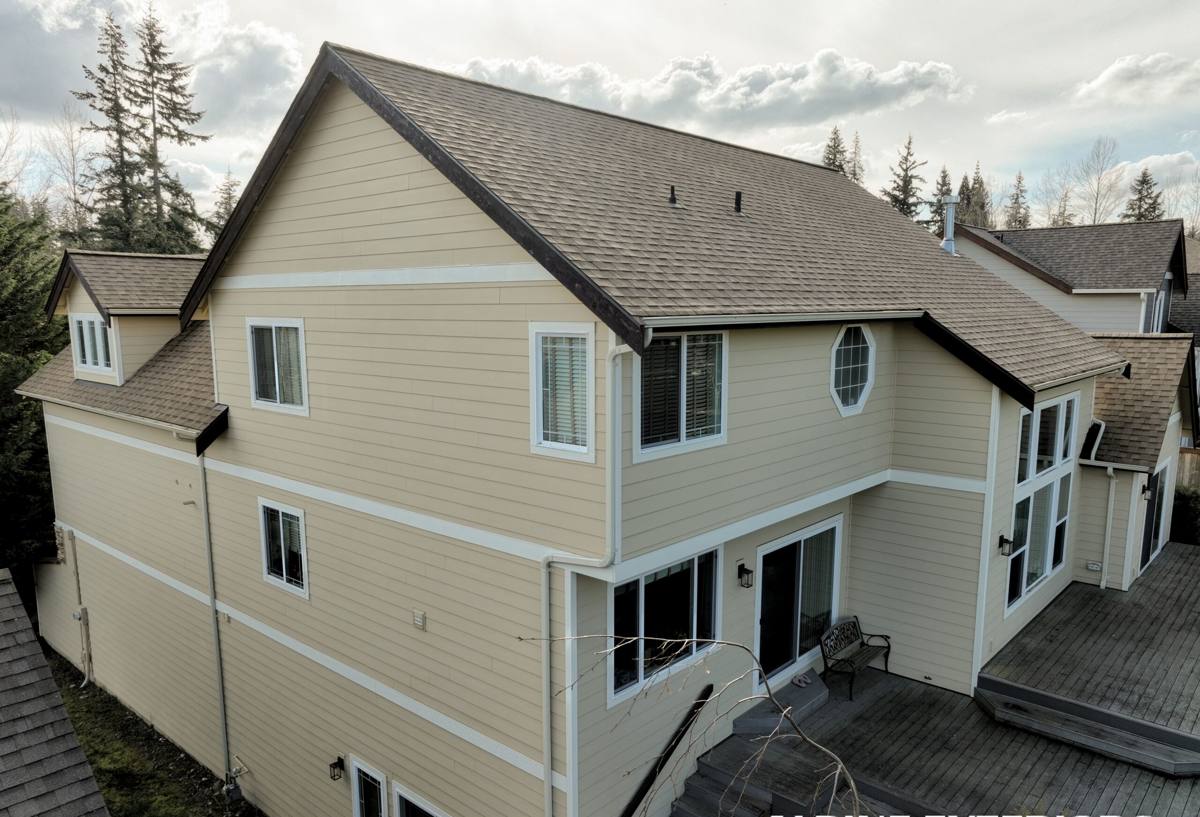
A lot of homeowners call us for a repair quote and end up needing a full replacement once we get underneath the surface. Here's what usually tips the decision:
- Soft, spongy, or spring-loaded spots when you walk across the deck — usually rotted joists or ledger board, not just bad decking
- Rust streaks bleeding out around fasteners or joist hangers, which points to corroding hardware inside the structure
- Visible gaps, cupping, or splitting across more than a small section of boards, rather than one or two isolated pieces
- A ledger board that's separating from the house, or flashing that's missing or failing where the deck meets the exterior wall
- Railings or posts that flex or wiggle under normal pressure
- A deck that's more than 15-20 years old and has never had the substructure inspected
If you're only seeing one or two of these on a deck that's otherwise sound, targeted repair may still make sense. Once the framing, ledger, or multiple structural fasteners are compromised, patching individual boards just delays a bigger problem — and hides it from view in the meantime.
What an Honest Deck Replacement Actually Involves
It starts below the boards, not above them
The decking surface is the part everyone sees, but the framing underneath is what determines whether a deck lasts five years or twenty-five in this climate. A correct replacement means evaluating and, where needed, replacing the ledger board, joists, beams, and posts — not just resurfacing over a frame that's already been compromised by moisture and salt exposure.
Fasteners and hardware matter more here than almost anywhere else
Standard hardware corrodes quickly this close to the water. We use stainless steel or coated fasteners and connectors rated for coastal exposure, along with joist hangers and structural connectors sized correctly for Florida wind-load requirements. This is one of the most common corners cut on lower-bid deck jobs, and it's the one that fails first — usually where you can't see it until something gives way.
Proper flashing and ledger attachment
Where the deck attaches to the house is the single most common failure point on any deck, coastal or not. Wind-driven rain pushes water into any gap in that connection, and without correct flashing, that moisture rots the ledger board and the rim joist behind it from the inside. We treat this connection as the structural priority it is, not an afterthought.
Material selection suited to sun and salt, not just looks
Every decking material handles UV, humidity, and salt air differently. We'll walk through the realistic trade-offs for your budget and how you use the space, rather than just installing whatever has the best margin.
Comparing Decking Materials for a Sunset Point Home
| Material | How It Handles This Climate | Maintenance | General Lifespan |
|---|---|---|---|
| Pressure-treated wood | Affordable, but UV and humidity cycles cause checking, warping, and fastener corrosion faster near the coast | Regular sealing/staining needed, especially with sun exposure | 10-15 years with upkeep |
| Composite decking | Resists rot and doesn't need sealing; quality varies by product line for fade and moisture resistance | Periodic cleaning; no staining or sealing | 20-30 years depending on product |
| PVC/cellular decking | Fully synthetic, handles moisture and salt air well; strong UV-stability track record | Low — occasional cleaning | 25+ years |
| Tropical hardwoods | Naturally dense and rot-resistant, but installation sensitivity is high and improper fastening leads to splitting | Periodic oiling to maintain appearance | 20-25 years if properly maintained |
We don't push one material as the "right" answer for every home — a lower-maintenance composite or PVC product makes sense for owners who want to spend their weekends doing anything other than deck upkeep, while wood still has a place for homeowners who prefer that look and don't mind the maintenance schedule.
Our Deck Replacement Process
- On-site evaluation — we inspect the existing structure, ledger connection, and framing before quoting anything, so the estimate reflects what your deck actually needs.
- Design and material selection — sizing, layout, railing style, and decking material chosen based on how you use the space and your budget.
- Permitting — we handle the permit process with the City of Clearwater or Pinellas County as required for your property.
- Demolition and disposal — full removal of the old deck, including framing, so nothing compromised gets buried under new construction.
- Framing and structural work — new or reinforced ledger, joists, beams, and posts, with coastal-rated hardware throughout.
- Decking, railing, and finish work — installed to manufacturer spec, with attention to fastener spacing and expansion gaps that matter in Florida heat.
- Final walkthrough — we go over the finished deck with you before calling the job done.
Permits and Code: What Sunset Point Homeowners Should Know
Deck replacement in Clearwater generally requires a building permit, and inspections check things like footing depth, structural attachment to the house, guard/railing height, and stair requirements. Requirements can vary based on your deck's size, height, and whether it's attached to the home, so we pull the correct permit for your specific project rather than assuming a one-size-fits-all approach. Skipping permitting on a deck rebuild isn't just a compliance issue — it can also complicate insurance claims and resale down the road if the work isn't documented and inspected.
What Drives the Cost of a Deck Replacement
| Factor | Why It Affects Cost |
|---|---|
| Deck size and layout | Square footage, multiple levels, and custom shapes all add material and labor |
| Framing condition | Rotted joists, beams, or ledger boards discovered during demo add scope beyond a surface-level quote |
| Decking material | Pressure-treated wood, composite, and PVC span a wide price range and affect long-term cost through maintenance |
| Railing and stairs | Style, material, and code-required height/spacing all factor in |
| Height and footings | Elevated decks need deeper footings and more substantial support structure |
| Permit and inspection requirements | Scope and documentation required varies by size and attachment type |
We give you a firm, itemized quote after the on-site evaluation, not a rough number over the phone — decks vary too much house to house to price accurately any other way.
Why It Matters That We Already Work in Sunset Point
A crew that's worked this neighborhood before already understands the exposure levels, typical framing conditions found in homes of this area's age, and what Clearwater's permitting process actually requires — instead of relearning it on your project. That familiarity shows up in fewer surprises mid-job and a deck built to actually hold up to the salt air and storm conditions specific to this part of Pinellas County, not a generic spec sheet from somewhere inland.
Questions Worth Asking Before You Hire
- Do you pull permits and schedule inspections, or is that left to me?
- What fastener and hardware grade do you use for coastal exposure?
- Will you inspect and, if needed, replace the ledger board and framing, or just resurface?
- What's your warranty on labor versus the manufacturer's warranty on materials?
- Can I see how you handle flashing at the house connection before work starts?
If a contractor can't give you clear, specific answers to those five questions, that's worth noticing before you sign anything.
If your deck in Sunset Point is showing wear, feels unstable, or you're just ready to replace it with something built to handle Clearwater's climate long-term, we're happy to take a look and give you a straightforward, no-pressure estimate. Fill out the form below and we'll set up a time to come out.