 Clearwater Window
 Largo's Siding Problems Aren't Generic
Largo sits in the middle of Pinellas County, close enough to both coasts to get salt-laden air moving through on a regular breeze, and exposed to the same summer humidity and afternoon storm pattern as the rest of the Tampa Bay area. Siding here doesn't fail the way it does in a dry inland climate. It fails from constant moisture cycling, UV breakdown, and the occasional direct hit from a tropical system's wind and wind-driven rain. A repair crew that mostly works dry-climate jobs will miss things that are obvious to anyone who repairs siding in this county every week.
This page is specifically about siding repair for homes in and around Largo — not a general "why siding fails" article. If you're looking at a section of damaged, buckled, or soft siding on a Largo home right now, this is what actually matters.
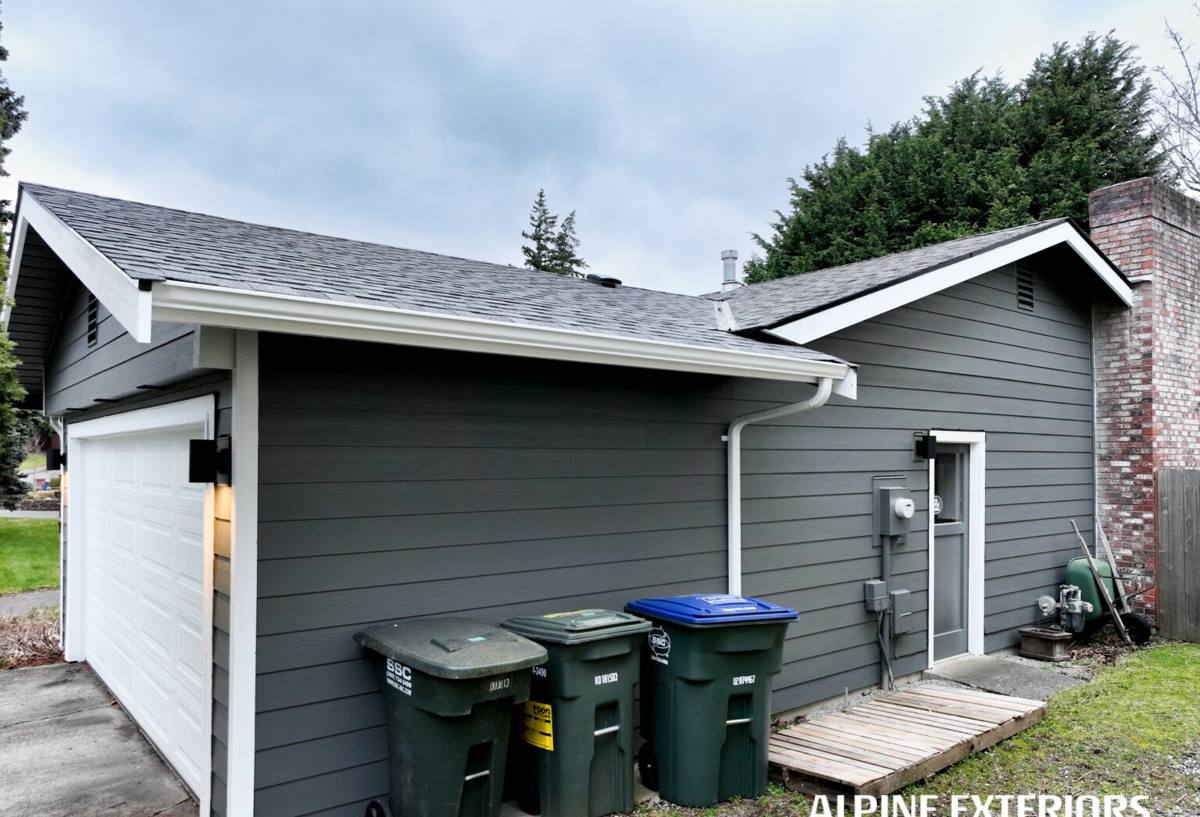
What We Actually Find When We Inspect Largo Homes
Vinyl siding
Vinyl is common on older Largo homes and it has two failure patterns in this climate: heat distortion (buckling and waviness from panels expanding against fasteners driven too tight) and UV-driven brittleness, where panels that are 12-15 years old crack instead of flexing when something hits them. Once vinyl is brittle, even a light impact — a dropped ladder, a gutter falling, a piece of storm debris — cracks the panel instead of denting it.
Older hardboard and LP-style siding
Homes with older wood-based composite siding are the ones we get called to most urgently, because the failure mode is moisture absorption at seams, butt joints, and the bottom edge near grade. Once that material takes on water, it swells, the paint film cracks, and the damage spreads under the surface faster than it shows from the yard. By the time you can see soft spots or paint bubbling, there's usually more compromised material behind it than the visible damage suggests.
Wood and cedar siding
Less common in newer construction but still present on some older Largo properties. Cedar handles moisture better than composite hardboard but still needs consistent film-forming paint or stain to survive year-round humidity, and gaps or cupped boards are common repair calls.
Fiber cement siding
Correctly installed fiber cement is the most durable of the group in this climate, but "correctly installed" is doing a lot of work in that sentence — most fiber cement repair calls we get in this area trace back to an installation mistake (caulk where there should be flashing, panels butted tight with no expansion gap, fasteners in the wrong location) rather than the material itself failing.
The Regional Stress Factors Behind Every Repair Call
- Wind-driven rain: Storms in this area rarely come straight down — wind pushes rain sideways into seams, laps, and trim joints that were never designed to shed water horizontally.
- Salt air: Even well inland from the coast, salt in the air accelerates corrosion on fasteners, flashing, and any exposed metal trim, which in turn stains and damages the siding around it.
- UV load: Florida sun breaks down paint films, caulk, and unprotected substrate faster than almost anywhere else in the country. Caulk that would last a decade up north can fail in 3-5 years here.
- Humidity cycling: Daily swings between hot, humid afternoons and cooler nights push moisture in and out of siding materials constantly, which is what drives swelling, delamination, and paint failure over time.
- Hurricane-force wind events: Even homes that never take a direct hit see wind loads during named storms that stress fastening patterns and flashing details, sometimes without visible damage until the next heavy rain finds the weak point.
What a Correct Siding Repair Actually Involves
A proper repair is not just pulling off a damaged piece and nailing up a new one. On every repair call in this area, we treat the following as non-negotiable steps:
- Find the water path, not just the damage. Damaged siding is a symptom. If water got behind the panel, we trace where it entered — a failed seam, a missing flashing, a caulk joint that gave up — before we close anything back up.
- Check the substrate. Any water intrusion means checking the sheathing and framing behind the siding for soft spots or rot. Replacing siding over compromised sheathing just hides the problem for another season.
- Match the reveal and profile. New siding pieces need to match the existing course spacing, reveal, and profile so the repair doesn't stand out or create a new water trap.
- Re-flash, don't just re-caulk. Caulk is a UV-exposed wear item in this climate, not a permanent water barrier. Any joint that's doing real waterproofing work needs proper flashing or house wrap integration behind it.
- Use corrosion-resistant fasteners. Given the salt air across this part of the county, fastener choice matters more here than in most parts of the country.
- Prime and paint cut edges. Any factory-finished siding that gets cut on site needs the cut edge sealed and matched — an exposed edge is where the next repair call starts.
Repair or Replace? How We Make That Call
Not every damaged section needs a full re-side, and not every homeowner needs to be sold a whole-house job when a targeted repair will hold. We look at scope, age, and condition of the surrounding material before recommending either path.
| Factor | Favors Repair | Favors Full Replacement |
|---|---|---|
| Extent of damage | Isolated to one wall or a few sections | Spread across multiple elevations |
| Age of existing siding | Under 10-12 years, still structurally sound | Near or past expected service life |
| Moisture intrusion | Localized, substrate unaffected | Found at multiple points or with sheathing damage |
| Material match | Discontinued product still sourceable or hidden location | Product discontinued and mismatch would be visible |
| Underlying material | Vinyl, fiber cement, or sound wood | Aging hardboard/LP-style composite showing widespread wear |
Where a home has aging LP SmartSide, cedar, or older hardboard siding failing in multiple spots, we're upfront that patch repairs are a short-term fix. Once a homeowner is looking at replacing more than a section or two of one of these materials, we'll walk through why we recommend moving to James Hardie fiber cement rather than repairing or replacing in kind.
Why We Repair and Replace With James Hardie — Not Vinyl, LP, or Cedar
We're a James Hardie-only siding contractor. We don't install vinyl, LP SmartSide, Cemplank, Allura, primed spruce, or cedar, and when a Largo repair turns into a larger conversation about replacement, we tell homeowners exactly why.
Vinyl is inexpensive and easy to install, but in this climate it distorts with heat and becomes brittle with UV exposure within a decade or two, which is exactly the failure pattern we see on repair calls. Wood-based composite siding like LP SmartSide performs reasonably well when the paint film and caulk joints are maintained on schedule, but the moment moisture gets behind a seam, the substrate swells and the repair becomes bigger than it looks from outside. Cedar is a beautiful, legitimate material, but it demands a maintenance commitment — refinishing on a real schedule — that most homeowners don't want to keep up with in a climate this hard on painted wood.
James Hardie fiber cement doesn't solve every one of those problems by existing — installation quality still determines whether a Hardie job holds up — but the material itself is non-combustible, dimensionally stable across heat and humidity swings, and the ColorPlus factory finish is baked on rather than field-applied, which removes a lot of the UV-driven paint failure we see on other materials. Hardie's HZ5 product line is engineered specifically for higher-moisture, hurricane-prone climates like ours. It's also backed by a strong transferable warranty, which matters if you sell the home before the siding's service life is up.
Our Repair Process for Largo Homes
- On-site inspection: We look at the damaged section and the whole elevation it's on, not just the spot you called about.
- Honest scope assessment: We tell you plainly whether this is a repair, a partial re-side, or something bigger — and why.
- Written estimate: Clear pricing before any work starts, with the repair scope spelled out.
- Substrate check before closing up: Any area where siding is removed gets checked for water damage underneath.
- Matched materials and finish: We match reveal, profile, and color as closely as the existing siding allows.
- Final walk-through: We show you what was done and what to watch for going forward.
Signs a Largo Home Needs a Siding Repair Now
- Soft or spongy spots when you press on a section of siding
- Visible cracking, buckling, or warping on one or more panels
- Paint peeling or bubbling in a localized area rather than uniformly across the house
- Gaps opening up at seams, corners, or trim joints
- Staining running down from a joint after rain — a sign water is tracking behind the siding
- Increased pest activity around one section of the exterior wall
- Visible fastener corrosion or rust streaks below nail heads
Any one of these on its own might be minor. Several together, especially clustered in one area, usually means water has been getting behind the siding for a while.
Why Hiring a Crew That Already Works Largo Matters
Siding repair done by a crew unfamiliar with this specific micro-climate tends to under-scope the job — patching visible damage without checking for the moisture intrusion that caused it, or using fastening and flashing details that work fine in a drier climate but don't hold up here. A crew that already works Largo and the surrounding Clearwater and Pinellas County area has seen the same failure patterns on enough homes to know where to look before a small repair becomes a bigger one. That local repetition is also why we can give you a realistic scope and price on the first visit instead of discovering surprises mid-job.
If you have a section of damaged, soft, or aging siding on a Largo home, we're happy to take a look, tell you honestly whether it's a repair or something more, and give you a straightforward estimate — no pressure, no upsell script. Use the form below to request a free estimate and we'll get back to you to schedule a visit.