 Clearwater Window
 Deck Building for Countryside Homes
Countryside is one of Clearwater's established residential areas — a mix of homes from different decades, many with mature landscaping and backyards that were built for Florida living. A lot of those original decks and patios were never engineered for the way this climate actually behaves over twenty or thirty years. When we build a deck for a Countryside homeowner, we're not just framing a platform and screwing down boards. We're building something that has to survive Pinellas County summers, wind-driven rain, and the occasional direct hit from a tropical system, without turning into a maintenance headache or a safety issue five years in.
This page covers what a deck built for this specific area and climate needs to get right — materials, structure, code, and process — so you know what to look for whether you hire us or someone else.
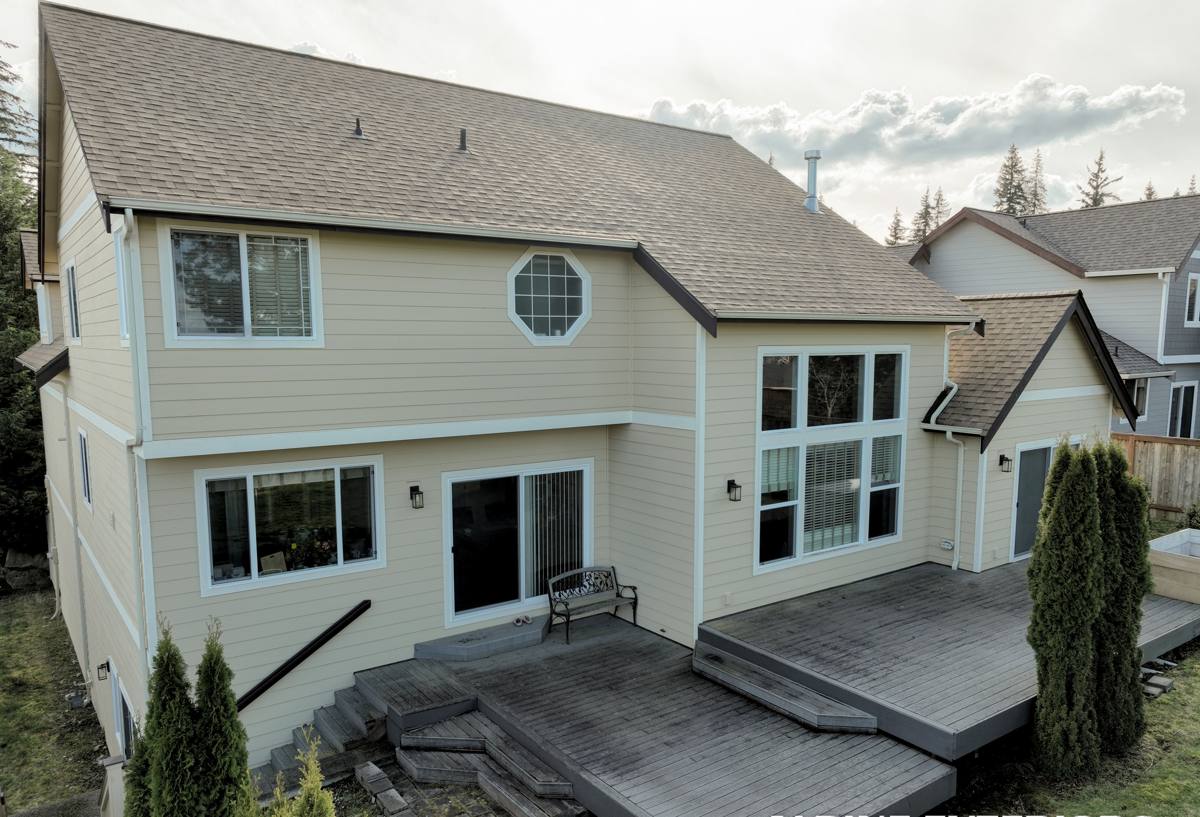
What Clearwater's Climate Does to an Outdoor Deck
UV exposure
Florida sun is close to overhead most of the year, and a deck has no roof overhang protecting it the way siding or a fascia board might. Untreated or poorly finished wood grays and checks fast under that kind of exposure. Composite decking without UV-stabilized capping fades unevenly, especially on the side that faces west. Any material choice for a Countryside deck has to be evaluated on how it actually performs under year-round direct sun, not just how it looks on a showroom sample.
Wind-driven rain and standing moisture
Clearwater doesn't just get rain — it gets rain pushed sideways by onshore wind, which finds its way into joints, fastener holes, and ledger connections that a northern builder wouldn't think twice about. Decks here need drainage planned into the structure itself: proper board spacing, joist flashing, and a ledger connection that doesn't trap water against the house.
Salt air and corrosion
Countryside sits inland of the immediate coastline, but Pinellas County as a whole carries salt-laden air that travels well beyond the beach on prevailing winds. Ordinary galvanized fasteners and connectors corrode faster here than the box label suggests. Anything holding a deck together — screws, joist hangers, post bases, bolts — needs a corrosion rating that matches a coastal county, not a generic hardware store default.
Hurricane-force wind loads
A deck attached to the house is a structural extension of it. During a named storm, uplift and lateral wind loads act on the deck surface and railings just like they do on a roof. A deck that's under-attached at the ledger, under-anchored at the footings, or missing proper joist hangers is a liability risk during high wind — both for the deck itself and, in worse cases, for the point where it ties into the house.
Choosing the Right Decking Material
There's no single "best" decking material — there's a best material for your budget, your maintenance appetite, and how much direct sun and rain your specific yard gets. Here's how the common options compare for a Countryside backyard:
| Material | Upfront Cost | Maintenance | How It Handles This Climate |
|---|---|---|---|
| Pressure-treated pine | Lowest | Annual sealing/staining recommended | Affordable and strong, but needs consistent upkeep or it grays, cups, and splinters under UV and moisture cycling |
| Tropical hardwood (e.g. ipe) | High | Periodic oiling to hold color | Dense and naturally rot-resistant; performs very well but is heavier on the framing and pricier to install correctly |
| Capped composite | Mid-to-high | Occasional washing, no sealing/staining | UV-stabilized capping resists fading and moisture intrusion far better than uncapped composite; good long-term fit for full-sun yards |
| PVC decking | High | Lowest — wash only | Fully synthetic, doesn't absorb moisture, handles wind-driven rain and salt air with minimal degradation |
We'll walk you through this trade-off honestly during your estimate rather than steering you toward whatever has the best margin. A shaded, low-traffic deck can do fine in treated pine with a homeowner willing to reseal it. A west-facing deck that bakes all afternoon is a much better fit for capped composite or PVC.
What a Properly Built Deck Actually Involves
Footings and posts
Everything starts below grade. Footings need to be sized and set to local frost-free, code-required depth, resting on undisturbed or properly compacted soil. In areas with sandy or fill soil — common around Clearwater — undersized or shallow footings are one of the most common causes of a deck that starts to rack or sag within a few years.
Ledger attachment
Where the deck ties into the house is the single most important structural connection on the whole project, and it's also the one most likely to be flashed incorrectly on a rushed job. A correct ledger installation includes through-bolting (not just lag screws in some cases), proper flashing to shed water away from the house's wall assembly, and spacing that lets air circulate rather than trapping moisture against the siding.
Framing and hardware
Joist spacing, beam sizing, and hanger selection all need to match the actual span and load, not just "what we usually do." We use corrosion-resistant, coastal-rated fasteners and connectors throughout — not just at the ledger — because every metal-to-wood connection on the deck is exposed to the same salt air and moisture cycling.
Decking and railing installation
Board spacing needs to allow for material expansion and drainage. Railings need to meet code height and baluster spacing requirements, and post attachment needs to be able to resist lateral load — a railing that just looks sturdy isn't the same as one that's actually anchored to resist a person leaning or falling against it.
Permits and Building Code in Pinellas County
Most new decks and significant deck replacements require a building permit through the City of Clearwater or Pinellas County, depending on your property's jurisdiction. Permitted work gets inspected at key stages — typically footings/framing and a final inspection — which is exactly the point: it's a second set of eyes confirming the structure was actually built to the load and connection requirements in the Florida Building Code, including the wind provisions that apply to Pinellas County as a coastal county.
Skipping the permit might save a little time up front, but it creates real problems later — at resale, with insurance claims after storm damage, and with liability if something fails. We pull permits as a standard part of our process, not an upsell.
Our Deck Building Process
Here's how a typical Countryside deck project moves from first call to finished structure:
- On-site visit to assess the yard, existing grade, sun exposure, and how the deck will tie into the house
- Material and layout discussion, with honest cost and maintenance trade-offs for your specific site
- Written estimate covering scope, materials, and structural details — no vague allowances
- Permit drawings and submission to the appropriate local jurisdiction
- Footings, framing, ledger attachment, and inspection at the required stages
- Decking, railing, and stair installation
- Final walkthrough and final inspection sign-off
Railings, Stairs, and Hardware Built for the Coast
Railings and stairs take more direct handling and weather exposure than the deck surface itself, so hardware choice matters even more here. We use fasteners and connectors rated for coastal exposure throughout the railing and stair system, not just at the structural connections that get inspected. Post caps, baluster brackets, and stair stringer hardware are all common places where a cheaper, non-rated fastener will show rust streaks and weakness well before the decking itself shows its age.
Maintenance: What to Expect After the Build
No deck in this climate is truly maintenance-free, but expectations should be set correctly by material:
- Pressure-treated wood — plan on cleaning and resealing roughly once a year to control graying, cupping, and splintering
- Tropical hardwood — periodic oiling if you want to maintain the original color; it will age to a silver-gray fine structurally if left untreated
- Capped composite — occasional washing to remove pollen, algae, and salt residue; no staining or sealing needed
- PVC decking — the least upkeep of the group; a rinse and occasional soap wash is generally enough
- All materials — periodic check of railing post connections and any visible hardware for corrosion, especially after a named storm
We'll tell you upfront what your chosen material actually requires, rather than letting you find out the hard way in year three.
Why Hire a Crew That Already Works in Countryside
A deck contractor who mainly works inland or in a different climate zone tends to default to standard-grade fasteners, standard flashing details, and standard footing depths — because that's what works where they usually build. In Clearwater, "standard" isn't enough. A crew that regularly works in Countryside and the surrounding Pinellas County neighborhoods already knows the local permitting process, the soil conditions common to the area, and the corrosion and wind realities that a deck here actually has to survive. That familiarity shows up in fewer surprises during permitting, fewer callbacks for hardware failure, and a deck that's still solid a decade from now instead of needing early rework.
If you're planning a new deck or replacing one that's showing its age, we're glad to come take a look, walk the site with you, and put together a straightforward, no-pressure estimate — just fill out the form below to get started.