 Clearwater Window
 Why Siding in Coachman Ridge Wears Differently Than Siding Inland
Coachman Ridge is an established residential pocket of Clearwater, and like most Pinellas County neighborhoods, its homes sit close enough to the Gulf that salt air is a daily fact of life, not an occasional nuisance. Add in hurricane-force wind events, months of intense subtropical UV, and wind-driven rain that gets pushed sideways into wall assemblies during storms, and you have four separate stress factors working on the same siding at the same time. Most siding products were never engineered to handle all four at once, which is why repair needs in this part of Clearwater tend to show up earlier and more aggressively than they would in a drier, milder climate.
When we get called out to a Coachman Ridge home, we're rarely looking at one isolated problem. Salt-laden humidity accelerates fastener corrosion and paint failure. UV bakes out plasticizers and pigments. Wind-driven rain finds every seam, nail hole, and butt joint that wasn't sealed or lapped correctly the first time. Understanding that combination is the difference between a repair that actually holds and one that fails again in a year or two.
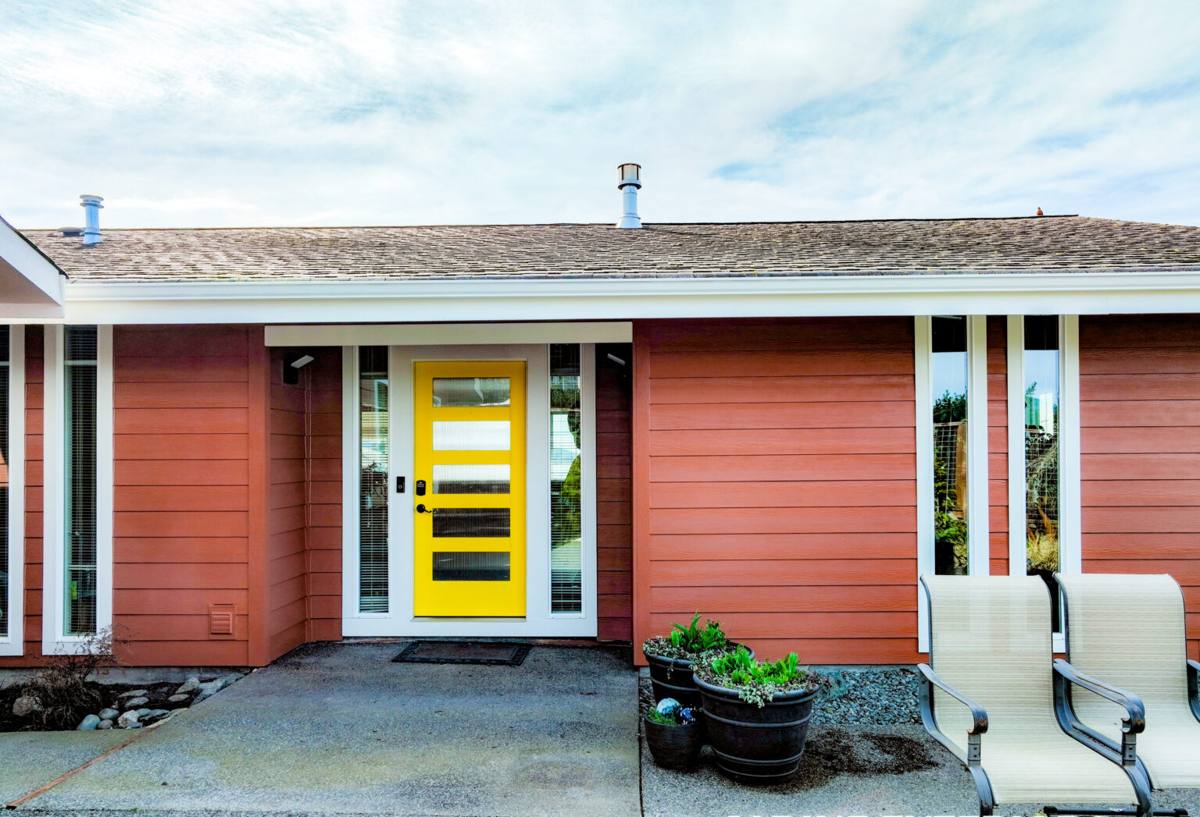
Signs a Coachman Ridge Home Needs Siding Repair
Some damage is obvious from the street. Other damage is quietly working its way into the wall sheathing long before it becomes visible. Homeowners in this neighborhood should walk their exterior a couple of times a year, especially after a named storm, and look for:
- Buckled, bowed, or rippled panels — often a sign of moisture trapped behind the siding or panels that were installed without proper expansion clearance
- Soft or spongy spots when pressed, which usually means water has already reached the substrate
- Cracked, chipped, or peeling paint concentrated on the sun-facing (typically south and west) walls
- Rust streaks bleeding from nail heads or fastener lines
- Gaps opening up at butt joints, corners, or around window and door trim
- Visible staining or dark streaking near the bottom courses, which can point to splash-back or grade issues rather than the siding itself
- Small dings, cracks, or punctures from wind-blown debris after a storm
Why Some of These Signs Get Ignored
A lot of this damage sits at eye level or above and doesn't announce itself the way a leaking roof does. Bowing on an upper story or hairline cracking near a soffit line is easy to write off as cosmetic. In our experience, cosmetic-looking damage on Clearwater exteriors is frequently a symptom of a moisture path that's already active behind the wall — which is exactly why a proper repair assessment starts with more than a visual walk-by.
What a Correct Siding Repair Actually Involves
Not every damaged section calls for the same fix, and one of the most common mistakes we see from past repair work in this area is applying the wrong scope — patching over rot, or replacing a single board when the moisture problem extends well beyond it.
| Repair Type | When It's Appropriate | What We Check First |
|---|---|---|
| Spot patch / caulk and paint | Isolated cosmetic damage, no moisture intrusion, sound substrate | Moisture meter reading behind the panel, condition of adjacent fasteners |
| Board or panel replacement | Localized cracking, impact damage, or a single failed section with dry sheathing behind it | Extent of the damage beyond the visible boundary, matching profile and reveal |
| Section re-side (wall or elevation) | Recurring failure pattern on one elevation, widespread butt-joint gapping, or repeated storm damage on the same wall | House wrap or building paper condition, flashing at penetrations and trim |
| Full re-side | Original material at end of service life, or damage present across most elevations | Overall wall assembly condition, code requirements for the current siding type |
Skipping the diagnostic step — and just swapping out what's visibly broken — is how homeowners end up paying for the same repair twice. Any repair we scope starts with confirming what's happening behind the siding, not just what's visible in front of it.
Siding Materials We Commonly Find (and Repair) in This Neighborhood
Coachman Ridge has a mix of home ages, which means we see a range of original siding materials when we go out for repair calls. Each behaves differently under Clearwater's climate load.
Vinyl
Vinyl is common on older homes in the area and is generally inexpensive to patch, but Gulf-side UV exposure causes it to fade, become brittle, and warp faster than in most other parts of the country. Once a vinyl panel has warped from heat, a patch rarely blends or lies flat again, and older vinyl profiles can be difficult to source for a clean match.
Wood and Primed Spruce
Wood siding needs a maintained paint film to survive salt air and humidity. Once that film cracks or fails, moisture gets into the wood grain quickly, and rot can spread further than it appears from the surface. Repairs on wood siding are only as good as the paint and caulk maintenance that follows.
Older Fiber Cement and Composite Boards
Some homes in this neighborhood carry earlier-generation fiber cement or composite wood products that weren't factory-finished the way today's engineered products are. These often show chalking, edge swelling, or fastener corrosion sooner than a modern, climate-engineered product would, particularly where caulking and paint upkeep lapsed.
We repair all of these materials as needed — a homeowner shouldn't be forced into a full re-side just to fix a damaged section. But when a wall has failed broadly rather than in one spot, we'll always tell you honestly whether patching is still the right call or whether you're just delaying a bigger job.
Why We Rebuild Damaged Sections with James Hardie
When a repair calls for replacing more than a board or two, or when an elevation has failed to the point that patching won't hold, we rebuild that section using James Hardie fiber cement rather than matching back to vinyl, LP-style engineered wood, or unfinished wood boards. That's a standard we apply across every job, not just here.
Hardie's HZ5 product line is engineered specifically for high-humidity, storm-prone climates like ours, and the ColorPlus factory finish holds color and resists the UV fading that drives so many repeat repair calls in Pinellas County. Fiber cement is also non-combustible and doesn't swell or rot the way wood-based products can when a seam takes on water. Where we can integrate a Hardie repair section cleanly into existing siding, we will. Where the existing material is failing broadly, we'll walk you through what a full re-side with Hardie would look like — with no pressure either way.
Our Repair Process for Coachman Ridge Homes
Every repair job follows the same sequence, whether it's a single panel or a full elevation:
- On-site inspection. We assess the damaged area and the surrounding wall, including a moisture check behind the siding wherever we suspect intrusion.
- Root-cause identification. We determine why the failure happened — flashing, caulk failure, impact damage, wind uplift, or material fatigue — because repairing the symptom without fixing the cause just resets the clock on the same problem.
- Scope and honest estimate. You get a clear explanation of what needs to happen, what it will cost, and why — including whether a smaller patch is genuinely sufficient or whether we'd be doing you a disservice recommending one.
- Repair or rebuild. We remove compromised material, address the underlying moisture or fastening issue, and install replacement material to match existing lines and reveals as closely as possible.
- Seal and finish. Proper flashing, caulking at penetrations and trim, and touch-up finishing so the repaired section holds up to the next storm season, not just the next inspection.
Why It Matters That We Already Work in Coachman Ridge
A crew that already knows this neighborhood isn't a marketing line — it changes the quality of the repair. We've seen how homes here are laid out, what the typical original siding installs looked like, and which failure patterns show up again and again on specific elevations given how Clearwater's storms and sun angles hit this part of the county. That local pattern recognition means less exploratory demolition and a more accurate first estimate.
It also matters for logistics. Local crews respond faster after storm damage, aren't guessing at permitting requirements for the city of Clearwater and Pinellas County, and can usually get replacement material matched and scheduled without the delays that come from a contractor working outside their normal service area for the first time.
What Siding Repair Typically Costs — and What Drives the Price
Every repair is different, but the same handful of factors drive cost on nearly every job we scope in this area:
| Cost Factor | Why It Matters |
|---|---|
| Extent of hidden moisture damage | Repairs that stop at sheathing replacement cost far less than those requiring stud or wrap repair |
| Material match | Matching an existing profile, color, or discontinued product adds time and sometimes cost versus a straightforward replacement |
| Accessibility | Second-story sections, tight side yards, or landscaping obstructions affect labor time |
| Scope size | A single board is priced very differently than a full elevation, and per-square-foot cost typically drops as scope increases |
| Underlying cause | Fixing a flashing or caulk failure adds a modest cost now but prevents the same repair call next storm season |
We don't quote broad numbers without seeing the damage, since two homes with similar-looking siding problems can have very different scopes once we check behind the panels. What we can promise is a straightforward, itemized estimate that explains exactly what you're paying for and why.
If you've noticed damage, aging siding, or storm impact on your Coachman Ridge home, we're glad to come take a look. The estimate is free, there's no pressure to move forward, and you'll get a straight answer about whether you need a patch, a section rebuild, or something more.