 Clearwater Window
 Coachman Ridge sits in one of the more established residential pockets of Clearwater, and like most Pinellas County neighborhoods built up over the last several decades, its homes have already lived through plenty of Florida weather. Roofs get replaced, AC units get swapped out, and eventually siding starts showing its age — chalking, soft spots, cracked caulk lines, panels that have pulled away from the wall. When that day comes for a Coachman Ridge home, the material choice matters as much as the installation. This page walks through what our climate actually does to exterior siding, what correct fiber cement installation involves, and why we only install James Hardie products on the homes we work on.
What Clearwater's Climate Does to Siding
Pinellas County isn't a gentle place to be exterior building material. Coachman Ridge homes face the same combination of stresses as the rest of the Clearwater area, and each one attacks siding differently:
- Hurricane-force wind — even homes outside a storm's direct path regularly see sustained gusts strong enough to test fastening patterns and panel edges. Siding that isn't installed to the manufacturer's wind-rated spec is the siding that ends up in the yard next door.
- Intense, year-round UV exposure — Florida sun breaks down pigments and surface coatings faster than almost anywhere else in the country. Paint jobs that would last 8-10 years up north can fade and chalk in half that time here.
- Wind-driven rain — Clearwater storms don't just fall straight down, they get pushed sideways into wall assemblies. Siding and the flashing behind it have to shed water that's actively being driven into seams and laps, not just resting on a vertical surface.
- Salt air — being this close to the Gulf means airborne salt is a constant, low-level presence even well inland from the water. It accelerates corrosion of fasteners and trim, and it's tough on any material that relies on a coating to keep moisture out.
None of these are occasional problems. They're the baseline conditions every wall assembly in Coachman Ridge deals with every single year, which is exactly why the material and the installation method both matter more here than in a milder climate.
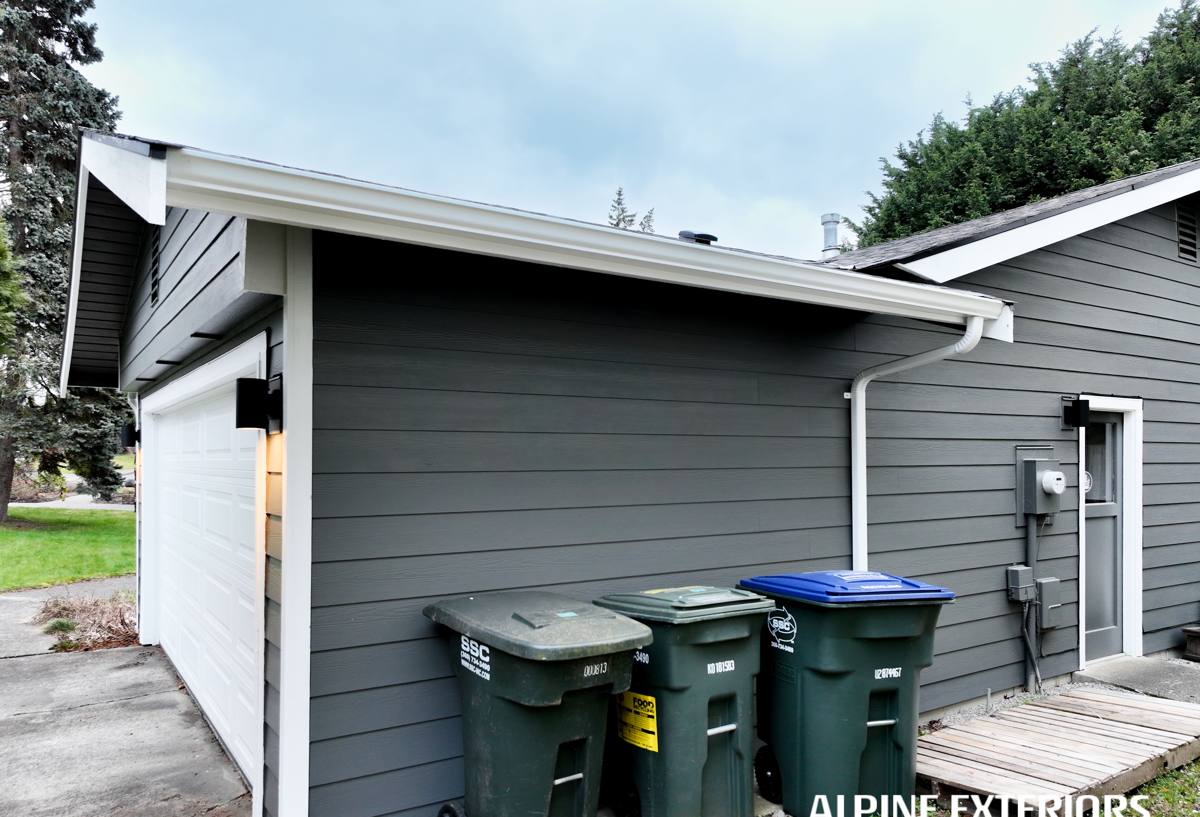
Why Fiber Cement Fits Coachman Ridge Homes
Fiber cement siding is made from cellulose fiber, sand, and Portland cement, pressed and cured into dense, dimensionally stable boards. That composition is what makes it a strong fit for this climate specifically:
It's non-combustible, which matters for insurance underwriting and for peace of mind. It doesn't expand and contract with humidity swings the way wood does, so joints and paint lines stay tighter over time. It holds up to direct sun without the surface degradation that plagues some plastics and untreated wood. And because it's dense and rigid, it resists wind uplift and impact better than lightweight cladding when it's fastened correctly.
That last point — fastened correctly — is where most siding failures in this area actually come from. The material itself is rarely the weak link. The installation is.
What a Correct Fiber Cement Installation Involves
Fiber cement siding is unforgiving of shortcuts in a way that's easy to underestimate. The manufacturer's installation instructions aren't a suggestion — in a high-wind, high-moisture climate like ours, deviating from them is how homeowners end up with problems five or ten years down the road instead of thirty.
Drainage plane and moisture management
Fiber cement siding is not the primary waterproofing layer on a wall — the weather-resistive barrier and flashing behind it are. Correct installation means a continuous drainage plane, properly lapped house wrap, and flashing at every window, door, and penetration so that any water that gets behind the siding has somewhere to go besides the sheathing.
Fastening pattern and clearances
Fastener type, spacing, and embedment depth are all specified by the manufacturer for a reason — they're what gives the wall its wind rating. Panels also need proper clearance from the roofline, decks, and grade to avoid trapping moisture against the bottom edge of the board, which is one of the most common points of long-term failure when it's ignored.
Joints, caulking, and factory finish
Butt joints need to be treated correctly — not just butted and caulked — and factory-finished boards need touch-up paint that actually matches the coating system, not a generic exterior paint that will weather at a different rate and telegraph every seam.
Trim and accessory integration
Corner boards, window and door trim, and soffit transitions all need to integrate with the siding system rather than fight it. Poorly detailed trim is a common source of water intrusion even when the field of the wall is installed well.
Why We Install Only James Hardie
We don't install LP SmartSide, vinyl, Cemplank, Allura, or primed wood siding, and that's a deliberate standard, not an oversight. James Hardie is the fiber cement manufacturer we've chosen to build every project around, for a few concrete reasons:
- Climate-engineered product lines — Hardie manufactures different formulations for different regions, accounting for the humidity and moisture exposure a home in our HardieZone actually experiences, rather than shipping one national product to every climate.
- ColorPlus factory-applied finish — the coating is baked on under controlled conditions before the boards ever reach the jobsite, which gives more consistent, longer-lasting color performance under intense Florida UV than field-applied paint typically achieves.
- Warranty structure — Hardie backs its siding with a strong, transferable warranty, which matters both for peace of mind and for resale value on a Coachman Ridge home.
- Proven track record — Hardie has been manufacturing fiber cement at scale for decades, with a large enough installed base in hurricane-prone climates that the product's real-world performance is well understood, not theoretical.
We'd rather stand behind one system we know inside and out than spread our crews thin across five different products with five different installation quirks. That consistency is part of what keeps callbacks low and results predictable.
How Siding Options Compare in This Climate
| Factor | Vinyl Siding | Wood / LP-Style Composite | James Hardie Fiber Cement |
|---|---|---|---|
| Wind resistance | Lower — prone to cracking and blow-off in gusts | Moderate, fastener-dependent | High when installed to spec |
| Moisture/rot risk | Low material risk, but traps moisture behind it | Higher — vulnerable if coating or caulking fails | Low — cement-based, doesn't rot |
| UV/fade resistance | Fades and can warp under intense sun | Coating fades; needs repainting | Factory finish resists fading longer |
| Salt air durability | Moderate — coating and fasteners degrade over time | Lower — moisture-sensitive substrates | Good — dense, non-organic material |
| Typical lifespan | 15-25 years | 15-25 years, install-dependent | 30+ years when installed and maintained correctly |
| Maintenance | Low, but limited repair options | Regular inspection and recoating needed | Occasional caulk/touch-up; no rot to manage |
Every material has trade-offs. Vinyl is inexpensive and low-maintenance but performs poorly in sustained wind and can look dated quickly under our sun. Wood-based composites can look great new but ask a lot of the coating system and the installer's attention to detail to hold up long-term in this humidity. Fiber cement asks more of the installer up front — it's heavier, requires specific tools and fastening — but rewards that effort with a wall system built for exactly the conditions Coachman Ridge sees every year.
Our Process for Coachman Ridge Projects
Assessment and scope
We start with a walk of the home to check the condition of the existing siding, sheathing, and trim, and to identify problem areas — soft spots, past water intrusion, poor flashing — that need to be addressed as part of the job, not painted over.
Removal and substrate prep
Old siding comes off and the sheathing underneath gets inspected and repaired as needed before anything new goes on. Installing new siding over damaged sheathing just hides a problem that gets worse behind the wall.
Weather barrier and flashing
A new drainage plane and flashing package go in at every penetration, window, and door before the first piece of Hardie siding is hung. This is the layer that actually keeps wind-driven rain out of the wall.
Installation to manufacturer spec
Panels are hung using Hardie's specified fastening pattern and clearances, with attention to proper joint treatment and trim integration throughout.
Finish and walkthrough
We handle final caulking and touch-up, clean up the site, and walk the finished exterior with the homeowner before calling the job done.
Maintaining Fiber Cement Siding in a Coastal Climate
- Rinse the exterior periodically to remove salt residue and airborne grime, especially on sides of the house exposed to prevailing wind.
- Inspect caulk lines around windows, doors, and trim annually, and re-caulk any joints that have opened up or cracked.
- Watch for staining or soft spots near the bottom edge of the siding, close to grade, decks, or roof-to-wall intersections.
- Trim vegetation back from the walls so leaves and moisture don't sit against the siding.
- Address any impact damage or cracked boards promptly rather than letting a small gap become a water entry point.
Why Local Experience in Coachman Ridge Matters
Clearwater and Pinellas County building departments enforce wind-load and code requirements that are stricter than what siding crews in milder climates are used to working under, and a contractor unfamiliar with local permitting and inspection expectations can turn a straightforward re-side into a stalled project. Crews who already work in and around Coachman Ridge know the housing stock in the area, understand what inspectors here look for, and aren't learning the region's climate demands on your home. That familiarity shows up in fewer surprises during the job and a finished wall system built for what this specific area actually throws at it, year after year.
If your Coachman Ridge home's siding is showing its age — or you're planning ahead rather than waiting for a failure — we're happy to take a look and walk you through what correct installation would involve for your specific home. Reach out for a free, no-pressure estimate using the form below.