 Clearwater Window
 What Sunset Point's Climate Does to a Home's Siding
Sunset Point sits in Clearwater, in Pinellas County, close enough to open water that homes here feel the coast every day — not as an occasional event but as a constant weather pattern working on the exterior year-round. Over a full year, walls in this neighborhood absorb sustained, intense UV exposure that most of the country never sees, sit inside humidity that stays elevated even during "dry" stretches, and periodically take direct hits of wind-driven rain and hurricane-force gusts during storm season. Add in the salt content riding on Gulf and bay breezes, and you've got a combination that wears down siding through several mechanisms at once, not just one obvious threat.
For siding, that shows up as sun-bleached and chalky paint film, swollen or delaminated seams on wood-based products, corroded fasteners and trim, and water intrusion at joints if the assembly wasn't detailed for a hurricane-zone climate in the first place. None of this is a reason to panic about siding on a Sunset Point home — it's a reason to be specific about material choice and installation quality, because the margin for error here is smaller than it would be in a milder climate.
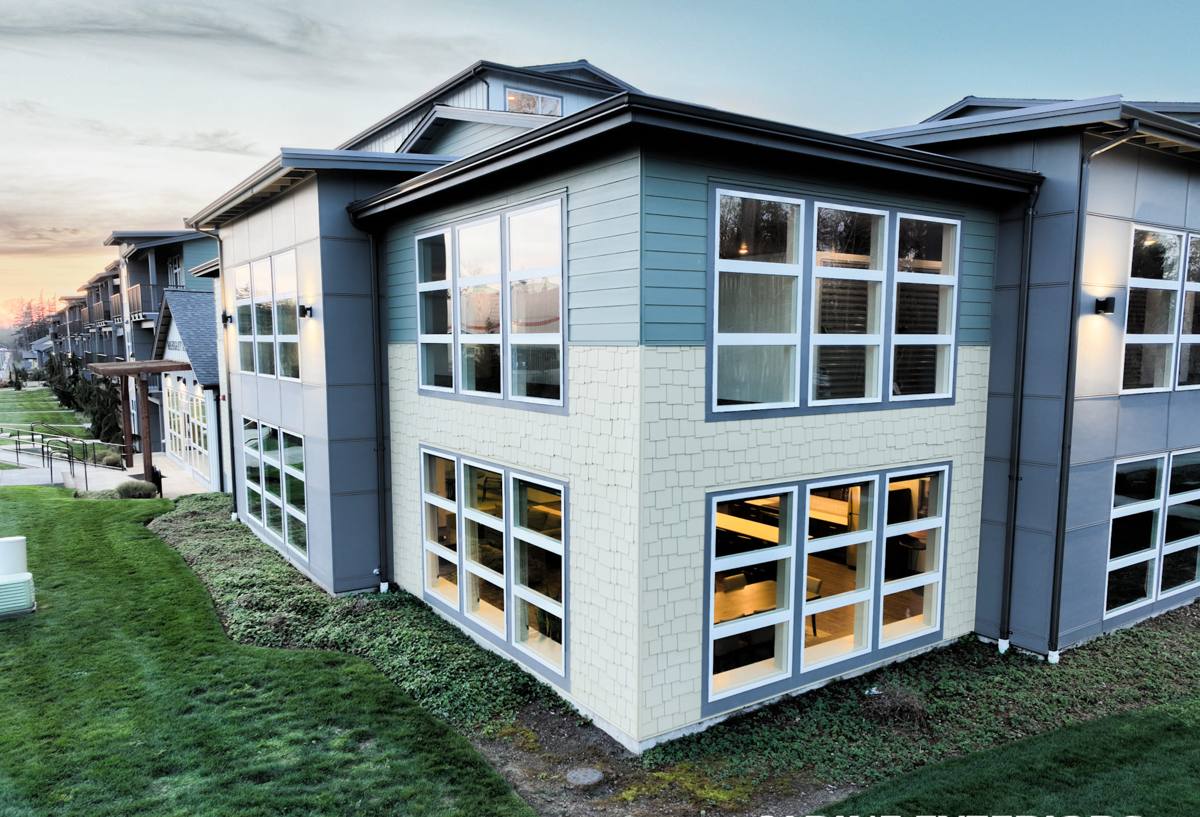
Why We Install Only James Hardie Siding
We standardized this company on James Hardie fiber cement and don't install vinyl, LP SmartSide, Cemplank, Allura, primed spruce, or cedar. That's not a claim that those products can't be installed correctly somewhere — it's a line we've drawn about what we're willing to put our name behind on homes that face Pinellas County's climate every single day. Fiber cement's core composition — cement, sand, and cellulose fiber — doesn't expand, contract, and absorb moisture the way a wood or wood-fiber product does, and it doesn't soften or deform the way vinyl can under sustained heat and direct sun. Hardie backs that composition up with a product line engineered specifically for humid, high-UV climates, a factory-applied finish built to outlast field-applied paint, and a warranty that transfers with the home if it's sold.
| Factor | James Hardie Fiber Cement | Vinyl / Wood-Based Alternatives |
|---|---|---|
| Moisture behavior | Non-organic core resists swelling, cupping, and rot | Wood-based products can absorb and release moisture through the fiber structure; vinyl doesn't rot but can trap moisture behind it |
| UV and color fade | ColorPlus factory finish engineered to resist fading and chalking | Field-applied paint and dyed vinyl fade unevenly, especially on south/west exposures |
| Wind and impact | Rigid, dense material holds up to wind-driven debris when installed to spec | Vinyl can crack or blow off in high wind; softened wood-based panels dent more easily |
| Salt air exposure | Doesn't corrode; performance depends on correct fastener and trim choice | Metal trim and fasteners on any system corrode faster here without corrosion-resistant hardware |
| Fire behavior | Non-combustible material | Vinyl and wood-based products are combustible to varying degrees |
Built for This Climate: James Hardie's Florida-Specific Engineering
James Hardie doesn't sell one formulation nationwide. The company engineers its boards by climate zone, and Florida falls into the zone built specifically for high-humidity, high-moisture coastal conditions rather than the standard formulation used across most of the rest of the country. That distinction matters more in Sunset Point than it would inland, because the combination of near-constant humidity and frequent wetting-and-drying cycles is exactly what stresses a lesser siding material over time.
Moisture and Humidity Cycling
Humid air doesn't just sit against the wall — it drives moisture into and out of exterior materials as temperatures shift between day and night, and between air-conditioned interiors and hot, wet exteriors. Fiber cement's dimensional stability means it doesn't cup, swell, or delaminate at cut edges the way a wood-based panel can after enough of these cycles. It still needs correctly sealed joints and properly treated cut edges to perform as designed — the material being moisture-stable doesn't excuse skipping those details.
Wind and Storm Performance
Sunset Point sits in a hurricane-prone wind zone, and any exterior product installed here needs a fastening pattern and edge treatment that accounts for sustained wind loads and the debris that comes with tropical storms and hurricanes, not just a light coastal breeze. Hardie's installation specifications include fastener type, spacing, and edge clearance requirements that scale with wind exposure — following them, rather than treating them as optional, is what separates siding that survives storm season from siding that doesn't.
What a Correct Installation Involves
The board itself is only part of what makes Hardie siding perform in Sunset Point. The assembly behind it — the parts you don't see once the job is finished — is usually what determines whether a house stays dry and intact through the next decade of storm seasons. A correct install includes:
- A properly lapped weather-resistive barrier behind the siding, installed so water sheds outward rather than getting trapped against the sheathing
- A drainage gap or rainscreen detail that lets any moisture that gets behind the siding actually escape instead of sitting against the wall
- Corrosion-resistant fasteners, sized and spaced according to Hardie's published fastening schedule for the wind zone and product line in use
- Flashing at every window, door, roofline, and penetration — not caulk substituting for flashing, which is a shortcut that fails first
- Correct clearance from grade, roof lines, decks, and other structures so the bottom edge of the siding isn't sitting in standing water or debris
- Joints and butt seams treated per manufacturer spec, whether that's caulked and painted or a shiplap profile designed to shed water on its own
Skip any one of these and the board can be genuinely good material sitting in a wall assembly that still fails — usually quietly, as a moisture problem behind the siding rather than an obvious leak you'd catch early.
ColorPlus Finish: One Less Weak Point in This Climate
Most Hardie siding we install carries the ColorPlus factory finish — color baked onto the board under controlled conditions before it reaches the site, rather than painted on-site after installation. That distinction matters in a climate where field-applied paint has to cure in unpredictable heat, humidity, and rain interruptions, all of which affect how well it bonds and how long it holds up. A factory-cured finish sidesteps that variability and comes with its own finish warranty, separate from the substrate warranty on the board. It doesn't make the siding maintenance-free — periodic gentle washing to remove salt film and pollen buildup still extends how long it looks new — but it removes one of the bigger variables that shortens a paint job's life on this coast.
Our Process, Start to Finish
Every Sunset Point project runs through the same sequence, because skipping steps is how climate-specific problems get baked into a wall:
- On-site assessment — we look at your current siding, wall assembly, moisture history, and exposure (how much direct sun, wind, and salt the specific walls of your house actually see)
- Product and color selection — matching the right Hardie product line and ColorPlus color to your home's style and exposure
- Permitting — pulling the required permit through the applicable local building department before any work starts
- Tear-off and prep — removing existing siding, inspecting sheathing for hidden damage, and correcting anything found before new material goes up
- Installation to spec — weather-resistive barrier, drainage detail, correct fastening, and flashing at every opening
- Final walkthrough — checking joints, trim, and finish with you before we consider the job done
What Drives Cost on a Sunset Point Hardie Project
| Cost Factor | Why It Matters Here |
|---|---|
| Home size and number of stories | More wall area and taller elevations mean more material and labor, plus added scaffolding or lift needs |
| Condition of existing siding and sheathing | Hidden moisture damage found during tear-off adds repair scope before new siding can go on correctly |
| Product line and texture | Lap, shingle, and panel profiles, plus smooth vs. textured finishes, carry different material costs |
| Trim and architectural detail | Homes with more corners, windows, and roof intersections need more flashing and cutting labor |
| Site access | Tight lots, fencing, pools, or landscaping close to the walls can slow staging and installation |
| Wind-zone fastening requirements | Hurricane-zone fastening schedules require more fasteners and closer spacing than a mild-climate install |
Why a Crew That Already Works Sunset Point Matters
Siding installation instructions read the same on paper anywhere in the country, but applying them well depends on knowing how a specific area's climate actually behaves. A crew that regularly works Sunset Point and the surrounding Clearwater neighborhoods has already seen where wind-driven rain finds gaps in flashing, which wall orientations take the worst salt exposure, and what fastener and trim choices hold up here versus what fails early. That's the kind of judgment that doesn't come from a manufacturer's installation manual alone — it comes from repeated exposure to this specific coastline's weather and to the older homes in this area that show what happens when those details get skipped.
A local crew also means faster response if something needs a look after a storm, familiarity with the local permitting process, and accountability that doesn't disappear once the invoice is paid.
Ready to Talk About Your Home
If your Sunset Point home's siding is aging, showing wear from sun and salt, or you're planning ahead of the next storm season, we're glad to take a look and walk you through what a correct James Hardie installation would involve on your specific house. There's a form below — reach out for a free, no-pressure estimate.