 Clearwater Window
 Why Harbor Oaks Homes Need a Different Approach to Siding
Harbor Oaks sits close to the water on Clearwater Harbor, which means homes here take a heavier climate beating than siding sitting further inland. The combination of direct bay exposure, older housing stock with a mix of architectural styles, and tree-lined streets that trap humidity against exterior walls all add up to conditions that push cheaper siding systems to fail years before their inland counterparts. Any siding installation in this neighborhood has to be planned around that reality from the first measurement, not treated as a generic re-clad.
We've worked on homes throughout Clearwater and Pinellas County long enough to know which failure points show up first near the water: fastener corrosion, moisture trapped behind panels, caulk joints that give out in the sun, and trim that separates at the corners. A correct installation in Harbor Oaks addresses every one of those points before the first course of siding ever goes up.
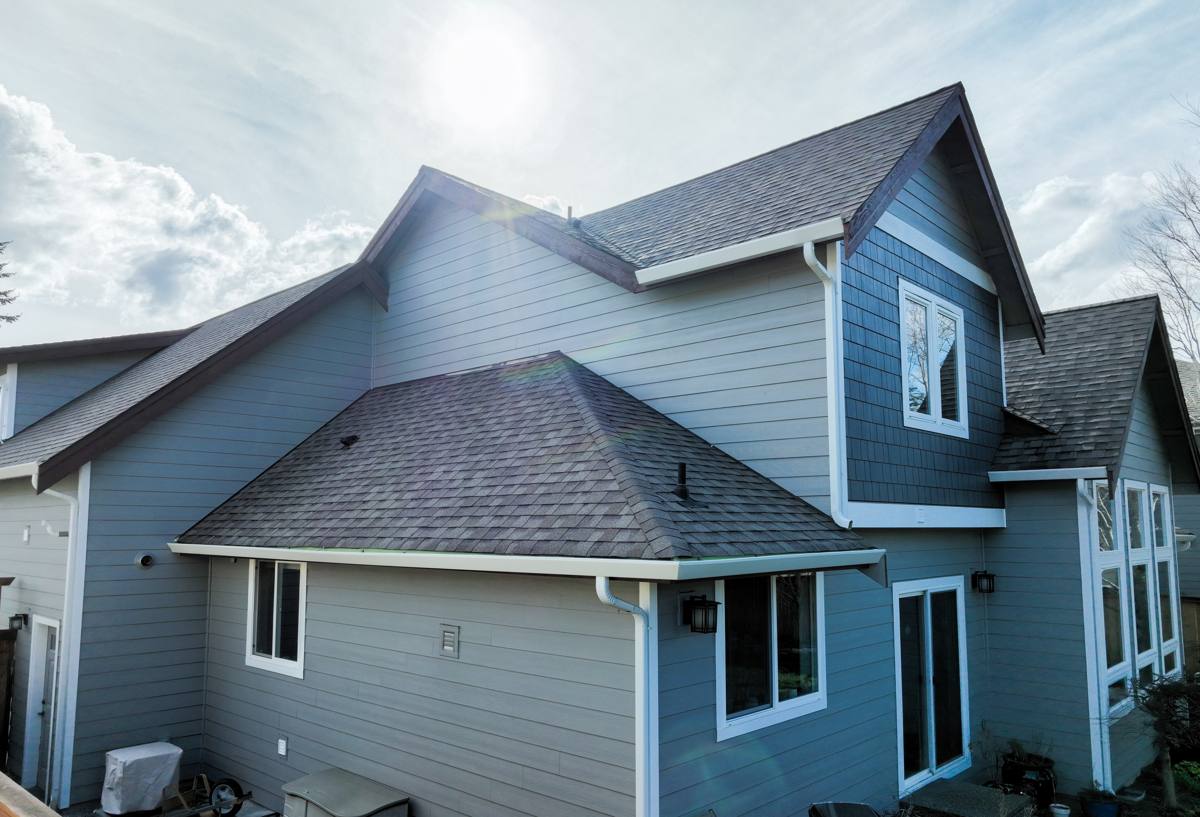
What Pinellas County's Climate Actually Does to Siding
Clearwater's exterior building materials deal with four stresses at once, and Harbor Oaks gets a concentrated dose of all four because of its waterfront location.
Hurricane-Force Wind
Wind doesn't just push on siding — it pulls. During a storm, negative pressure on the leeward side of a house tries to lift panels away from the wall. Siding that isn't fastened to spec, or installed over a weak substrate, is the first thing to peel off in a named storm. Fastening pattern, fastener type, and nailing zone matter far more here than they do in most parts of the country.
Year-Round UV Exposure
Florida sun is relentless, and it's on siding twelve months a year, not just in summer. UV breaks down pigments and the resins that hold coatings together. Siding that isn't formulated for it fades unevenly, chalks, and eventually loses its ability to shed water the way it did when it was new.
Wind-Driven Rain
Rain in a coastal storm doesn't fall straight down — it drives sideways into every seam, joint, and penetration in the siding. A water-resistive barrier and correctly lapped flashing behind the siding matter as much as the siding itself, because that's what actually keeps water out of the wall assembly when rain is moving horizontally.
Salt Air
Harbor Oaks' proximity to the harbor means a steady low-level dose of airborne salt. Salt accelerates corrosion in fasteners, flashing, and any exposed metal trim, and it degrades some coatings faster than inland sun exposure alone would. Material choice and hardware selection both have to account for it.
What a Correct Siding Installation Actually Involves
Siding installation is often talked about as if it's just "hanging boards," but the siding itself is the last layer of a multi-part system. On a Harbor Oaks home, every layer underneath it has to be right, because the siding can only do its job if the assembly behind it is sound.
- Removal of old siding and inspection of the sheathing underneath for rot, delamination, or prior water intrusion
- Repair or replacement of any compromised sheathing before a single new panel goes up
- Installation of a continuous water-resistive barrier, properly lapped and sealed at every seam
- Correct flashing at windows, doors, roof-to-wall intersections, and any penetrations (vents, hose bibs, electrical)
- Proper clearance between the bottom of the siding and grade, roof lines, decks, and patios to keep splash-back and standing water away from the material
- Fastening pattern and fastener type matched to the manufacturer's wind-zone requirements for this part of Florida
- Caulking and sealant only at joints designed to be sealed — not as a substitute for correct flashing
- Factory-finished color and trim installed so field-cut edges are sealed per manufacturer spec
Skip any one of these steps and the siding may look fine for a year or two, then start failing exactly where the shortcut was taken — usually around windows, at the bottom course, or at inside corners.
Why We Install Only James Hardie Fiber Cement
We made a deliberate decision to install one siding system: James Hardie fiber cement. We don't install vinyl, LP SmartSide, Cemplank, Allura, or primed wood species like spruce or cedar. That's not a marketing position — it's a standard we settled on after weighing how each category of siding actually holds up in a climate like this one.
Fiber cement is non-combustible, which matters in a state where wildfire and lightning-strike house fires are a real risk. It doesn't soften or deform in direct summer heat the way vinyl can, and it doesn't rely on a factory primer coat to protect raw wood fibers from moisture the way engineered wood products do. James Hardie backs its boards with a factory-applied ColorPlus finish that's baked on and warrantied against fading — a meaningful advantage in a spot that gets this much direct sun.
Hardie also engineers specific product lines for different climates. Their HZ5 formulation is built for humid, moisture-heavy regions like the Gulf Coast, which is a real advantage over one-size-fits-all siding that isn't engineered for regional exposure differences at all. Combined with a strong, transferable warranty, it's the system we're comfortable standing behind on a home that's going to face what Harbor Oaks faces every hurricane season.
How Our Harbor Oaks Installation Process Works
- On-site assessment: We walk the exterior, check the current siding and substrate condition, and note anything specific to the home's exposure — its distance from the water, tree cover, and sun-facing walls.
- Removal and substrate inspection: Old siding comes off and we inspect the sheathing before moving forward. Any rot or water damage gets repaired first.
- Weather barrier installation: A continuous water-resistive barrier goes on with correctly lapped seams, sealed to shed wind-driven rain rather than trap it.
- Flashing at every penetration: Windows, doors, roof lines, and any wall penetrations get flashed before trim or siding covers them.
- Hardie panel and trim installation: Boards are fastened to Hardie's specified pattern for this wind zone, with proper clearances maintained at grade, roofs, and decks.
- Detail work: Corners, joints, and factory-cut edges are finished and sealed per manufacturer requirements, not just caulked over.
- Final walkthrough: We review the finished exterior with the homeowner and confirm everything meets both our standard and the manufacturer's installation requirements.
Comparing Siding Options for a Waterfront Clearwater Home
Homeowners in Harbor Oaks often ask how the material options actually stack up once you factor in what this location demands. Here's an honest comparison based on how each performs under coastal Florida conditions specifically.
| Material | Wind/Storm Performance | UV & Salt Air Resistance | Long-Term Maintenance | Upfront Cost |
|---|---|---|---|---|
| James Hardie Fiber Cement | Strong when installed to spec | Factory-baked finish resists fading and salt exposure well | Low — occasional wash and caulk check | Medium-High |
| Vinyl | Can deform or detach in high wind | Fades and can grow brittle under constant UV | Low, but prone to warping over time | Low |
| LP SmartSide / Engineered Wood | Moderate; edge-sealing is critical | Vulnerable if coating or sealed edges fail | Moderate — coating maintenance matters | Medium |
| Primed Wood (spruce/cedar) | Moderate; depends on maintenance | Sensitive to moisture and salt without diligent upkeep | High — regular painting and sealing required | Medium |
No material is maintenance-free in a coastal environment, but the gap between fiber cement and the alternatives widens every year as the sun, humidity, and salt keep working on whatever's on the wall.
Matching Harbor Oaks' Architectural Character
Part of what makes Harbor Oaks distinct is its mix of established, character-driven homes rather than a single cookie-cutter style. Re-siding a home here isn't just a technical exercise — it's also about keeping the exterior looking like it belongs on the street. James Hardie's lap siding, board-and-batten, and trim profiles come in a range of factory colors and textures that can match traditional coastal styling or a more contemporary look, without sacrificing the performance underneath. We talk through profile and color options with the homeowner before ordering material, so the finished home fits the neighborhood rather than standing out for the wrong reasons.
Maintenance After Installation
One advantage of a correctly installed Hardie system is how little it asks of the homeowner afterward. It doesn't need repainting on the schedule wood does, and it doesn't warp or fade the way vinyl can under sustained Florida sun. That said, a few habits keep any siding performing at its best near the water:
- Rinse salt residue off exterior walls periodically, especially after storms with onshore wind
- Inspect caulked joints annually and re-seal if you see cracking or separation
- Keep irrigation heads and sprinklers from spraying directly on siding long-term
- Trim back vegetation that holds moisture against the wall
- Have flashing and trim checked after any major storm, not just when damage is visible
Why Hiring a Crew That Already Works in Harbor Oaks Matters
Siding installation looks similar on paper everywhere, but the details that keep a home dry and wind-resistant change based on exposure, and a crew that already works this specific stretch of Clearwater knows what to check for before problems show up. That includes understanding how close-to-the-water exposure changes fastening and flashing decisions, recognizing older substrate conditions common in established Pinellas County neighborhoods, and knowing which product lines and installation details actually hold up here versus on paper. It also means we're familiar with local permitting and inspection expectations, so the project moves without avoidable delays.
If you're weighing a siding replacement for a Harbor Oaks home, we're happy to walk the exterior with you, look at what's there now, and talk through what a correctly installed James Hardie system would look like on your specific house. There's no pressure and no cost to get our take — just a straightforward estimate and an honest answer about what your home actually needs.