 Clearwater Window
 Decks Built for Palm Harbor's Weather, Not Just Its Backyards
Palm Harbor sits close enough to the water that every outdoor structure on a property deals with the same set of conditions: intense year-round UV, salt-laden air drifting in off the Gulf and Tampa Bay, wind-driven rain during summer storms, and the occasional hurricane-force gust that tests every fastener and connection in a structure. A custom deck built for this area has to be more than good-looking — it has to be engineered for the specific way Pinellas County weather attacks wood, metal, and finishes over time. A deck design that works fine in a dry inland climate can fail early here if the materials and hardware weren't chosen with the coast in mind.
We build custom decks for homeowners in and around Palm Harbor with that reality built into every decision — from the framing hardware to the fastener coating to how the deck drains after a downpour. This page walks through what actually matters for a deck in this specific area, not generic deck-building advice.
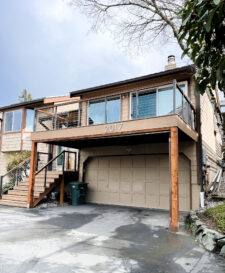
What Local Homes Actually Need From a Deck
Most Palm Harbor properties want a deck that extends living space outdoors — for grilling, entertaining, or just sitting outside in the evening once the heat breaks. A few things come up again and again in this area that don't get the same attention in cooler, drier climates:
- Shade and heat management. Direct Florida sun makes uncovered decking surfaces hot enough to be uncomfortable barefoot for a good part of the day. Orientation, pergolas, or partial roof coverage change how usable a deck actually is.
- Drainage away from the house. Heavy, fast-moving rain is normal here. A deck that doesn't shed water properly — or that traps it against the ledger board or house framing — creates a moisture problem long before the wood itself would otherwise wear out.
- Corrosion resistance. Salt air travels further inland than most homeowners assume, especially with onshore breezes. Standard hardware store fasteners and connectors corrode faster here than they would even 30-40 miles inland.
- Wind performance. Railings, posts, and ledger attachments need to hold up under wind loads that are meaningfully higher than what generic national deck-building guides assume.
- Low-maintenance expectations. Homeowners in this area are often already dealing with UV and salt exposure on their siding, windows, and roofing — the last thing anyone wants is a deck that adds another high-maintenance surface to the list.
Material Choices That Actually Hold Up Here
Decking Surface
The decking surface takes the most direct UV exposure and the most foot traffic, so it's usually the first thing to show wear. There isn't one "correct" material for every project — it depends on budget, maintenance tolerance, and how the deck will be used.
| Material | How It Handles This Climate | Maintenance |
|---|---|---|
| Pressure-treated pine | Affordable and structurally sound when properly sealed; UV and moisture will still degrade the surface faster than composite over time | Needs re-staining/sealing every 1-2 years in this climate |
| Capped composite decking | Strong UV and moisture resistance; color and surface hold up well against sun and salt air | Occasional washing; no staining or sealing |
| PVC decking | Fully synthetic, doesn't absorb moisture, very stable in humidity swings | Lowest maintenance of common options; periodic cleaning |
| Tropical hardwoods (e.g., ipe) | Naturally dense and durable, but sensitive to installation quality and UV graying without upkeep | Requires periodic oiling to maintain color and prevent surface checking |
We don't push homeowners toward one product line. Each of these can be the right choice depending on what the homeowner values — first cost, long-term maintenance, or a specific look. What we won't do is install a decking system in a way that ignores how it actually behaves in coastal humidity and heat, regardless of which material is chosen.
Framing and Substructure
The framing underneath is where corners get cut on decks that don't last, because it's not visible after the project is finished. In this climate, we treat the substructure as seriously as the surface:
- Structural framing rated for exterior/ground-contact use where applicable, sized to the actual span and load — not the minimum code allows
- Stainless steel or heavy hot-dip galvanized fasteners and connectors, not standard zinc-coated hardware that corrodes quickly in salt air
- Proper ledger board flashing where the deck ties into the house, so wind-driven rain doesn't work its way behind the flashing and into the wall assembly
- Post bases and hardware set to avoid standing water or direct wood-to-concrete contact, which accelerates rot in a humid climate
Design Decisions That Matter in This Climate
Orientation and Shade
Where the deck sits relative to the sun's path through the day changes how usable it is for most of the year. A deck that faces full afternoon western sun with no shade structure will often go unused during the hottest stretch of the day. Partial coverage — a pergola, a roof extension, or strategic landscaping — extends the number of hours a homeowner actually gets to use the space.
Drainage and Grading
Decks built low to the ground or over areas with poor drainage need attention to how water moves underneath and away from the structure. Standing water under a deck, especially near the house foundation, is a problem this climate creates faster than drier regions ever would.
Railings and Wind Load
Guardrails and railing posts need connections built to resist real wind loads, not just meet the minimum height requirement. Post attachment to the framing — through-bolted with proper blocking rather than just screwed to the rim joist — is one of the most common weak points we see on decks that weren't built with this area's wind exposure in mind.
Permits, Codes, and What Pinellas County Requires
Custom decks in unincorporated Pinellas County communities like Palm Harbor generally require a building permit, and inspections at key stages of construction. Elevation, flood zone designation, and setback requirements can all affect what's allowed on a given lot, and these vary property to property. We handle the permitting process as part of the project rather than leaving it to the homeowner, because getting it wrong can mean a deck that has to be altered or torn out after the fact.
Wind load requirements built into Florida's building code are also more demanding than in most of the country, which is exactly why framing hardware and fastener choice matter as much as they do here — a deck built to a national baseline standard isn't necessarily built to what this area actually requires.
Our Process for a Palm Harbor Deck Project
- On-site visit. We look at the property, discuss how the space will be used, and assess sun exposure, drainage, and any site-specific constraints.
- Design and material selection. We walk through decking and framing options honestly, including trade-offs in cost, maintenance, and appearance, rather than steering toward whatever is easiest to sell.
- Permitting. We prepare and submit the permit package and coordinate required inspections with the county.
- Construction. Framing first, with corrosion-resistant hardware and proper flashing at the ledger, followed by decking installation and railings.
- Final walkthrough. We go over the finished deck with the homeowner, including basic care specific to the material chosen.
Maintaining a Deck in a Coastal Climate
Even a well-built deck needs some upkeep in this environment. A short seasonal checklist keeps small issues from becoming expensive ones:
- Rinse salt residue and debris off the decking surface periodically, especially after storms
- Check fastener heads and railing connections annually for corrosion or loosening
- Inspect ledger board flashing where the deck meets the house for signs of water intrusion
- Clear leaves and debris from between deck boards and around post bases to prevent trapped moisture
- Re-seal or re-stain wood decking on the schedule appropriate to that material — don't wait until it's visibly worn
- Confirm drainage under and around the deck hasn't changed due to landscaping or soil settling
Why a Crew That Already Works in Palm Harbor Matters
A deck contractor who mainly works inland or in a different climate doesn't necessarily think about salt-air corrosion, hurricane wind loads, or Pinellas County permitting the same way a crew that works this area regularly does. We're already familiar with the local permitting process, the flood zone and setback questions that come up on properties in this part of the county, and the specific way sun, salt, and storms wear on outdoor structures here. That familiarity shows up in the decisions made before a single board is cut — not just in the finished look of the deck.
If you're considering a custom deck for your Palm Harbor property, we're glad to come take a look and talk through what makes sense for your home. Use the form below to request a free, no-pressure estimate — there's no obligation, and it's a straightforward way to get a clear picture of options and costs for your specific space.