 Clearwater Window
 Oldsmar's Climate Puts Real Stress on Exterior Siding
Oldsmar sits on the northeastern edge of Tampa Bay in Pinellas County, which means homes here deal with a specific combination of weather stress that inland Florida towns don't see as often. You've got salt-laden air drifting in off the bay, long stretches of intense UV exposure nearly year-round, sudden wind-driven rain during summer storms, and the real possibility of hurricane-force gusts during the season. Add in the humidity that never really goes away, and you have an environment that tests every seam, fastener, and coating on a home's exterior.
Siding in this part of Pinellas County isn't just a cosmetic layer. It's the first line of defense against moisture intrusion, wood rot in the wall assembly behind it, and wind damage that can turn into a much bigger repair bill. Homeowners in Oldsmar who've dealt with peeling paint, swollen boards, or siding that simply didn't hold up through a couple of storm seasons already know this. The material you choose, and how it's installed, determines whether your home's exterior is an asset or a recurring maintenance headache.
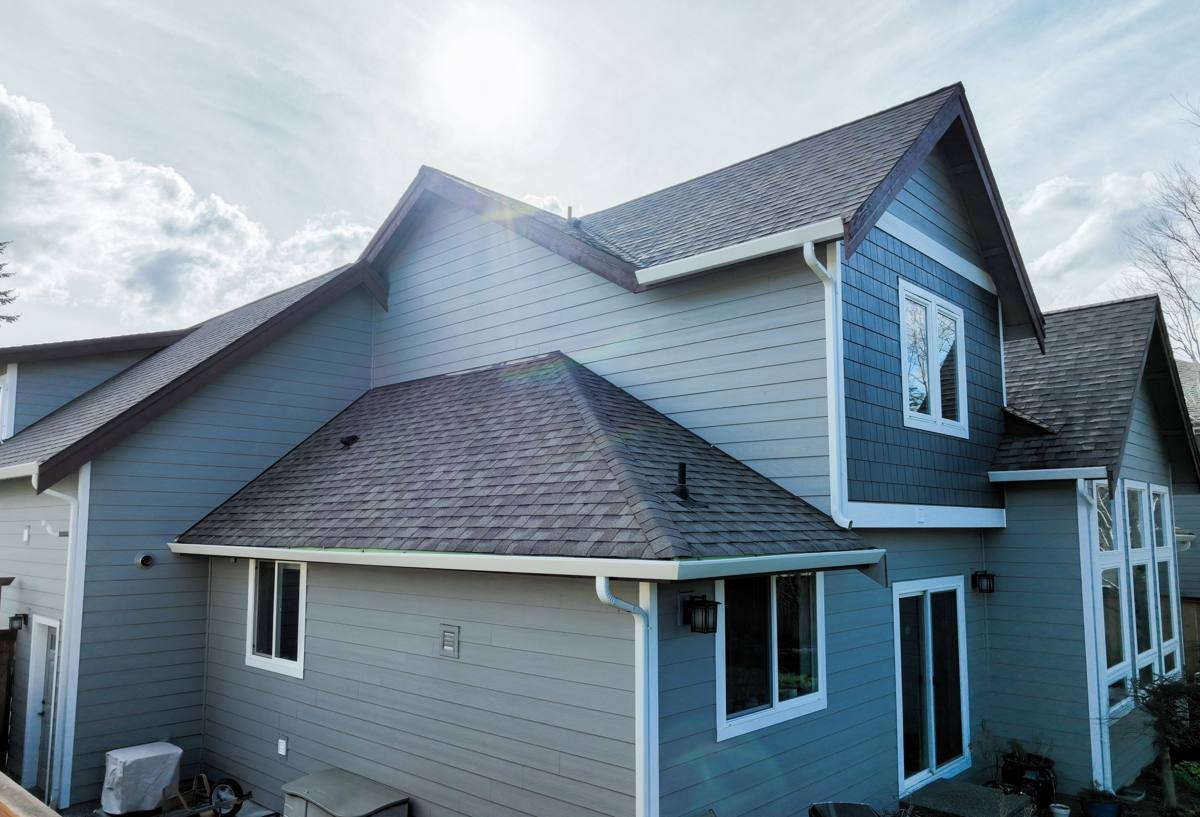
Why We Install Only James Hardie Fiber Cement
We made a decision as a company to install James Hardie fiber cement siding exclusively — not vinyl, not LP SmartSide, not Cemplank or Allura, not primed wood. That's not a marketing angle; it's a standard we hold because of what we've seen these materials do (and not do) in exactly the kind of coastal, high-humidity, storm-exposed environment Oldsmar sits in.
Vinyl softens, warps, and can crack in high heat and impact from wind-blown debris, and it has no real fire resistance. Wood-based composite siding products depend heavily on unbroken paint and edge sealing to keep moisture out — once that seal is compromised, swelling and rot can spread quickly in humid climates. Traditional wood or cedar siding demands ongoing refinishing to survive UV and moisture exposure at all. James Hardie fiber cement is non-combustible, engineered specifically for high-humidity climates in its HZ5 product line, and finished at the factory with ColorPlus Technology, a baked-on finish that resists fading and holds up to UV far longer than field-applied paint.
None of this means other products are worthless — vinyl and wood siding have legitimate uses in the right climate and budget. But for Oldsmar's combination of salt air, sun, and storm exposure, we don't think they hold up well enough to put our name behind the installation. James Hardie does.
James Hardie Product Lines and What Fits an Oldsmar Home
James Hardie makes several siding profiles, and the right one depends on your home's architecture and the look you're going for. All of them are available in the HZ5 formulation engineered for Florida's humidity and moisture exposure.
- HardiePlank lap siding — the most common choice, available in multiple textures and exposure widths, works well on the ranch and traditional-style homes common throughout Pinellas County.
- HardiePanel vertical siding — often used as an accent on gables, porches, or modern-style facades.
- HardieShingle siding — a staggered or straight-edge shingle look for homes wanting more architectural texture.
- HardieTrim boards — matching trim for corners, fascia, and window/door surrounds, so the whole exterior system is consistent and rated for the same climate.
We'll walk through which profile and exposure width makes sense for your home's style during the estimate — there's no one-size answer, and a home near the bay with more direct salt exposure may warrant different detailing at joints and trim than a home further inland in Oldsmar.
How Siding Options Compare in a Coastal Pinellas Climate
| Material | Moisture/Humidity Behavior | Wind & Impact Resistance | Maintenance | Typical Lifespan |
|---|---|---|---|---|
| James Hardie fiber cement (HZ5) | Engineered for high-humidity climates; resists swelling and rot | Rated for high-wind installations when installed to spec | Occasional wash; factory finish resists fading | 30+ years, often longer |
| Vinyl siding | Doesn't absorb moisture, but seams can allow water behind panels | Can crack or blow off in high wind, softens in heat | Low, but fades and becomes brittle over time | 15-25 years |
| LP SmartSide / wood composite | Vulnerable to swelling if edges or seams aren't fully sealed | Reasonable if intact, but edge damage compounds over time | Repainting and seam inspection needed periodically | 15-30 years, install-dependent |
| Cedar / primed wood | Absorbs moisture readily; needs consistent sealing | Moderate; more prone to storm damage over time | High — regular refinishing required | Varies widely with upkeep |
The pattern that matters most for a home in Oldsmar is moisture behavior. This is a climate where humidity and rain exposure are constants, not occasional events, so a material's tolerance for that — and its ability to shed water at seams and joints — matters more here than it might in a drier region.
What a Correct James Hardie Installation Actually Involves
James Hardie siding performs the way it's supposed to only when it's installed to the manufacturer's specifications — and this is where a lot of the real difference between a good siding job and a problem job shows up. Fiber cement is unforgiving of shortcuts in a way that's not always visible until years later.
A correct installation includes proper fastener placement and spacing (over-driven or under-driven nails are a common failure point), correct clearance between the siding and grade, roof lines, and other flat surfaces to prevent wicking moisture, properly flashed and sealed joints and butt seams, and factory-caulked or manufacturer-approved sealant at penetrations like window and door trim. In a high-wind area, fastening pattern and schedule also directly affects the wind rating the assembly can actually achieve — installing it "close enough" can mean the siding doesn't perform the way it's rated to in a real storm.
We also pay attention to the house wrap and moisture barrier underneath, since siding is only one part of a home's water management system. A new layer of Hardie board over a compromised or improperly lapped weather barrier will still let problems develop behind the wall.
Common Mistakes We See From Prior Installs
- Nails driven flush against or through the face of the board instead of at the specified depth
- Insufficient clearance where siding meets roofing, decks, or grade
- Butt joints that aren't flashed or sealed correctly, creating a direct path for water
- Caulk used in place of proper flashing at trim and window returns
- Painting over factory ColorPlus finish incorrectly, which can void warranty coverage
Our Process, From Estimate to Finished Exterior
- Free on-site estimate. We look at your home's current siding condition, wall assembly, and any problem areas — moisture staining, soft spots, or prior repairs — and talk through which Hardie profile fits your home and budget.
- Detailed proposal. You get a clear scope of work: product line, color, trim details, and what's included, so there are no surprises once work starts.
- Prep and removal. Old siding comes off, and we inspect the sheathing and weather barrier underneath for damage that needs to be addressed before new siding goes on — this step gets skipped by some crews, and it shouldn't.
- Installation to manufacturer spec. Correct fastening, clearances, flashing, and sealing at every joint and penetration, following James Hardie's published installation guidelines for HZ5 climate zones.
- Final walkthrough. We go over the finished work with you before considering the job done.
Maintenance: What Oldsmar Homeowners Should Actually Expect
One of the real advantages of James Hardie's factory-applied ColorPlus finish is how little ongoing maintenance it needs compared to field-painted materials. That said, "low maintenance" isn't "no maintenance," especially this close to the bay.
- Rinse siding periodically to remove salt residue and airborne grime, particularly on sides of the home facing open water or prevailing wind
- Inspect caulking at trim, window, and door junctions annually and re-seal if it's cracking or pulling away
- Keep sprinklers and irrigation from spraying directly onto siding long-term, which can accelerate wear at the base
- After major storms, do a quick visual check for impact damage or loosened panels near roof edges and corners
- Trim back vegetation that holds moisture against the siding surface
Why Local Installation Experience in the Area Matters
Fiber cement installation isn't identical everywhere in the country, and it shouldn't be treated that way. A crew that regularly works Oldsmar and the broader Clearwater and Pinellas County area already understands how bay-facing exposure, prevailing wind patterns, and Florida's building code requirements for wind-borne debris zones factor into a proper install. That's different from a crew that installs Hardie occasionally alongside several other siding products and treats every job the same regardless of climate.
It also means we're not guessing at permitting requirements or inspection expectations for this part of Pinellas County — that's part of doing this work here consistently, not a one-off.
Warranty and Long-Term Value
James Hardie backs its siding products with a substantial limited warranty, and the ColorPlus factory finish carries its own separate finish warranty — both are transferable to a new owner if you sell, which is worth mentioning if you're thinking about resale value down the line. That warranty coverage is part of why correct installation matters so much: workmanship issues can affect what's covered, which is one more reason to have the work done to spec the first time rather than dealing with a redo.
Between the non-combustible material, the engineered HZ5 formulation for humid climates, the factory finish, and a warranty structure built around long-term ownership, James Hardie is the system we're willing to put our name behind for homes in this climate — and it's the only one we install.
If your Oldsmar home's siding is showing its age, or you're planning ahead for storm season, we're happy to take a look and give you a straightforward, no-pressure estimate — just fill out the form below.