 Clearwater Window
 Decking Built for How Oldsmar Actually Weathers
Oldsmar sits at the north end of Tampa Bay, close enough to open water that salt air is a constant, even on properties that aren't waterfront. Add in the sun exposure Pinellas County gets nearly year-round, the summer storm pattern that brings wind-driven rain almost daily in July and August, and the occasional hurricane-force wind event, and you've got a climate that is genuinely hard on outdoor structures. A deck that would hold up fine in a drier, cooler part of the country can fail early here — not because the homeowner did anything wrong, but because it wasn't built with this specific combination of stressors in mind.
Composite decking exists largely to solve the parts of that problem that wood struggles with: rot, splintering, insect damage, and the endless cycle of sanding and refinishing. But composite isn't automatically immune to Florida conditions. The board itself, the fasteners, the substructure, and the way the whole system handles moisture and heat all matter. A correctly built composite deck in Oldsmar looks and performs very differently five years out than one that was installed without those details addressed.
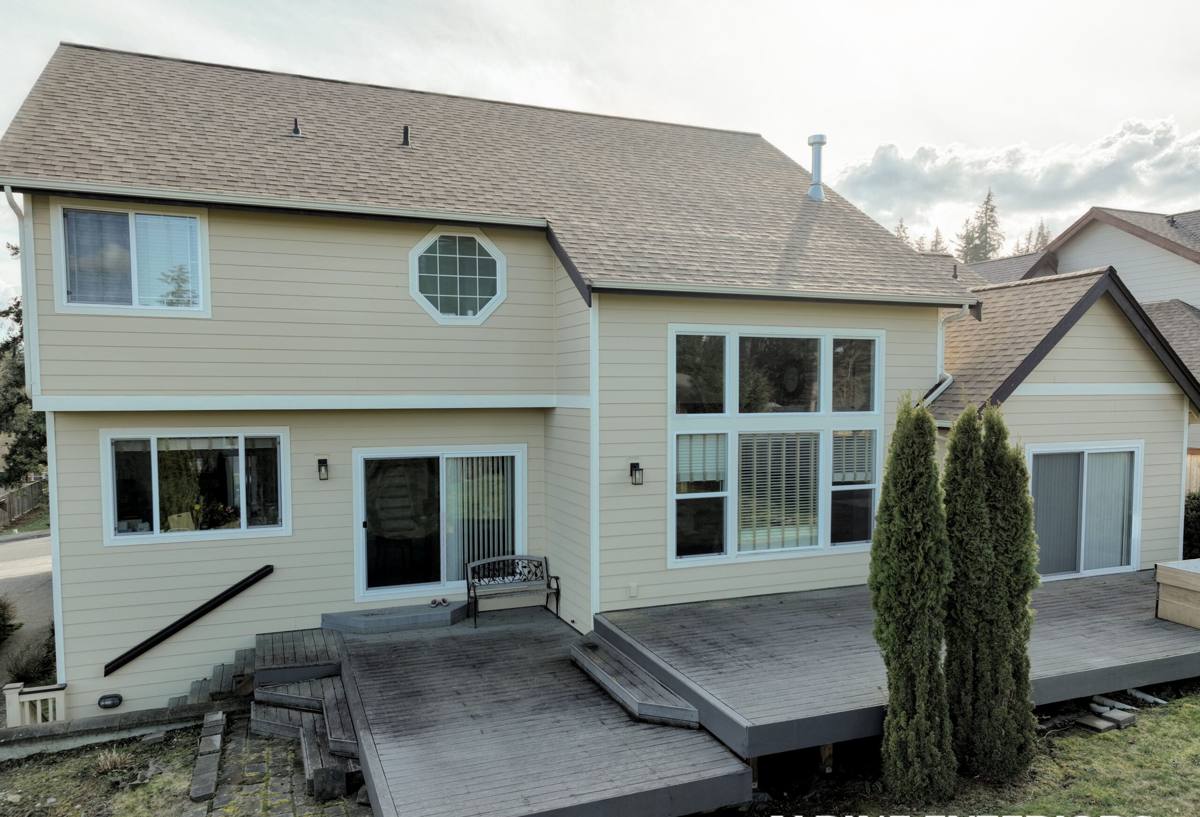
What UV, Heat, and Salt Air Actually Do to a Deck
It helps to understand the specific mechanisms at work, because they drive most of the decisions in a proper install.
UV and Heat
Pinellas County gets intense, near-daily sun exposure for most of the year. UV breaks down surface finishes and can cause lower-grade composite boards to fade or chalk over time. Heat also causes boards to expand and contract more aggressively than they would in a milder climate — gaps and fastening patterns need to account for that movement, or you end up with buckling, warping, or squeezed-together boards that trap moisture.
Wind-Driven Rain and Humidity
Frequent summer storms don't just add water — they drive it sideways, into gaps, ledger connections, and fastener points that a purely vertical rain wouldn't reach. Combined with Florida's humidity, any part of the deck system that can't shed or dry out quickly becomes a spot for moisture to sit, which is where rot in substructure lumber and corrosion in hardware usually start.
Salt Air
Even a few miles inland from Tampa Bay, salt-laden air accelerates corrosion in fasteners, brackets, and any exposed metal. Over years, standard hardware can weaken at the exact points holding the deck together — ledger bolts, joist hangers, and structural screws — long before the composite decking itself shows wear.
High Wind
Hurricane-force winds put uplift and lateral load on a deck structure, particularly at the ledger board connection to the house and at railing posts. A deck that isn't fastened and braced for that load is a structural liability, not just a cosmetic one.
Our Composite Decking Process
The order of operations matters as much as the materials. Here's how a correctly built composite deck comes together for an Oldsmar property:
- Site assessment and layout. We look at drainage patterns around the house, existing grade, sun exposure, and how the deck will tie into the structure before anything is designed.
- Ledger and structural connection. Where the deck attaches to the house is the single most important structural point on the project, especially given local wind loads. This gets properly flashed to keep water out of the house structure, not just bolted on.
- Substructure framing. Joists, beams, and posts are sized and spaced for the actual load and span, not just to minimum code — and fastened with corrosion-resistant hardware appropriate for a salt-air environment.
- Ventilation and drainage detailing. Gaps, slope, and airflow underneath the deck are planned so water moves off and out rather than pooling against framing.
- Composite board installation. Boards are laid with manufacturer-specified gapping to allow for thermal expansion, using a fastening system matched to the board profile — hidden clips for grooved-edge boards, or approved face-screws where required.
- Railing, stairs, and trim. Structural railing posts are through-bolted, not just screwed to the rim joist, which matters a great deal when wind loads are part of the picture.
- Final walkthrough. We check board spacing, fastener seating, and that every structural connection is tight before calling the job done.
Choosing a Composite Board for This Climate
Not all composite decking is built the same, and in a high-UV, high-humidity, salt-air environment, the differences show up faster than they would elsewhere. The table below compares the general categories of composite boards you'll come across.
| Board Type | How It Handles UV/Heat | Moisture Behavior | Typical Maintenance |
|---|---|---|---|
| Capped composite (full wrap) | Cap layer resists fading and chalking well | Shell resists moisture absorption into the core | Periodic wash-down; no sealing or staining |
| Uncapped or partially capped composite | More prone to surface fading and chalking over time | Exposed core surfaces can absorb more moisture | May need more frequent cleaning to keep appearance |
| PVC/synthetic decking | Very stable in heat and UV; some products run hotter underfoot | Essentially moisture-proof | Low; occasional cleaning |
| Pressure-treated wood (for comparison) | Fades and grays without regular refinishing | Absorbs and releases moisture, prone to rot over time | Annual sealing/staining recommended |
For Oldsmar's conditions, we generally steer homeowners toward fully capped composite or PVC decking. Uncapped composite can still be a reasonable value choice for a budget-conscious project, but it's an honest trade-off — homeowners should know upfront that it will show more wear from sun and humidity over the years than a capped product.
The Substructure Is Where Most Deck Failures Actually Start
Homeowners tend to focus on the decking boards themselves, but the framing underneath is what determines how long the whole structure lasts — and it's largely invisible once the job is done. In a salt-air environment near Tampa Bay, we treat the substructure with the same seriousness as the visible decking:
- Corrosion-resistant, coated or stainless structural screws and hangers at every connection
- Properly flashed ledger boards to keep wind-driven rain from reaching the house framing
- Joist spacing and beam sizing matched to the actual span and load, not just code minimums
- Post bases set to keep wood framing off standing water and away from direct ground contact
- Railing posts through-bolted for wind resistance, not just surface-screwed
A composite deck with a poorly built substructure will still fail — it just fails underneath, out of sight, until a board starts to feel spongy or a railing starts to move.
Drainage and Ground-Level Considerations
Many Oldsmar properties near the bay and its tributaries deal with higher water tables and heavier seasonal rainfall than inland parts of the county. If a deck sits low to grade, or drainage around the foundation isn't accounted for, water can end up pooling under or near the structure after storms. Part of a proper install is making sure the deck's height, slope, and surrounding grade let water move away rather than sit and soak framing components or erode footings over time. On lower properties, this sometimes means adjusting post footing depth or deck height beyond what a minimum-code build would call for.
Permitting and Local Considerations
Deck projects in Pinellas County typically require a building permit, and structural elements — footings, framing, railings — need to meet current wind load and building code requirements for the area. If your property is in an HOA, there may be additional approval steps for materials or appearance. We handle the permitting and inspection process as part of the job, so homeowners aren't left figuring out code requirements on their own.
Maintaining a Composite Deck in a Salt-Air Climate
One of the main reasons homeowners choose composite over wood is lower maintenance — but "low maintenance" doesn't mean "no maintenance," especially this close to the bay. A simple seasonal routine goes a long way:
- Rinse or wash the deck surface periodically to clear salt residue, pollen, and organic buildup
- Sweep debris out of board gaps so airflow underneath isn't blocked
- Check railing posts and stair connections annually for movement, especially after storm season
- Keep gutters and downspouts near the deck clear so runoff isn't dumping onto or under the structure
- Inspect fastener heads and hardware periodically for early signs of corrosion
Why Hire a Crew That Already Works in Oldsmar
Building a deck that holds up here isn't about following a generic national spec — it's about knowing which details actually matter for this stretch of Pinellas County. That means understanding local wind load requirements, knowing how salt air behaves on hardware over a five- or ten-year timeline, and building drainage and substructure details around the rain patterns this area actually sees. A crew that works Oldsmar regularly has already seen what fails and why, and builds around it from the start instead of learning the hard way on your project.
Questions Worth Asking Before You Hire
- Is the ledger connection properly flashed to keep water out of the house structure?
- What grade of fastener and hardware is being used, and is it rated for coastal/salt-air exposure?
- Is the composite board fully capped, and what does the manufacturer warranty actually cover?
- How is the deck framed and footed to handle local wind load requirements?
- Will the project be permitted and inspected through Pinellas County or the appropriate local authority?
- How is drainage and grading around the deck being handled?
If you're weighing composite decking for a property in Oldsmar, we're happy to walk the site, talk through board options and what they cost over time, and give you a straightforward, no-pressure estimate. Fill out the form below and we'll follow up to schedule a visit.