 Clearwater Window
 Asphalt Shingle Roofing Built for Oldsmar's Climate
Oldsmar sits along the northern edge of Pinellas County, tucked near the top of Tampa Bay. It doesn't get the direct beach exposure of the barrier islands, but it still sits inside the same weather system that batters every roof in this part of Florida: hurricane-force wind events during the season, wind-driven rain that hits roof planes sideways instead of straight down, intense UV exposure nearly year-round, and salt-laden air moving in off the bay that accelerates corrosion on anything metal. A shingle roof installed without those specific conditions in mind will show its age here faster than most homeowners expect.
Asphalt shingle roofing remains one of the most practical choices for Oldsmar homes when it's specified and installed correctly — the right shingle rating, the right underlayment, and flashing details that actually hold up to wind uplift and driving rain. Where roofs fail early in this area, it's rarely the shingle itself. It's almost always a shortcut somewhere in the system underneath it.
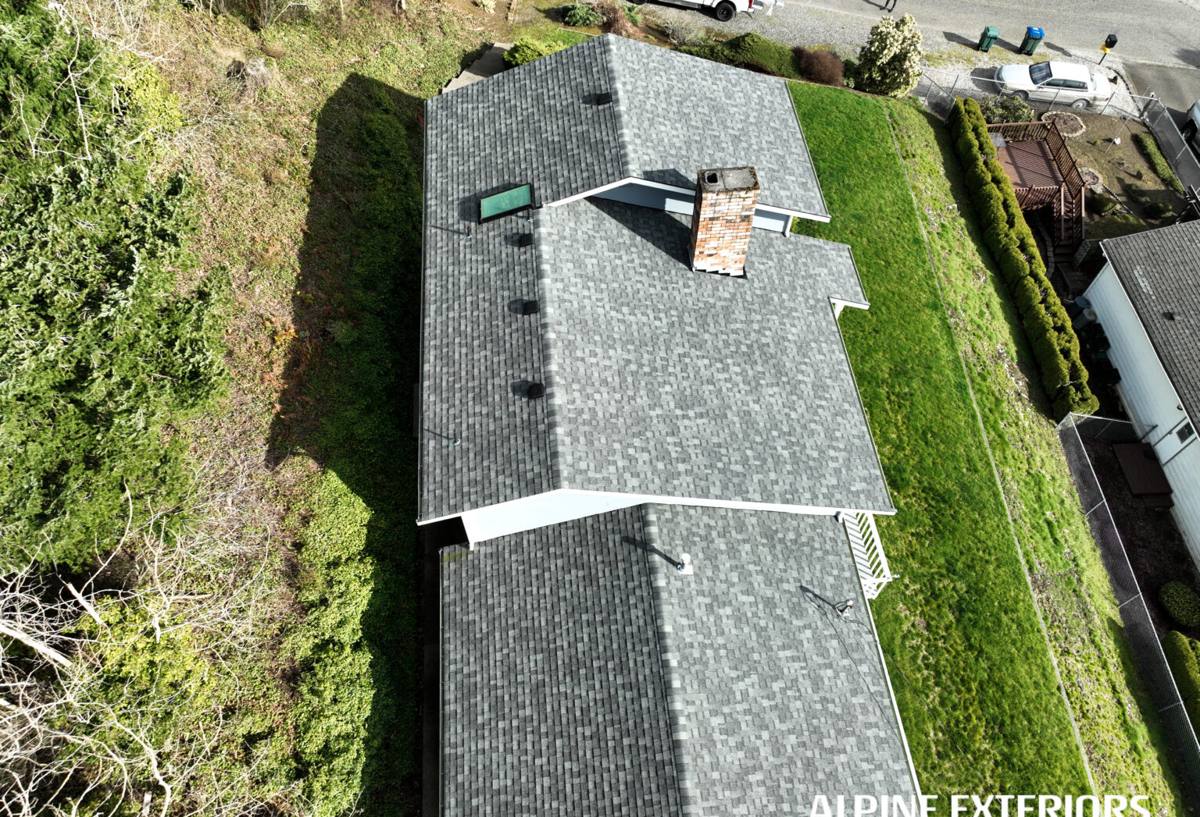
What This Climate Does to a Shingle Roof
Wind Uplift and Storm Exposure
Every hurricane season brings the risk of sustained high winds and gusts that test a roof's weakest point, not its average condition. Shingles rated for a given wind speed only perform to that rating if they're fastened correctly, with the right nailing pattern and the right number of fasteners per shingle. Roofs where installers cut corners on fastening tend to lose shingles at wind speeds well below what the product is actually rated for.
Wind-Driven Rain
Rain in a storm doesn't fall straight down — it gets pushed sideways into valleys, around vent pipes, and up under shingle edges and flashing. That's a very different, more aggressive moisture load than a simple rainfall total suggests, and it's exactly where underlayment quality and flashing detail either hold or fail.
UV Exposure and Material Fatigue
Florida sun is intense for most of the year, and UV breaks down asphalt shingle granules and the asphalt binder beneath them faster here than in cooler, cloudier climates. Over time that shows up as granule loss, brittleness, and a shortened service life relative to the shingle's rated years — especially on roof planes with full southern or western sun exposure.
Salt Air and Metal Components
Oldsmar's proximity to Tampa Bay means salt-laden air reaches roofs here even without direct waterfront exposure. Flashing, fasteners, and any exposed metal components that aren't corrosion-rated will pit and weaken faster than they would further inland, which is why material selection for those details matters as much as the shingle choice itself.
Shingle Options and How They Actually Perform Here
Not every asphalt shingle product is built the same, and the differences matter more in this climate than in a milder one. Here's how the common options compare for a home in this area.
| Shingle Type | Wind Rating (Installed Correctly) | UV/Granule Durability | Typical Lifespan Here |
|---|---|---|---|
| Standard three-tab | Lower end of the range; fewer nailing points per shingle | Thinner profile wears faster under intense sun | 12-18 years |
| Architectural (laminate) | Higher wind ratings available with proper fastening | Thicker, multi-layer construction holds up better | 18-25 years |
| Impact-resistant architectural | Highest wind and impact ratings; often insurance-discount eligible | Comparable to standard architectural, with added impact layer | 20-25+ years |
We'll walk through which option makes sense for your roof's pitch, sun exposure, and budget, along with what it means for wind rating compliance and, where relevant, potential insurance premium credits. A steep, fully exposed roof plane and a lower-slope, partly shaded one don't always call for the same product.
What a Correct Installation Actually Includes
The shingle brand on the wrapper matters less than what happens underneath it. On every roof, that means:
- Underlayment rated for sustained wind-driven rain exposure, not just a bare minimum-code product
- Nailing pattern and fastener count matched to the shingle's actual wind rating — not a generic pattern applied to every job
- Properly lapped, sealed flashing at every valley, chimney, vent pipe, and roof-to-wall transition
- Ice-and-water shield or equivalent self-adhered membrane at valleys and eaves where water concentrates
- Corrosion-resistant fasteners and flashing metals suited to a salt-air environment
- Attic and roof deck ventilation that lets built-up heat and moisture escape instead of cooking the shingles from underneath
- Drip edge and starter strip installed correctly at eaves and rakes, not skipped to save time
None of these details add much to the overall cost of a roof compared to the shingles themselves, but skipping any one of them is how a twenty-year roof turns into a ten- or twelve-year roof in this climate.
Signs an Oldsmar Roof Needs a Closer Look
- Granules collecting in gutters or at the base of downspouts
- Curling, cupping, or cracked shingles, especially after a storm
- Missing or lifted shingles anywhere on the roof
- Water staining on interior ceilings near exterior walls or around chimneys and skylights
- Daylight visible through the roof deck from inside the attic
- Soft spots or noticeable sagging when the roof is walked
- Flashing that looks rusted, lifted, or missing sealant
- Visible wear concentrated on the sun-exposed south or west-facing slopes
Any of these is worth a professional look before the next storm season. Caught early, most issues are a straightforward repair. Left alone, they tend to turn into deck damage and a full tear-off.
Our Process for an Oldsmar Roof
- Inspection and assessment — we look at the existing shingle condition, deck condition, ventilation, and flashing details before recommending anything.
- Honest scope — we tell you plainly whether the roof needs a repair, a partial re-cover, or a full replacement, and why.
- Material selection — we help you weigh standard architectural shingles against impact-rated options based on your budget, roof exposure, and any insurance considerations.
- Correct installation — underlayment, fastening pattern, flashing, and ventilation done to the standard the climate actually requires, not the code minimum.
- Final walkthrough — we go over what was done and what to watch for going forward, in plain language.
Repair or Replace? How We Help You Decide
Not every roofing problem in Oldsmar calls for a full replacement, and we don't default to recommending one. We look at the shingle's age relative to its rated lifespan, how much of the roof surface is affected, whether the deck underneath shows moisture damage, and how many repairs the roof has already had. A localized leak on an otherwise sound roof is usually a straightforward repair. A roof approaching the end of its service life with wind or storm damage spread across multiple slopes, or a deck with soft spots from long-term moisture intrusion, is usually more honestly addressed with a replacement rather than another patch. We'll explain what we find and give you the real trade-offs rather than steering you toward whichever option is more profitable for us.
Why a Crew That Already Works Oldsmar Matters
A crew that installs and repairs roofs across this part of Pinellas County through hurricane seasons, dry spells, and everything in between sees how wind, UV, and salt air actually behave on real houses over years — not just how a product performs on a spec sheet. That shows up in practical decisions: which roof orientations in Oldsmar take the hardest UV load and need extra attention, how much wind rating actually makes sense for a given home's exposure, and which flashing and fastening details are worth the extra time on install day so you're not dealing with a callback after the next named storm. It also means someone who understands current wind-mitigation and building code requirements for this area, rather than applying a one-size-fits-all approach borrowed from a different climate.
Beyond the Roof: Windows and the Rest of Your Exterior
Roofing is one piece of protecting a home in this climate, and the same wind, UV, and salt-air exposure that wears on a roof wears on windows, seals, and trim too. As a windows contractor that also handles roofing for Oldsmar homeowners, we look at the whole exterior picture — if a roof inspection turns up related issues at a window head flashing or fascia line, we can flag it and address it as part of the same conversation instead of sending you to track down a second contractor.
Get a Free, No-Pressure Estimate
If your Oldsmar roof needs an inspection, a repair, or you're weighing a full replacement before the next storm season, we're glad to take a look and give you a straightforward, honest read on what it actually needs. Reach out using the form below to schedule a free estimate — no pressure, no upsell script.