 Clearwater Window
 Siding Built for Safety Harbor's Exposure, Not Just Its Curb Appeal
Safety Harbor sits along Old Tampa Bay in Pinellas County, which means homes here take on a specific combination of stresses that inland Florida properties simply don't deal with. Salt-laden air drifts in off the water, afternoon storms roll through with wind-driven rain that hits siding sideways rather than straight down, and the sun is intense and constant for most of the year. Add hurricane-force wind events to that list and you have a climate that is genuinely hard on exterior building materials. Siding here isn't just a cosmetic choice — it's the first line of defense for the wall assembly behind it.
When we talk about siding installation for Safety Harbor homes, we're talking about a system that has to perform under all of those conditions at once, year after year, without babysitting. That's the lens we use for every recommendation on this page.
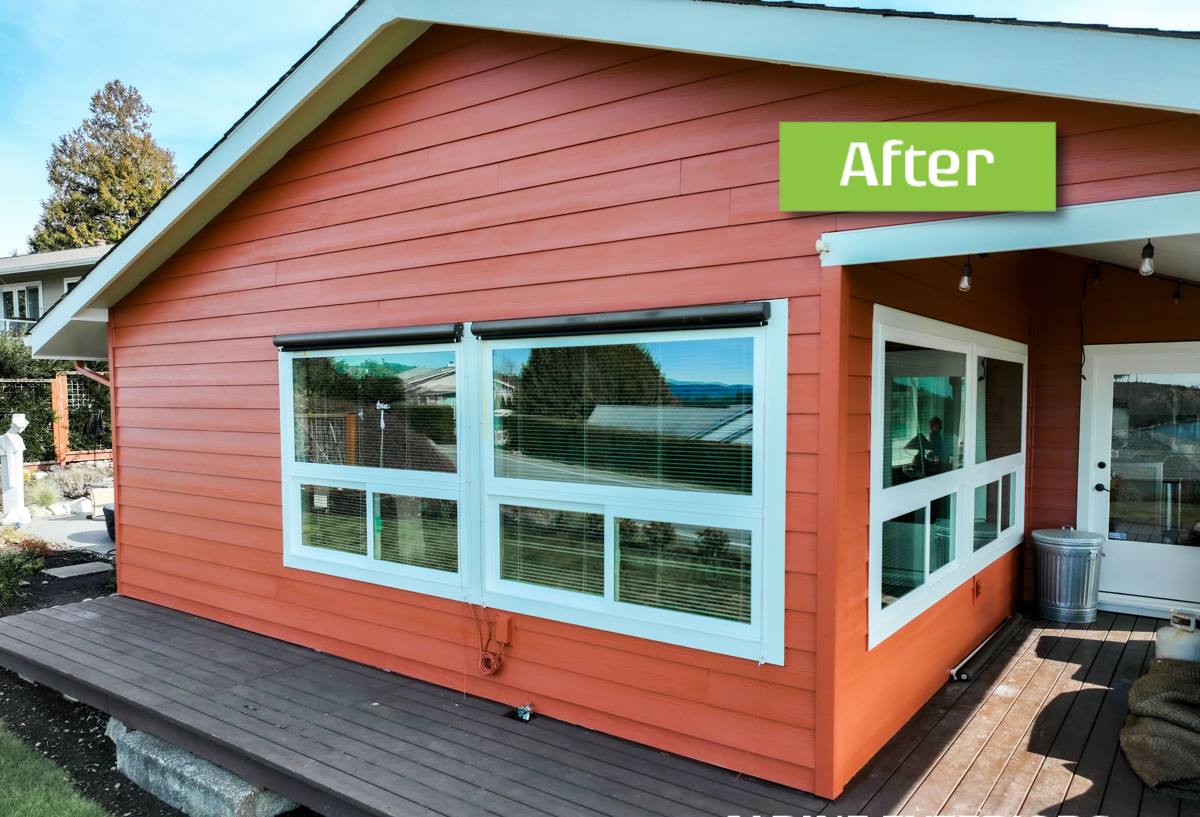
What Safety Harbor's Climate Actually Does to Siding
Salt Air and Coastal Moisture
Even a few miles from open water, airborne salt settles on exterior surfaces and accelerates corrosion of fasteners and metal components, while also drawing moisture into porous or poorly sealed materials. Siding products that aren't engineered for coastal-adjacent exposure tend to show it first at seams, fastener heads, and butt joints — the places where water and salt find a way in.
UV Load
Central Florida gets an enormous amount of direct sun exposure across the year. Painted and coated surfaces take a real beating from UV — color fades unevenly depending on sun exposure by elevation, and some coatings chalk or become brittle over time. A south- or west-facing wall on a Safety Harbor home will visibly age faster than a shaded north wall if the siding's finish isn't built to hold up.
Wind-Driven Rain
Florida storms don't just drop rain — they push it horizontally into wall assemblies, testing every lap, joint, and penetration in the siding system. A siding job that looks fine on a calm day can still be letting water behind it during a heavy squall if the flashing and overlap details weren't done correctly.
Hurricane Wind Loads
Pinellas County is squarely in a wind-borne debris and high-velocity wind zone. Siding has to be rated and fastened to hold up under sustained high winds and gusts, not just look attached under normal conditions. This is as much about installation technique — fastener spacing, nailing pattern, edge clearance — as it is about the product itself.
Why We Only Install James Hardie Fiber Cement Siding
We made a deliberate decision to install only James Hardie fiber cement siding, and we don't install vinyl, LP SmartSide, Cemplank, Allura, or primed wood siding like spruce or cedar. That's not a marketing position — it's a standard we hold because of what we've seen these products do, and not do, in exactly the kind of climate Safety Harbor sits in.
Vinyl siding is affordable and easy to install, but it's a plastic product that softens and can distort under intense, sustained heat, and it has real limits in high-wind installations unless everything from panel gauge to fastening is done precisely. Engineered wood products like LP SmartSide use wood strand cores that, however well-treated, remain wood — meaning moisture intrusion at a cut edge, seam, or fastener point can lead to swelling or deterioration over time, especially in a humid coastal climate. Primed spruce or cedar siding requires the homeowner to stay on top of repainting and sealing on a tight schedule, because raw wood behind a coating is only as protected as that coating's condition.
James Hardie fiber cement is a cement, sand, and cellulose fiber composite. It doesn't burn, it doesn't attract termites, and it doesn't swell or rot the way wood-based products can. Hardie also engineers specific product lines (HZ5) for higher-humidity, higher-moisture climate zones like ours, and its ColorPlus factory-applied finish is baked on under controlled conditions rather than field-painted, which gives it materially better fade and wear resistance than site-applied paint. It's a heavier, denser material to install correctly, which is exactly why installation quality matters so much — but done right, it's the product we're comfortable standing behind on a Safety Harbor home.
What Correct Siding Installation Actually Involves
Fiber cement siding is only as good as its installation. The material can be excellent and still fail early if the crew cuts corners on the details that don't show up in a drive-by look at the finished wall.
- Water-resistive barrier: A continuous, properly lapped weather barrier goes on before any siding, managing any moisture that gets past the cladding.
- Flashing at every penetration: Windows, doors, hose bibs, vents, and any other wall penetration need proper flashing so wind-driven rain can't track behind the siding.
- Correct fastener type, spacing, and placement: Hardie specifies fastener size, type, and spacing for a reason — under-fastening is one of the most common causes of blow-off in high wind events.
- Proper clearances: Siding needs the right gap from roofing, decking, and grade to avoid trapping moisture against the bottom edge of the material.
- Caulking and joint treatment per manufacturer spec: Butt joints and trim intersections need to be treated correctly, not just caulked over as an afterthought.
- Factory-finish handling: Cut edges on ColorPlus product need to be sealed with the correct touch-up product to maintain the factory finish's protection.
Skipping any one of these doesn't necessarily show up on day one — it shows up two or three years later as staining, a loose panel, or moisture damage behind the wall, usually right after the next serious storm.
Our Installation Process for Safety Harbor Homes
1. On-Site Assessment
We walk the exterior, look at the current siding or substrate condition, check for existing moisture or rot issues, and note anything specific to the home's exposure — sun-facing walls, low-lying areas prone to wind-driven rain, proximity to the water.
2. Product and Line Selection
We help you choose the right Hardie product line, profile (lap, shingle, panel), and color for the home, factoring in the coastal-adjacent exposure Safety Harbor properties deal with.
3. Tear-Off and Substrate Check
Old siding comes off and we inspect the sheathing underneath for any moisture damage that needs to be addressed before new material goes on — covering a compromised substrate just hides a problem instead of solving it.
4. Weather Barrier and Flashing
We install the water-resistive barrier and flash every penetration before a single piece of siding goes up.
5. Siding Installation to Manufacturer Spec
Panels or lap siding go on following James Hardie's fastening schedule and clearance requirements, matched to the wind zone the home sits in.
6. Trim, Caulk, and Touch-Up
Trim work, joint treatment, and factory-finish touch-up on cut edges close out the job so the finished wall is sealed and uniform.
7. Final Walkthrough
We walk the finished exterior with you before considering the job done.
Why Hiring a Crew That Already Works in Safety Harbor Matters
Siding installation isn't a one-size-fits-all trade. A crew that regularly works Pinellas County homes already understands the local wind zone requirements, has a feel for which walls on a given lot orientation take the worst UV and rain exposure, and isn't guessing at flashing details for the first time on your house. That familiarity shows up in fewer callbacks and a tighter, more consistent install — not because the manufacturer's instructions change by zip code, but because experience with the local building department, permitting expectations, and typical home construction in the area removes friction and guesswork from the job.
Comparing Siding Options for Coastal Pinellas County Exposure
| Factor | James Hardie Fiber Cement | Vinyl | Engineered Wood (e.g. LP SmartSide) | Primed Wood (Spruce/Cedar) |
|---|---|---|---|---|
| Combustibility | Non-combustible | Combustible (melts/softens under heat) | Combustible | Combustible |
| Moisture/rot risk | Low — cement-based, engineered for humid climates | Low material risk, but can trap moisture behind panels | Moderate — wood core can swell at damaged edges | Higher — raw wood relies on coating integrity |
| High-wind performance | Strong when installed to spec | Variable — sensitive to gauge and fastening | Good when installed correctly | Depends on fastening and board condition |
| UV/color fade resistance | Strong — factory-baked ColorPlus finish | Moderate — can fade and become brittle | Field-painted finish fades over time | Requires regular repainting |
| Maintenance burden | Low | Low | Moderate | High |
Signs Your Safety Harbor Home May Need New Siding
- Visible cracking, warping, or buckling panels, especially on sun- or storm-exposed walls
- Soft spots or discoloration that suggest moisture has gotten behind the siding
- Paint or finish that's chalking, peeling, or fading unevenly by wall orientation
- Gaps opening up at seams, corners, or trim after storm seasons
- Rising energy bills that may point to a compromised building envelope
- Siding that's simply reaching or past its expected service life for the material type
If you're seeing any of these, it's worth having the siding and the substrate behind it evaluated before the next storm season rather than after.
A Straightforward Next Step
If your Safety Harbor home's siding is showing its age, or you're planning ahead of the next storm season, we're happy to come take a look and give you a straightforward, no-pressure estimate for James Hardie fiber cement siding installation. Fill out the form below to get started.