 Clearwater Window
 New-Construction vs. Replacement Windows: Why the Distinction Matters Here
"New-construction windows" isn't just a phrase for the process of putting new glass in a new house. It refers to a specific window design — one with a nailing fin around the perimeter that gets fastened directly to the framing and integrated with the house wrap or building paper before stucco, siding, or trim goes on. That's different from a replacement or "insert" window, which is built to slide into an existing frame after the old sash is removed. On Clearwater Beach, we see new-construction window scopes on ground-up rebuilds, additions, and full-gut renovations where the exterior wall is opened to the studs — all common on this barrier island as older homes get replaced, elevated, or brought up to current code.
The distinction matters because a new-construction window is only as good as the wall assembly it's tied into. Get the flashing sequence wrong at this stage and you've built a leak path into the structure itself, one that won't show up until the first serious wind-driven rain event — and by then it's hidden behind finished walls.
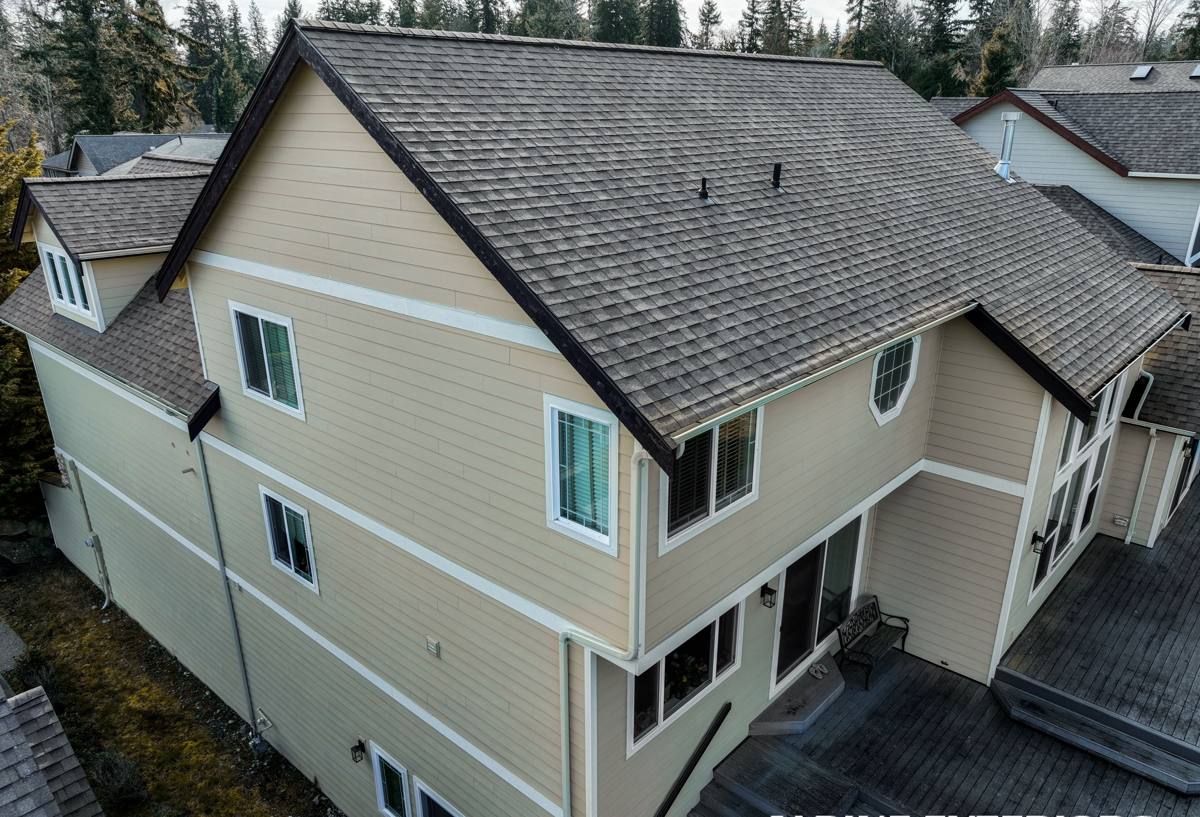
What Clearwater Beach's Climate Actually Demands From a Window
Clearwater Beach sits directly on the Gulf, which means every window on a barrier-island home is dealing with a harsher set of conditions than a house even a few miles inland in Pinellas County. Four things drive our decisions on every new-construction job here:
- Hurricane-force wind: sustained high winds and gusts put real structural load on glass and frames, and that load has to be engineered for, not guessed at.
- Wind-driven rain: water doesn't just fall here, it's pushed sideways and upward into every joint and seam during storms.
- Intense, near-constant UV: Florida sun breaks down cheap vinyl, weatherstripping, and sealants faster than in most of the country, even outside of storm season.
- Salt air: the corrosive effect of ocean-adjacent air on fasteners, hardware, and unprotected metal is constant, not occasional, on Clearwater Beach specifically.
None of these are unique in isolation, but a Gulf-front property in Pinellas County deals with all four at once, continuously. A window package that performs fine in a neighborhood a few miles inland can underperform noticeably closer to the water.
Getting the Engineering Right Before You Order
Design pressure and wind exposure
Every window has a Design Pressure (DP) rating — a measure of how much wind load it's engineered to resist. That rating has to match the house's wind exposure category, its height, and its distance from the coast, which your architect or engineer's window schedule should already reflect. On Clearwater Beach, that schedule typically calls for higher DP ratings than the same size window would need further inland, especially on upper floors or corners of the structure where wind loads concentrate.
Wind-borne debris region requirements
Pinellas County falls within Florida's wind-borne debris region under the Florida Building Code, which means new construction here requires either impact-rated glazing or approved impact protection for openings — this isn't optional, and it's checked at permitting and inspection. Every window we install carries the Florida Product Approval documentation the building department needs to sign off on the job, and we confirm that documentation matches what's specified on the plans before anything is ordered.
Coordinating with the plans
On new construction, the window schedule is usually set by the architect or engineer of record, and our job is to match product selections to those specs exactly — size, DP rating, glazing type, and configuration — while flagging anything that looks mismatched to the site conditions before it becomes a change order mid-build.
Frame and Glass Choices That Actually Hold Up in Salt Air
Material selection matters more here than in most parts of the country. Salt air accelerates corrosion on hardware, fasteners, and unprotected metal components, and constant UV exposure shortens the working life of lower-grade seals and finishes. We steer new-construction clients on Clearwater Beach toward frame materials and hardware built for exactly this environment, and we're upfront when a product looks good in a showroom but isn't the right call thirty yards from saltwater.
| Frame Material | Salt-Air Durability | Maintenance | Typical Use on the Beach |
|---|---|---|---|
| Vinyl (coastal-rated) | Good — no corrosion, but quality varies widely by manufacturer | Low | Common on mid-range new construction |
| Fiberglass | Very good — stable in heat, resists pitting and corrosion | Low | Favored on higher-end, direct-exposure builds |
| Aluminum | Fair to good, depends on finish/coating | Moderate — finish needs upkeep near the water | Common in impact-rated storefront-style and larger openings |
| Wood-clad | Weakest in direct salt exposure unless clad finish is fully intact | Highest | Rare on direct Gulf-front new construction |
Glass selection matters just as much as the frame. Impact-rated laminated glass is required in the wind-borne debris region, but within that requirement there's still a real choice to make on Low-E coatings and tint — both affect how much heat and UV get through, which matters for cooling costs and for protecting interior finishes from sun damage over time. We also spec stainless steel or coated fasteners on hardware and fins, since standard hardware corrodes noticeably faster here than it would even a few miles inland.
Where New-Construction Installs Go Wrong — and How We Prevent It
Most window failures on new construction aren't product failures at all — they're installation sequencing failures. The window itself can be correctly rated and still leak if the wall assembly around it wasn't built right. The details that matter most on a Clearwater Beach job:
Sill pan flashing
A sloped sill pan under the opening, installed before the window ever goes in, gives any water that gets past the exterior finish a way out instead of a way into the wall cavity. This is the single most important step we don't skip, ever, regardless of schedule pressure from other trades.
Flashing sequenced with the house wrap
The nailing fin has to be integrated with the house wrap in the correct shingle-lap order — wrap over the top flange, tape or flash the sides, and the sill pan underneath everything. Done out of order, water works its way behind the wrap instead of running down and out.
Sealant and fastener compatibility
Not every sealant bonds well to every frame material, and using the wrong one is a common shortcut that looks fine on install day and fails within a year or two of UV exposure and thermal movement.
Timing with other trades
Windows need to go in before stucco, siding, or trim closes up the opening, but after the wall is properly wrapped and prepped — that window in the schedule can be tight on a fast-moving build, and it's where corners get cut if the crew isn't used to coordinating with a general contractor's timeline.
Our Process on a New-Construction Job
- Plan review: we check the window schedule against the site's actual wind exposure and confirm DP ratings and impact requirements before anything is ordered.
- Rough opening verification: we field-measure every opening against the plans rather than trusting the drawings alone — framing tolerances shift during a build.
- Ordering and lead-time coordination: impact-rated, code-compliant product on Florida's coast can carry longer lead times than standard stock, so we build that into the GC's schedule early.
- Sill pan and flashing installation: done before the window is set, every time, no exceptions.
- Window setting and fin integration: shimmed, squared, fastened, and flashed in the correct sequence with the house wrap.
- Sealing and final inspection prep: interior and exterior sealant, hardware check, and documentation ready for the building department's inspection.
What to Confirm Before Installation Day
- Window schedule matches the engineer's specified DP ratings for each opening
- Florida Product Approval numbers on hand for the building department
- Rough openings field-verified, not just taken from the plan set
- House wrap or weather barrier installed and ready for flashing integration
- Sill pan flashing material and sealant confirmed compatible with the frame material
- Schedule coordinated with stucco, siding, or trim crews so windows aren't rushed in out of sequence
Why a Crew That Works Clearwater Beach Regularly Makes a Difference
A barrier island job site isn't the same as a mainland Pinellas County job site. Access is limited by bridge traffic, staging space is tighter, and many properties are governed by condo or HOA rules that affect delivery windows and work hours. Beyond logistics, a crew that installs new-construction windows on Clearwater Beach regularly has actually seen what happens when flashing is done wrong here — the specific way wind-driven rain finds a bad seam, the specific corrosion patterns salt air causes on the wrong hardware — not just the general theory of it. That local pattern recognition is what keeps a new-construction window package performing the way it's rated to for years, not just at the final inspection.
We also work directly with general contractors and architects on these jobs, which means fewer surprises mid-build: we flag spec mismatches early, keep our install window tight with the rest of the trade schedule, and stand behind the work once the walls are closed up and the job is done.
If you're planning new construction, an addition, or a full renovation on Clearwater Beach, we're happy to walk the plans with you and give you a straightforward, no-pressure estimate — just fill out the form below to get started.