 Clearwater Window
 Belleair Bluffs Siding Has to Answer to the Water
Belleair Bluffs sits on elevated ground along Boca Ciega Bay, a small Pinellas County community wedged between Largo and the Belleair beaches, just a few minutes from Clearwater. That elevation gives a lot of homes here open exposure to bay winds, which sounds pleasant until you think about what those winds carry: salt spray, moisture, and — a few times a year — the kind of gusts that come with tropical systems moving through the Gulf. Siding on a Belleair Bluffs home isn't decorative. It's the first line of defense against a coastal climate that doesn't let up.
We install James Hardie fiber cement siding exclusively, and this page is about what that means specifically for homes in this neighborhood — not siding in general, but the material, the installation details, and the process that hold up here.
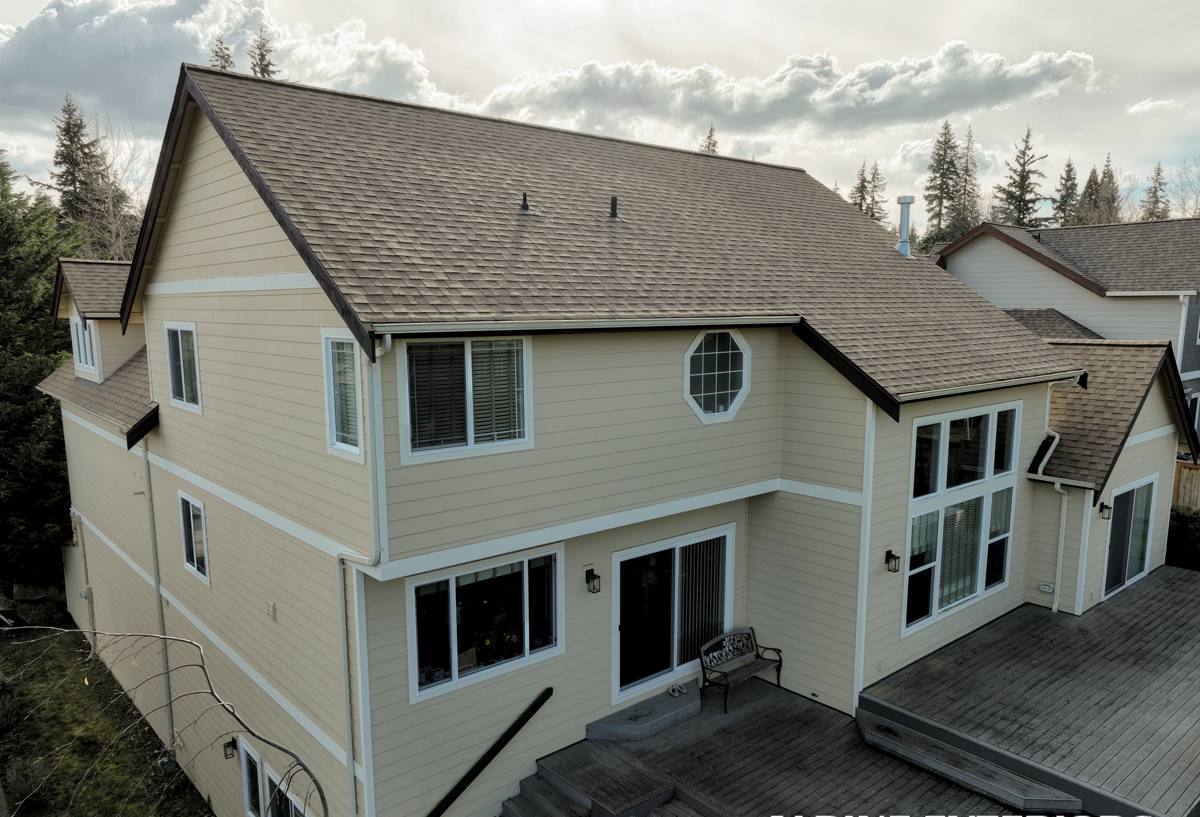
What This Climate Actually Does to Siding
Four things wear on exterior walls in Belleair Bluffs, and they compound each other:
- Wind-driven rain. Bay-facing walls take rain sideways, not straight down. Any gap in flashing, caulking, or panel overlap becomes a path for water to get behind the cladding.
- Salt air. Airborne salt is corrosive to fasteners and hardware, and it accelerates the breakdown of coatings and finishes that weren't engineered for it.
- Year-round UV. Florida sun runs hot nearly twelve months a year. Paint films chalk, fade, and crack faster here than almost anywhere else in the country.
- Hurricane-force wind loads. Even homes that never take a direct hit deal with repeated high-wind events over their lifespan, and siding attachment has to be engineered for that, not just for a calm afternoon.
None of this is unique to Belleair Bluffs — it's true across Pinellas County — but low-lying, water-adjacent neighborhoods like this one feel it first and worst. Siding that's marginal inland tends to fail early here.
Why We Only Put James Hardie on Belleair Bluffs Homes
We don't install LP SmartSide, vinyl, Cemplank, Allura, or wood siding, and it's worth explaining why rather than just stating it. Vinyl softens and warps in sustained heat and can crack in wind events. Wood and wood-based composite products absorb moisture at cut edges and fastener penetrations, and in a climate this humid, that moisture doesn't dry out fast enough between rain events — it leads to swelling, rot, and repeated repainting. Those aren't defects in those products so much as mismatches with this specific climate.
James Hardie fiber cement is cement, sand, and cellulose fiber. It doesn't absorb bulk water the way wood-based products do, it doesn't soften in heat, and it's non-combustible. It's also the product Hardie engineers specifically for climates like this one — which matters more than it sounds.
The Right Hardie Product for a Bay-Adjacent Lot
James Hardie makes region-specific formulations, and homes near open water should be specified in the HZ5 line, engineered for high-humidity, high-moisture climates like Florida's Gulf Coast — as opposed to the HZ10 formulation built for drier, freeze-prone regions. Specifying the wrong HZ line is a real installation mistake, and it's one reason DIY-grade siding jobs or crews unfamiliar with coastal Florida sometimes underperform even when the brand on the box is correct.
For the finish, we install ColorPlus factory-applied color rather than field-painting after installation. It's baked on and cured under controlled conditions before the panels ever reach the site, which gives it better UV and fade resistance than a site-applied paint job — a meaningful advantage given how hard the sun works on painted surfaces here. It also means no exposed raw edges holding color unevenly once the crew is done cutting and fitting panels around your home's actual dimensions.
Common style choices for this area include HardiePlank lap siding in a traditional reveal, and HardieShingle for accent gables or a coastal-cottage look, often paired with HardieTrim around windows, corners, and fascia for a finished edge that resists the same moisture and UV exposure as the field siding.
What Correct Installation Looks Like Here
The material only performs as well as the install. In a wind-and-salt environment, a few details separate a job that lasts decades from one that causes problems in a few years:
- Weather-resistive barrier and flashing first. Every penetration — windows, doors, vents, hose bibs — gets flashed and integrated with the water-resistive barrier before a single piece of siding goes up. This is the layer that actually keeps wind-driven rain out; the siding is the second line of defense, not the first.
- Correct fastener spacing and type. Hardie specifies fastener type, spacing, and penetration depth by product line and local wind exposure. Coastal Pinellas jobs need fasteners and spacing suited to higher wind loads, and corrosion-resistant hardware to handle salt air over the long term.
- Proper clearances. Siding needs a minimum gap above roof lines, decks, and grade, and a gap where panels meet trim, so water can drain and wood-framed elements underneath aren't sitting in standing moisture.
- Joint treatment. Butt joints and seams get treated per Hardie's specification, not just caulked and hoped for — caulk alone isn't a substitute for correct flashing or shingle-lap technique.
- Manufacturer-matched touch-up and caulk. Using the caulk and touch-up products Hardie specifies keeps the warranty intact and avoids visible mismatch as the ColorPlus finish weathers.
Skipping any one of these doesn't usually show up on install day. It shows up two, five, or eight years later as a soft spot behind a window, a streak of rust bleeding from a fastener, or a section that's peeling while the rest of the wall isn't.
How We Approach a Belleair Bluffs Job
We walk the exterior first and look at exposure, not just square footage — which walls face open water or prevailing wind, where the existing siding or sheathing shows moisture damage, and where trim, window flashing, or roof-to-wall transitions need attention as part of the siding scope rather than as an afterthought. From there we put together a written scope covering product line, style, color, trim details, and what happens with the substrate underneath if there's existing damage.
During the job, that means removing old siding down to the sheathing, addressing any rot or moisture damage we find (rather than covering it up), installing or correcting the weather-resistive barrier and flashing, then installing Hardie panels and trim to manufacturer specification for this wind zone. We clean up and haul away debris as we go, not just at the end.
Cost Factors for a Bay-Adjacent Home
Every home is different, but the line items that move the price on a Belleair Bluffs siding job are consistent. This isn't a quote — it's what to expect a contractor to walk through with you:
| Factor | Why It Matters Here |
|---|---|
| Home size and wall complexity | More corners, gables, and dormers mean more cutting, trim, and labor hours |
| Existing substrate condition | Rot or water damage found at tear-off adds repair scope before new siding can go on |
| Product line and style | Lap siding, shingle accents, and trim packages price differently by material use and labor |
| Flashing and window/door detailing | Coastal wind-driven rain makes correct flashing non-negotiable, and it's labor-intensive to do right |
| Height and access | Multi-story sections and tight lot lines near neighboring homes affect equipment and labor time |
| Color and finish | Factory ColorPlus finishes and specialty colors price differently than standard primed options |
Because so much of the real cost is determined by what's underneath the old siding, we don't give firm numbers over the phone — an in-person look is what makes an estimate accurate instead of a guess.
Living With Hardie Siding in a Salt-Air Environment
James Hardie siding is genuinely low-maintenance compared to wood or repainted surfaces, but "low-maintenance" in Pinellas County still means paying attention a couple of times a year. A simple seasonal routine goes a long way:
- Rinse salt residue and airborne grime off exterior walls with a garden hose or low-pressure wash — high-pressure washing can damage the finish and isn't necessary
- Inspect caulking at trim joints, window and door surrounds, and butt joints annually, and re-caulk with a Hardie-compatible product if it's cracked or pulling away
- Walk the exterior after any major wind event and look for loose panels, dislodged trim, or fasteners backing out
- Check for rust staining at fastener heads, which can indicate the wrong hardware was used during installation
- Keep sprinklers and irrigation heads aimed away from siding — constant direct wetting from irrigation is a common, avoidable source of premature wear
- Trim landscaping back from walls so foliage isn't trapping moisture against the siding
None of this is a major undertaking, which is a large part of why fiber cement makes sense here — it asks a lot less of a homeowner than repainting wood siding every few years or babysitting seams on vinyl.
Why a Crew That Already Works Belleair Bluffs Matters
Coastal wind zone requirements, moisture behavior at grade level near the bay, and the way salt air ages hardware aren't things a crew learns from a manual — they're things a crew learns by doing the work in this specific environment, repeatedly. A contractor who mainly works inland neighborhoods can install Hardie siding competently and still miss the details that matter most fifteen feet from open water: the fastener spec, the flashing detail at a bay-facing window, the clearance above a seawall-adjacent grade. Local, repeated experience in Belleair Bluffs and the surrounding Clearwater waterfront is what closes that gap.
If you're weighing a siding replacement or repair on a Belleair Bluffs home, we're glad to take a look and talk through what your home actually needs — no pressure, no hard sell. Use the form below to request a free estimate.