 Clearwater Window
 Island Estates sits close to the water, which means the roofs here take a different kind of beating than homes further inland. Between hurricane-season wind events, salt-laden air rolling off the bay, and the kind of wind-driven rain that finds every weak seam in a roof system, storm damage shows up faster and in more places than most homeowners expect. If you've had a recent storm come through Pinellas County and you're not sure whether your roof needs attention, this page walks through what storm damage actually looks like on an Island Estates roof, what a proper repair involves, and how our process works from first call to final inspection.
Why Island Estates Roofs Take a Harder Hit
Being surrounded by water isn't just a lifestyle perk here — it's a factor in how fast a roof ages and how it fails during a storm. A few things stack up against roofing systems in this part of Clearwater:
- Wind exposure: Waterfront and near-waterfront properties get less wind buffering than homes tucked into inland neighborhoods, so gusts hit roof edges, ridges, and flashing harder during tropical systems and even routine summer squalls.
- Salt air corrosion: Metal fasteners, flashing, vents, and exposed hardware corrode faster this close to the water. A fastener that's rusted through holds shingles far less securely than one that isn't.
- Wind-driven rain: Florida storms rarely fall straight down. Rain pushed sideways by wind gets up under shingle tabs, around vent boots, and into any gap that a calm-weather rain would never reach.
- Year-round UV load: Central Florida sun bakes shingles and sealant strips for most of the year, so materials are already somewhat brittle before a storm ever arrives, which makes wind damage more likely, not less.
None of this means an Island Estates roof is destined to fail — it means the margin for deferred maintenance is smaller, and storm damage that looks minor from the ground can be more serious once someone's actually up there.
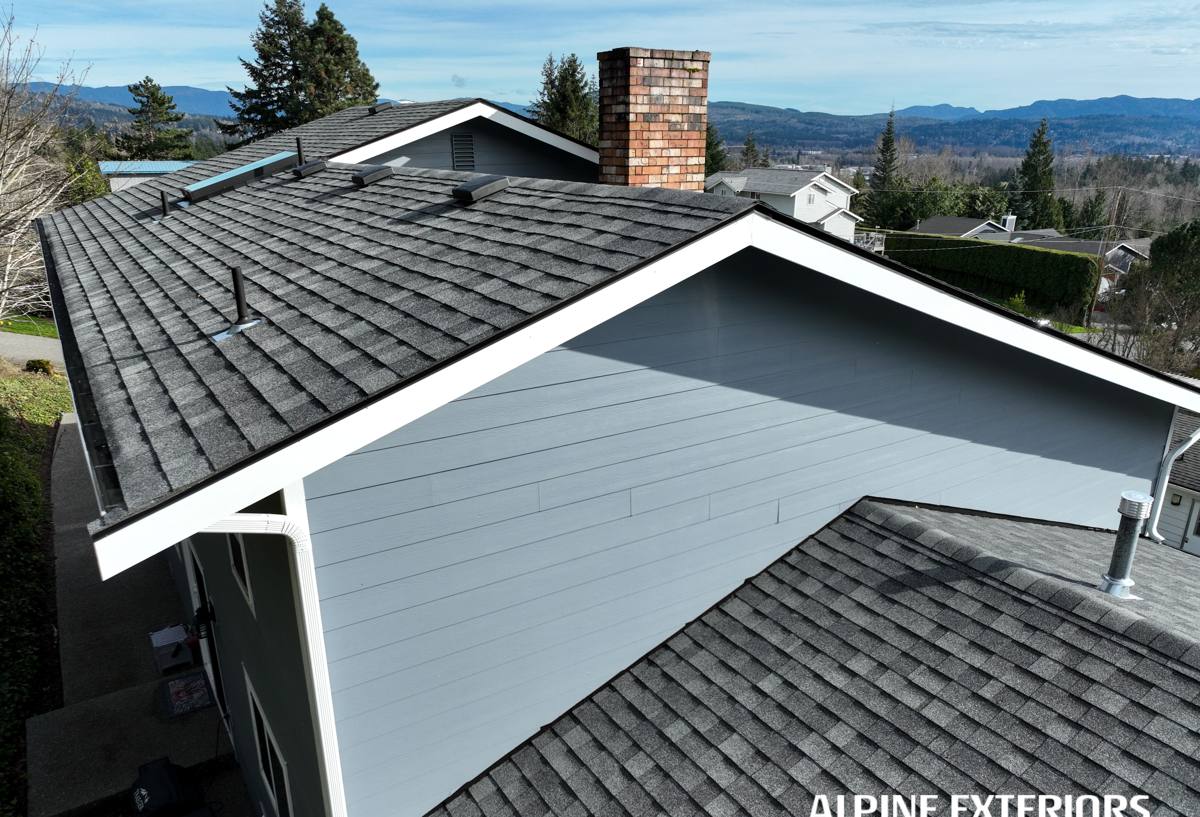
What Storm Damage Actually Looks Like
Most homeowners picture storm damage as missing shingles or an obvious hole. That does happen, but a lot of the damage we find after wind and rain events is less dramatic and easier to miss.
Signs You Can Often See From the Ground
- Shingles that look curled, lifted, or out of alignment compared to the rest of the roof plane
- Granules collecting in gutters or at downspout outlets after a storm
- Visible creasing or soft spots on shingles from flying debris impact
- Flashing around chimneys, skylights, or vent stacks that's bent, lifted, or separated from the roof surface
- Water stains on ceilings or exterior soffits that weren't there before the storm
Damage That Usually Requires a Closer Look
- Sealant strips broken loose under shingle tabs — often invisible until the next hard rain finds the gap
- Fasteners backed out or corroded enough to lose their grip
- Underlayment tears beneath shingles that appear intact from above
- Compromised vent boots, which are one of the most common sources of slow leaks after wind events
This is exactly why a roof that "looks fine" from the driveway can still have real storm damage. The problems that cause the most trouble down the road are usually the ones nobody notices right away.
What a Correct Storm Repair Involves
A rushed patch job might stop water for a season, but it rarely addresses the underlying cause — and in a climate like this one, that gap tends to show up again at the worst possible time. A proper storm damage repair covers a few non-negotiable steps.
1. Full Roof Assessment, Not Just the Obvious Spot
We look at the entire roof, not just the area a homeowner flags. Wind damage is rarely confined to one section — if the storm was strong enough to damage one part of the roof, it's worth checking ridge caps, flashing, valleys, and vent penetrations everywhere else too.
2. Identifying the Actual Entry Point
Water travels. A stain on an interior ceiling doesn't always sit directly below the source of the leak — it can travel along rafters or underlayment before showing up inside. Chasing the visible symptom instead of the actual entry point is one of the most common reasons storm repairs fail to hold.
3. Matching Materials and Method to What's Already There
Repairs should tie into the existing roof system correctly — proper shingle integration, correct flashing technique, and fasteners rated for coastal exposure. A patch that isn't tied in properly becomes its own future leak point.
4. Verifying the Fix Under Real Conditions
Once repairs are made, we check the work — flashing seated correctly, shingles laying flat and sealed, vent boots secure — before calling the job done.
Our Process for Island Estates Homeowners
| Step | What Happens |
|---|---|
| 1. Contact & Scheduling | You reach out, describe what you're seeing, and we schedule an on-site assessment — sooner if there's active leaking. |
| 2. Roof Inspection | We inspect the full roof, not just the reported problem area, and document what we find. |
| 3. Written Estimate | You get a clear explanation of what's damaged, what needs to be repaired, and an honest cost range — no pressure, no upsell. |
| 4. Repair Work | Repairs are completed using materials and fastening methods suited to coastal, high-UV conditions. |
| 5. Final Check | We confirm the repair is sound before we consider the job finished. |
Repair vs. Replacement: How We Help You Decide
Not every storm-damaged roof needs to be replaced, and not every roof can be reasonably patched back to good condition. The right call depends on the roof's age, how widespread the damage is, and how much of the underlying material is still sound.
| Factor | Favors Repair | Favors Replacement |
|---|---|---|
| Roof age | Roof is within its expected service life | Roof is near or past its expected lifespan |
| Damage extent | Localized to one section or a few spots | Widespread across multiple roof planes |
| Underlayment condition | Intact beneath the damaged shingles | Compromised or showing signs of prior water intrusion |
| Storm history | First significant damage event | Repeated storm damage over recent years |
| Insurance scope | Covers a defined repair area | Adjuster scope indicates full replacement |
We'll always tell you honestly which side of that table your roof falls on rather than defaulting to the more expensive option.
Working With Insurance on Storm Damage
Storm damage repairs often involve an insurance claim, and the documentation matters as much as the repair itself. We provide clear photos and a written description of the damage that can support your claim, and we're available to walk an adjuster through what we found if that's helpful. What we won't do is inflate a scope of work to chase a bigger payout — our documentation reflects what's actually damaged, which is what holds up under review and what protects you if a claim is questioned later.
Why Local Experience in Island Estates Matters
A roofing crew that regularly works waterfront and near-waterfront Pinellas County properties knows what to check first. We know that flashing and fasteners near the water corrode faster than the manufacturer's general guidance assumes. We know which vent boot styles hold up to this climate and which ones fail early. And we know that a repair here needs to account for the next storm, not just the last one.
That local pattern-recognition is the difference between a repair that solves the actual problem and one that just covers the visible symptom until the next wind event finds the same weak point again.
A Quick Post-Storm Checklist
After any significant wind or rain event, it's worth doing a quick check before you decide whether a professional inspection is needed:
- Walk the interior and check ceilings, especially in upper rooms and near chimneys or skylights, for new stains
- Look at gutters and the ground around downspouts for granule buildup
- Check the attic (if accessible) for damp insulation, daylight through the roof deck, or musty odor
- Note any debris impact on the roof — fallen branches, loose fencing, or other wind-blown material
- Photograph anything unusual from the ground for your own records before repairs begin
If any of these turn up something, it's better to have it looked at promptly. Small leaks left alone tend to turn into deck rot, mold, or interior damage that costs far more to fix than the original roof repair would have.
If a recent storm has you wondering about your roof, we're happy to take a look. Reach out for a free, no-pressure estimate — we'll tell you honestly what we find and what it would take to fix it right.