 Clearwater Window
 Why Indian Rocks Beach Siding Takes More Abuse Than Most
Indian Rocks Beach sits on a narrow barrier island along the Gulf of Mexico, and that location changes what "durable siding" actually means. A house three blocks inland in Clearwater deals with Florida weather. A house on this island deals with Florida weather plus constant salt-laden air, near-daily wind off open water, and sun exposure with almost nothing to block it. Siding that performs fine in a shaded inland neighborhood can start failing years early out here, and homeowners are often surprised at how much the distance to the water actually matters.
Salt Air and Corrosion
Airborne salt doesn't just sit on the surface — it works into seams, fastener heads, and any exposed edge of a siding panel. Over time it accelerates corrosion on metal components and breaks down finishes that aren't rated for a marine-influenced environment. This is one of the biggest reasons material choice and fastener choice matter more here than almost anywhere else in Pinellas County.
Wind-Driven Rain
Storms on the Gulf side rarely fall straight down. Wind pushes rain sideways into walls, and it finds every gap in flashing, every under-lapped seam, and every place where caulk has dried out. A siding system that isn't installed with the right laps, flashing details, and drainage plane will eventually let water behind it, even if the surface material itself is holding up fine.
UV and Heat
Indian Rocks Beach homes get direct, largely unobstructed sun for most of the year. That constant UV load fades color, dries out caulk and trim faster, and stresses materials that expand and contract with heat. Siding that isn't engineered for this kind of exposure tends to show fading, chalking, or warping well before its expected lifespan is up.
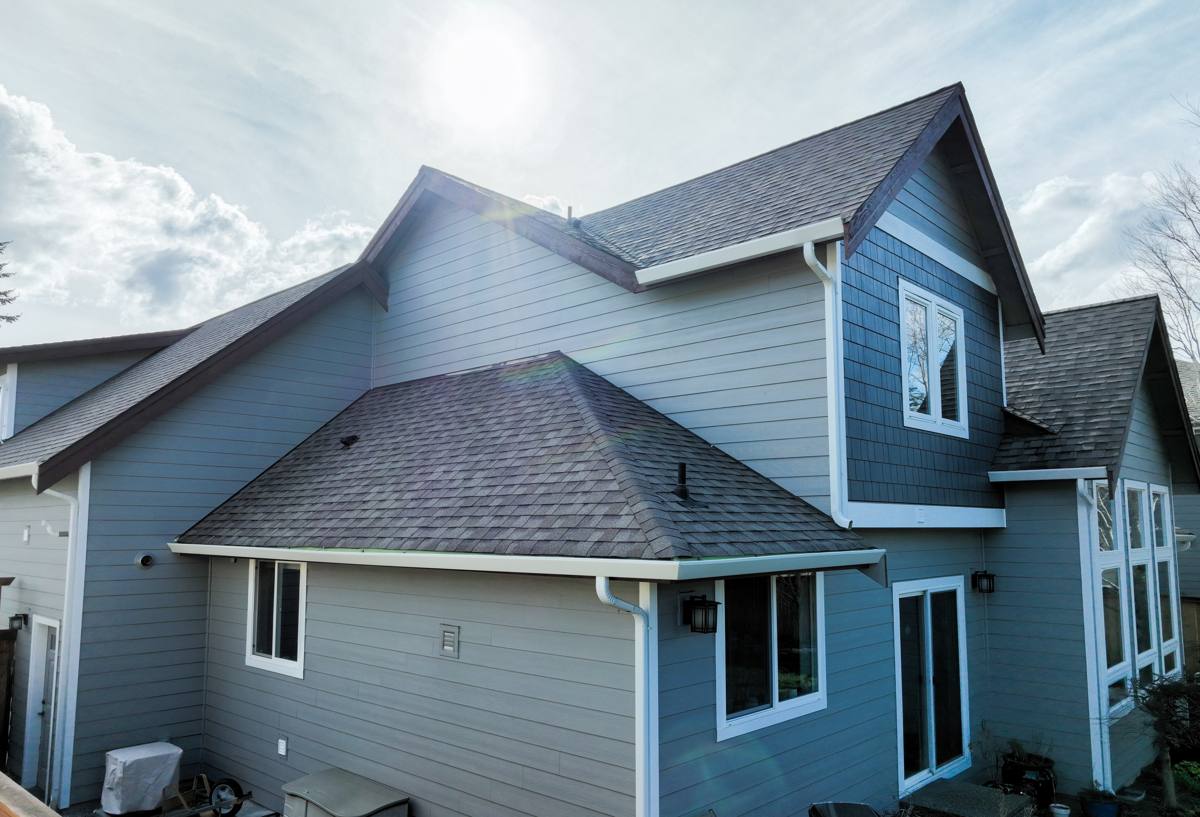
What Correct Siding Installation Means on a Barrier Island
"Correct" installation here isn't just about getting the panels on straight. It means building a wall system that can shed wind-driven rain, resist high wind loads, and hold up to salt exposure for decades — not just look good on install day. That starts underneath the siding, not with it.
- Sound sheathing with no hidden rot or moisture damage from the old siding system
- A properly lapped weather-resistant barrier (house wrap) installed shingle-style so water sheds down and out
- Correct flashing at every window, door, roofline, and penetration — the details most likely to leak if rushed
- Fastening patterns and fastener spacing that meet the wind load requirements for this location, not a generic inland pattern
- Proper joint treatment and caulking at butt joints, corners, and trim using sealants rated for exterior, coastal use
Skip any one of these and the siding can still look fine for a year or two. The problems that show up later — soft spots, staining, nail pops, panels working loose in a storm — almost always trace back to something that was done wrong (or skipped) at this stage, not a flaw in the siding itself.
Why We Only Install James Hardie Fiber Cement
We install James Hardie fiber cement siding exclusively — no vinyl, no LP SmartSide, no primed wood, no other fiber cement brand. On a project like a home in Indian Rocks Beach, that's not a brand preference, it's a practical decision. Fiber cement is non-combustible, which matters in a state with real wildfire and lightning risk, and it doesn't warp, rot, or attract wood-boring insects the way engineered wood products can. James Hardie also builds a version of its siding specifically for humid, moisture-heavy climates — the HZ5 product line — which is engineered for exactly the conditions this part of Florida delivers year-round.
The factory-applied ColorPlus finish is another piece of this. It's baked on under controlled conditions rather than field-painted, which gives it better fade and adhesion performance against the kind of relentless UV this island gets than a job-site paint job typically achieves. James Hardie also backs its siding with a strong, transferable limited warranty and a separate finish warranty on ColorPlus colors — real protection for a homeowner making a long-term investment in a coastal property.
None of this means other products are junk. Vinyl is inexpensive and easy to install; primed wood has a traditional look some homeowners want; other fiber cement brands have their own strengths. But after years of doing this work on the Gulf coast, we've seen where each of those products tends to struggle in salt air, high UV, and wind-driven rain, and we made the call to install one system we can stand behind fully rather than offer several we'd have reservations about.
Our Installation Process, Step by Step
- Inspection and assessment. We look at the existing siding, sheathing, and any signs of past water intrusion before quoting anything, so the estimate reflects what your walls actually need.
- Tear-off. Old siding comes off down to the sheathing so we can check for hidden rot, especially around windows, doors, and lower wall sections where water tends to collect over the years.
- Sheathing repair. Any damaged sheathing gets replaced before anything else goes back up. Installing new siding over compromised sheathing just hides a problem that will resurface.
- Weather-resistant barrier. House wrap goes on lapped correctly, with flashing tied in at every penetration so the drainage plane actually works as a system.
- Flashing and trim. Windows, doors, and rooflines get flashed before siding starts, since these are the highest-risk points for wind-driven rain intrusion.
- Siding installation. Panels or planks go up with fastener spacing and placement matched to the wind exposure of your specific home, not a one-size-fits-all pattern.
- Joint and seam sealing. Butt joints, corners, and transitions get sealed with exterior sealants suited to sustained salt and UV exposure.
- Final walkthrough. We go over the finished job with the homeowner and confirm everything is tight, sealed, and ready for whatever the season throws at it.
Fasteners and Flashing: The Details That Fail First
On most siding failures we get called out to inspect, the siding material itself isn't the real problem — a fastener, a flashing detail, or a sealant is. In a barrier island environment, corrosion-resistant fasteners aren't optional upgrades; they're the difference between a wall system that lasts and one that starts showing rust streaks and loose panels within a few years.
| Component | Standard-grade option | Coastal-appropriate option |
|---|---|---|
| Fasteners | Electro-galvanized nails/screws | Stainless steel or hot-dip galvanized fasteners rated for coastal exposure |
| Flashing metal | Bare or lightly coated steel | Aluminum or coated flashing resistant to salt-driven corrosion |
| Sealants | General-purpose exterior caulk | High-elasticity, UV- and salt-stable sealant rated for marine climates |
| Weather barrier | Basic housewrap | Housewrap rated for high wind-driven rain exposure, properly lapped and taped |
Every one of these upgrades costs more up front than the standard-grade version. On an inland home, the standard option might be perfectly adequate. On Indian Rocks Beach, we treat the coastal-appropriate option as the baseline, not an upsell, because the failure modes we see out here almost always start with the cheaper hardware giving out first.
Permits and Working Within Local Wind Requirements
Siding replacement in Indian Rocks Beach and elsewhere in Pinellas County typically requires a permit, and inspectors are checking that the installed system meets the wind resistance requirements for the location — not just that the siding looks properly attached. Products and fastening schedules need documentation showing they're approved for the wind loads this part of the Gulf coast is designed around. A contractor unfamiliar with these requirements can end up failing inspection, or worse, passing inspection with a system that isn't actually built to hold up in a real storm. We handle the permitting and make sure the installation matches what's required for a home this close to open water, not a generic statewide minimum.
Signs Your Current Siding Is Already Losing the Battle
Because this environment is harder on siding, problems tend to show up earlier here than they would on an identical home further inland. Worth checking for:
- Soft or spongy spots when you press on the siding, especially near the bottom edges
- Visible rust streaking below nail heads or metal trim
- Cracked, chalky, or peeling paint that keeps coming back after repainting
- Warping, buckling, or panels that no longer sit flat against the wall
- Gaps opening up at seams, corners, or window and door trim
- A musty smell or visible staining on interior walls that share an exterior wall with problem siding
- Siding that feels unusually light or crumbly at the edges — a sign moisture has already broken it down
Any one of these on its own might not mean a full replacement is due. Several of them together, especially on a home that's had the original siding for well over a decade, usually means the material has reached the end of what it can handle in this climate.
What Affects Timeline and Cost
Every home is different, but the same handful of factors drive most of the variation in scope, schedule, and price on Indian Rocks Beach projects:
| Factor | Why it matters |
|---|---|
| Extent of hidden sheathing damage | Rot found during tear-off adds repair work that can't be fully known until walls are opened up |
| Home size and wall complexity | More corners, dormers, and trim details mean more flashing and cutting time |
| Siding profile chosen | Lap siding, shingle-style panels, and larger panel systems install at different rates |
| Site access | Narrow island lots, limited parking, and close-set neighboring homes can slow material staging and equipment setup |
| Permitting and inspection scheduling | Local review timelines affect when work can legally begin and pass final inspection |
| Season | Scheduling around peak storm season affects material staging and weather delays |
We walk through these factors during the estimate so there aren't surprises once work starts — particularly the sheathing condition, since that's the one variable that genuinely can't be confirmed until the old siding comes off.
Why Hiring a Crew That Already Works Indian Rocks Beach Matters
Barrier island jobs come with logistics that don't exist on a typical inland project — tighter lots, limited parking, staging materials on a narrow street, and sometimes coordinating around neighborhood access rules. A crew that already works this area knows how to plan around that instead of losing days to it. More importantly, we've seen firsthand how differently siding fails out here compared to a few miles inland, which shapes every decision we make about fasteners, flashing, and sealants before the first panel goes up. That local track record is also why we're comfortable standing behind the work with confidence rather than hedging — we know what this specific stretch of Gulf coast does to a home's exterior, because we've been dealing with it directly.
If your Indian Rocks Beach home's siding is showing its age, or you're planning ahead before the next storm season, we're glad to take a look and walk you through what we're seeing — no pressure, no obligation. Request a free estimate below and we'll get back to you with straight answers.