 Clearwater Window
 Sunset Point's Bayfront Exposure Is Harder on Siding Than Most Homeowners Realize
Sunset Point sits along Clearwater's bayfront in northern Pinellas County, and homes here face a combination of stresses that inland properties simply don't deal with year-round. Open water frontage means more direct wind exposure during storms, more reflected sun off the water during the day, and more airborne salt working its way into every exterior surface on the house. Siding that would hold up fine forty minutes inland can start failing early here if it wasn't built or installed for this environment.
The four forces doing the damage are consistent: hurricane-force wind gusts that drive rain sideways into seams and trim, intense year-round UV that breaks down pigments and resins, wind-driven rain that finds every gap in flashing and caulking, and salt-laden air that accelerates corrosion on fasteners and metal components. None of these are occasional problems in Clearwater — they're baseline conditions the siding has to handle every single year, not just during a bad storm season.
That's the lens we bring to every Sunset Point project. We're not asking "does this siding look good going up" — we're asking "will this assembly still be doing its job in fifteen years, on this specific street, facing this specific exposure."
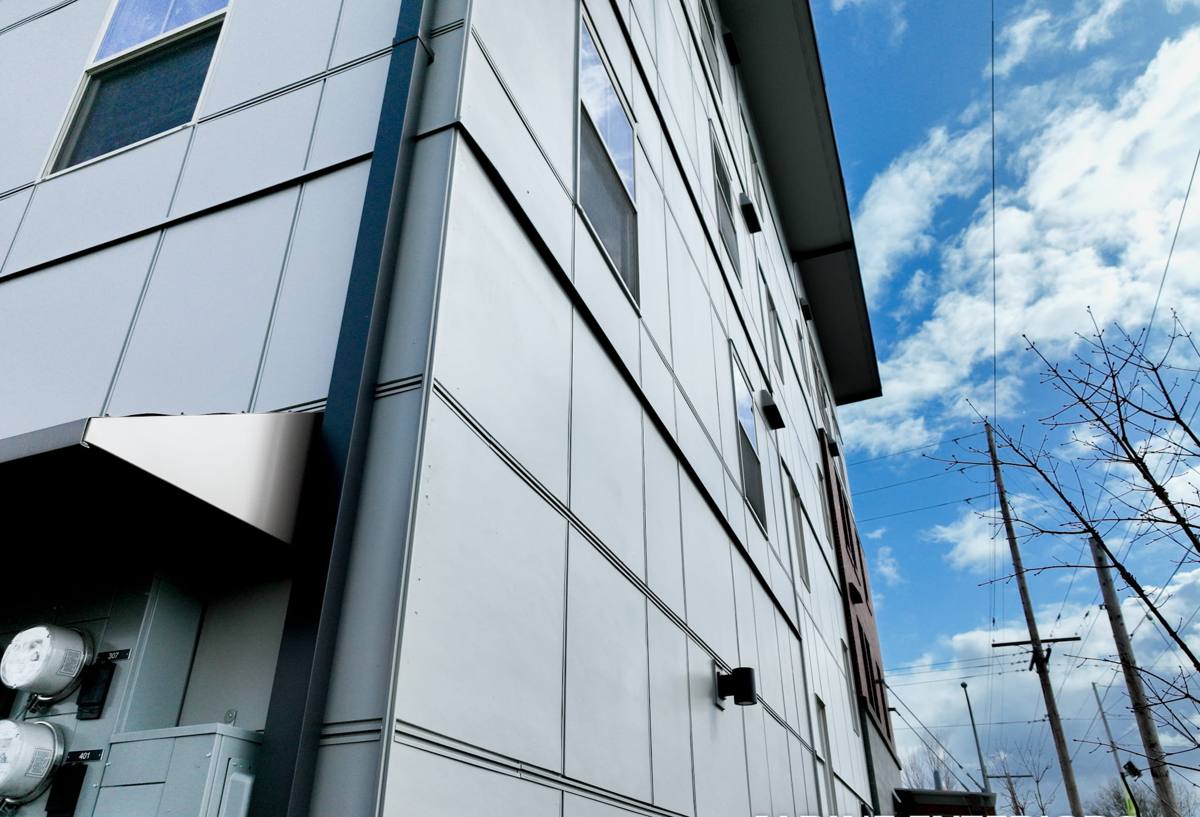
What a Correct Fiber Cement Installation Actually Requires Here
Fiber cement siding is only as good as the installation behind it. The material itself is durable, but the water management system underneath it — the parts nobody sees once the job is done — is what determines whether a home stays dry through Pinellas County's rainy season and storm events.
Water Management Comes First
Before a single plank goes up, the wall needs a correctly lapped weather-resistant barrier, properly integrated window and door flashing, and rainscreen or drainage detailing where the wall assembly calls for it. On a bayfront lot, wind-driven rain doesn't fall straight down — it gets pushed sideways and upward under eaves and around openings. If the drainage plane behind the siding isn't continuous and correctly shingled (each layer overlapping the one below it), water finds its way into the wall cavity regardless of how good the siding itself is.
Fastening and Clearances Matter More in Salt Air
Fastener choice and placement are not cosmetic details. Corrosion-resistant fasteners, correct nailing patterns, and proper panel gapping all affect how the siding performs over time in a salt-air environment. Manufacturer-specified clearances above roofing, decks, and grade also matter — too little clearance and the bottom edge of the siding stays damp longer than it should, which shortens its service life regardless of what it's made of.
James Hardie: The Only Siding We Install, and Why
We install James Hardie fiber cement exclusively. We don't install vinyl, LP SmartSide, Cemplank, Allura, primed spruce, or cedar — not because those products have no merit, but because after years of exterior work on the Gulf Coast, Hardie is the one system we're willing to put our name behind and back with our own installation standards.
Non-Combustible and Climate-Engineered
James Hardie fiber cement is non-combustible, which matters for insurance and peace of mind, and it's engineered in regional formulations — the HZ5 product line is built specifically for hot, humid, high-moisture climates like Florida's. That means the board itself is formulated to resist moisture-related swelling and deterioration in exactly the conditions Sunset Point homes face every summer.
ColorPlus Factory Finish
Most Hardie siding we install goes up with the ColorPlus factory finish rather than field-applied paint. It's baked on in a controlled environment, adheres more consistently than a job-site paint job, and is backed by its own finish warranty separate from the substrate warranty. In a market with this much year-round UV, finish durability is not a minor detail — it's a big part of why the siding still looks good a decade in.
A Warranty Structure That Holds Up
Hardie's transferable limited warranty is a real factor for resale, especially in a neighborhood where waterfront and near-waterfront properties tend to turn over to buyers who ask hard questions about exterior condition. A documented, transferable warranty from a major manufacturer carries more weight at closing than "the siding looks fine."
Our Process for Sunset Point Siding Projects
1. Assessment and Moisture Check
We start by inspecting the existing wall assembly, checking for hidden moisture damage behind the current siding, and evaluating trim, flashing, and any areas where past water intrusion may have gone unnoticed. Bayfront and near-bayfront homes are more likely to be carrying moisture issues that aren't visible from the outside, so this step isn't skipped.
2. Correct Prep Before Anything Goes Up
Any damaged sheathing gets addressed, the weather-resistant barrier and flashing get installed or corrected, and window and door penetrations get properly integrated before the first plank is hung. This is the stage that determines whether the finished job actually performs, and it's also the stage that's easiest for a rushed crew to shortcut.
3. Installation to Manufacturer Spec
We install to James Hardie's published specifications — correct fastener type and spacing, proper clearances, correct panel gapping for expansion, and manufacturer-approved caulking and sealant at joints and penetrations. Spec-true installation is also what keeps the manufacturer's warranty intact; installations that deviate from spec can jeopardize warranty coverage even if the material itself is sound.
4. Final Walkthrough and Documentation
We walk the finished job with the homeowner, confirm trim and caulking details, and make sure warranty registration paperwork is handled. Nothing gets called "done" until it's actually done.
Cost Factors for Fiber Cement Siding in This Area
Every home is different, but the same handful of factors drive most of the cost variation we see on bayfront and near-bayfront properties in Clearwater.
| Factor | Why It Affects Cost | Sunset Point Consideration |
|---|---|---|
| Existing wall condition | Hidden moisture damage requires sheathing repair before siding can go on | More common on older homes with long-term bayfront exposure |
| Trim and detail complexity | Corners, window returns, and architectural trim add labor | Coastal-style homes often carry more trim detail than inland builds |
| Siding profile and finish | Lap width, texture, and ColorPlus color selection vary in material cost | Darker ColorPlus finishes perform well but should be matched to sun exposure |
| Flashing and drainage upgrades | Correcting inadequate water management adds scope but prevents callbacks | Higher priority on open-water-facing walls |
| Access and site conditions | Landscaping, seawalls, or tight lot lines affect staging and labor time | Common on waterfront and near-waterfront lots |
Signs Your Sunset Point Home Needs Siding Attention
Some warning signs are easy to miss from a normal walk around the house. Look for these before small problems become expensive ones:
- Soft or spongy spots when you press on siding, especially near the bottom courses
- Visible warping, buckling, or gaps at seams and corners
- Peeling or chalking paint that keeps returning within a year or two of repainting
- Rust streaks around fasteners or trim, a common sign of salt-air corrosion
- Bubbling or discoloration on interior walls near exterior corners, which can indicate moisture getting in behind the siding
- Visible daylight or drafts around window and door trim
- Siding that feels notably hotter or has faded unevenly on sun-facing walls
Any one of these on its own isn't necessarily an emergency, but on a bayfront property they're worth having looked at before the next storm season rather than after.
Why Hiring a Crew That Already Works Sunset Point Matters
A contractor who only occasionally works this close to open water can miss details that a crew with regular bayfront experience catches automatically — the extra attention a west- or water-facing wall needs, the fastener corrosion resistance that actually holds up in salt air, the flashing details that matter more here than forty minutes inland. There's also a practical side: a local crew is easier to reach for a warranty question five years down the road, and understands Pinellas County permitting and wind-load requirements without a learning curve.
We'd rather turn down work that isn't a fit for Hardie's system than install a product we can't stand behind. That standard is exactly why we only offer one siding system, not five.
Maintenance After Installation
Correctly installed James Hardie siding is low-maintenance, not no-maintenance. A yearly rinse to clear salt residue, a visual check of caulking at trim and penetrations, and prompt attention to any landscaping or irrigation spraying water directly onto the siding will go a long way toward protecting the investment. None of this is heavy lifting — it's the same kind of basic upkeep any exterior surface needs on the Gulf Coast.
If you're weighing a siding project for a Sunset Point home, we're happy to take a look and walk you through what your specific walls need — no pressure, no obligation. A free estimate is the easiest way to find out what correct, climate-appropriate siding actually costs for your house.