 Clearwater Window
 Deck Repair Built for Dunedin's Climate, Not a Generic Fix
A deck in Dunedin does not age the way a deck in a drier, cooler climate does. Between the salt air rolling in off the Gulf and St. Joseph Sound, the wind-driven rain that comes with almost every summer storm, and UV exposure that runs strong nearly twelve months a year, the wood and hardware holding your deck together are under constant low-grade attack. Add in the occasional hurricane-force wind event that Pinellas County plans for every season, and a deck that looked fine two years ago can quietly develop problems that aren't obvious until you're standing on a soft board or a railing that shouldn't move.
We repair decks in Dunedin regularly, and the patterns repeat: fastener corrosion before the wood itself fails, ledger board connections that were never properly flashed, and railings that loosen from repeated wind-load cycling rather than one dramatic event. Good deck repair here means understanding those patterns, not just replacing whatever board looks worst.
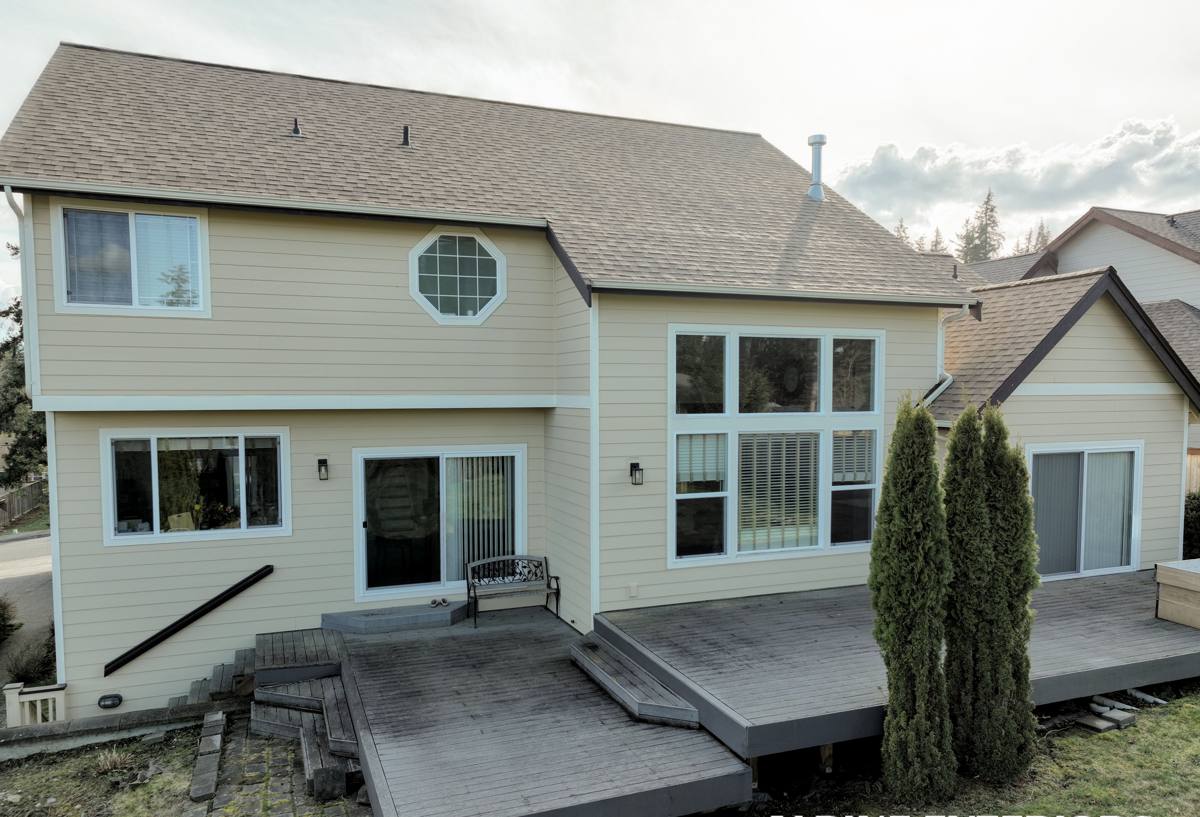
What Coastal Pinellas County Conditions Actually Do to a Deck
Salt Air and Corrosion
Even a few miles inland, airborne salt accelerates corrosion in fasteners, joist hangers, and any exposed metal connectors. Standard galvanized hardware that would last decades in a landlocked climate can start rusting and losing holding strength in a fraction of that time near the coast. This matters more than people expect, because a deck's structural integrity depends as much on its fasteners and connectors as on the boards themselves. We've opened up decks where the decking looked serviceable but the hidden hardware underneath was badly corroded — that's a safety issue, not a cosmetic one.
UV Exposure
Florida sun breaks down the lignin in wood fiber and degrades the UV inhibitors in composite decking and sealants over time. Wood grays and gets brittle at the surface; composite boards can fade, chalk, or lose the surface treatment that resists moisture and staining. Sealed and stained wood needs reapplication far more often here than manufacturers' generic schedules assume, because Florida UV intensity simply outpaces those numbers.
Wind-Driven Rain and Moisture Cycling
Afternoon storms don't just add moisture — wind pushes rain sideways and underneath decking, into end grain, fastener holes, and the ledger connection where the deck meets the house. Wood that gets wet and dries repeatedly (moisture cycling) is far more prone to checking, cupping, and rot than wood that's simply damp once. This is why the ledger board area and any spot where water can pool or get trapped are the first places we check.
Hurricane-Force Wind Loads
Decks don't need to be hit by a named storm to take wind damage. Repeated seasonal wind-load cycling loosens railing posts, works fasteners out of joists, and stresses ledger connections over years. When storm season does bring a real event, a deck with pre-existing loose connections or corroded hardware is far more likely to fail than one that's been properly maintained and inspected.
Signs Your Dunedin Deck Needs Repair, Not Just a Cleaning
- Boards that feel spongy, bounce noticeably, or show soft spots when pressed
- Railings or posts that wiggle, even slightly, when pushed
- Visible rust streaking around fasteners or connector plates
- Gaps opening up between the ledger board and the house
- Cracking, splitting, or deep checking in structural framing members (not just surface boards)
- Stair stringers that flex or show separation from treads
- A noticeable change in how the deck sounds or feels underfoot compared to a year ago
- Standing water or slow drainage anywhere on the deck surface
Any one of these on its own might be minor. Several together, especially near the ledger or stairs, usually mean it's time for a real inspection rather than a surface patch.
Repair vs. Replace: How We Make That Call
Not every deck problem means starting over, and not every deck is worth patching indefinitely. We look at the structural frame first — if the joists, beams, and ledger connection are sound, targeted repair is usually the honest recommendation. If the framing itself is compromised, repeated repairs become a pattern of throwing money at a deck that needs to be rebuilt.
| Factor | Favors Repair | Favors Replacement |
|---|---|---|
| Structural frame condition | Joists and beams solid, no rot at connections | Rot or corrosion at multiple structural points |
| Age of deck | Under 10-15 years, built to current practices | Older deck with outdated framing or fastening methods |
| Extent of damage | Isolated boards, railings, or stairs | Widespread issues across surface and substructure |
| Ledger connection | Properly flashed, no active water intrusion | Missing flashing or ongoing moisture damage at the house |
| Budget goals | Extend usable life at lower cost | Want a fresh footprint, material change, or design update |
We'll tell you plainly if we think repair is a short-term patch on a deck that's better off rebuilt. That honesty matters more than closing a smaller job.
How Our Deck Repair Process Works
1. Full Inspection, Including What You Can't See
We start below the decking, not on top of it. That means checking joists, the ledger connection, support posts, and footings, along with the visible surface. Corrosion and rot often start where you can't see them, and a repair that only addresses the visible symptom tends to fail again within a season or two.
2. Structural Repairs First
Any compromised framing, hangers, or connector hardware gets addressed before anything cosmetic. We use fasteners and connectors rated for coastal exposure — this isn't a place to save money with standard hardware that will corrode again in a few years.
3. Decking, Railing, and Stair Repair
Damaged boards get replaced to match existing material where reasonable, or we'll talk through options if a full resurface makes more sense. Railings get re-secured to solid framing, not just tightened at the surface connection. Stair stringers and treads are checked for the same structural issues as the deck itself.
4. Sealing and Finish Work
For wood decks, this means proper sealing or staining rated for high-UV, coastal exposure. For composite, it means confirming fastening systems and trim details are correctly reinstalled per manufacturer specs, since composite decking depends on correct installation for its warranty to hold.
5. Final Walkthrough
We walk the deck with you, point out what was repaired and why, and flag anything worth watching going forward — including a realistic maintenance timeline for this climate, not a generic one.
Materials and Code Considerations for Pinellas County
Florida's building code has specific requirements for deck construction and repair, particularly around ledger attachment, guardrail height and spacing, and fastener corrosion resistance in coastal zones. When a repair touches structural elements, we work to those standards rather than just matching what was there before — what was there before is sometimes part of why the deck is having problems now.
On fasteners and connectors specifically: we use stainless steel or heavy hot-dip galvanized hardware rated for coastal and treated-lumber exposure, not the lighter-duty galvanized hardware sold for general interior or dry-climate use. It costs more upfront and is worth it every time given what salt air does to lesser hardware within a few years.
Wood vs. Composite: What We Tell Dunedin Homeowners
Both materials can work well here if installed and maintained correctly, but they carry different maintenance realities in this climate:
| Consideration | Pressure-Treated Wood | Composite Decking |
|---|---|---|
| UV maintenance | Needs sealing/staining every 1-2 years in this sun | Minimal, but color can fade over many years |
| Moisture behavior | Prone to checking and cupping with wet/dry cycling | Doesn't absorb water the same way, but trapped moisture at fasteners still matters |
| Upfront cost | Lower material cost | Higher material cost |
| Repair approach | Individual boards easy to replace and match | Matching older composite color/profile can be harder if discontinued |
| Structural framing | Same coastal-grade fastening needs regardless of decking choice | Same coastal-grade fastening needs regardless of decking choice |
Neither choice eliminates the need for good fastening hardware and a properly flashed ledger — that part of the job matters the same either way.
Maintaining Your Deck Between Repairs
- Rinse salt residue off the deck surface and railings every few weeks, not just after visible storms
- Reseal or restain wood decking on a schedule built for Florida UV, not the can's generic recommendation
- Check fasteners and connector hardware for rust streaking at least once a year
- Keep gutters and downspouts clear so runoff isn't dumping extra water onto or under the deck
- Clear debris from between boards so moisture doesn't stay trapped against the framing
- After any major storm, do a quick walk of railings and stair connections before assuming everything's fine
Why a Crew That Already Works in Dunedin Matters
Deck problems here follow patterns tied directly to this specific coastal environment — salt exposure, UV intensity, and wind-driven moisture that a crew unfamiliar with the area might not weigh correctly. A contractor who repairs decks across Dunedin and the wider Clearwater area on a regular basis knows what tends to fail first in homes near the water versus a few miles inland, what hardware actually holds up, and what Pinellas County's code requirements mean in practice for a repair, not just for new construction. That local pattern recognition is the difference between a repair that lasts and one you're paying for again in two years.
If your deck has soft spots, loose railings, rust stains, or you just haven't had it looked at in a while, we're happy to take a look and give you a straight answer about what it needs. Reach out for a free, no-pressure estimate using the form below.