 Clearwater Window
 Building a Deck That Actually Holds Up in Safety Harbor
Safety Harbor sits along the north shore of Tampa Bay, and that waterfront exposure changes what a deck needs to survive here compared to a deck built further inland. Bay-adjacent lots see more consistent wind, more salt-laden air moving off the water, and often more humidity holding against the underside of the structure. Add in Pinellas County's hurricane-force wind exposure, intense year-round UV, and wind-driven rain that gets pushed sideways under railings and through gaps, and you have a climate that is genuinely tougher on outdoor structures than most homeowners realize until they see it firsthand.
A deck that's framed, fastened, and finished the way it would be in a drier, calmer climate will show problems in Safety Harbor faster than the same deck built somewhere inland. This page covers what a correctly built deck for this area actually involves — materials, structure, permitting, and the maintenance reality — so you know what to ask for and what to expect.
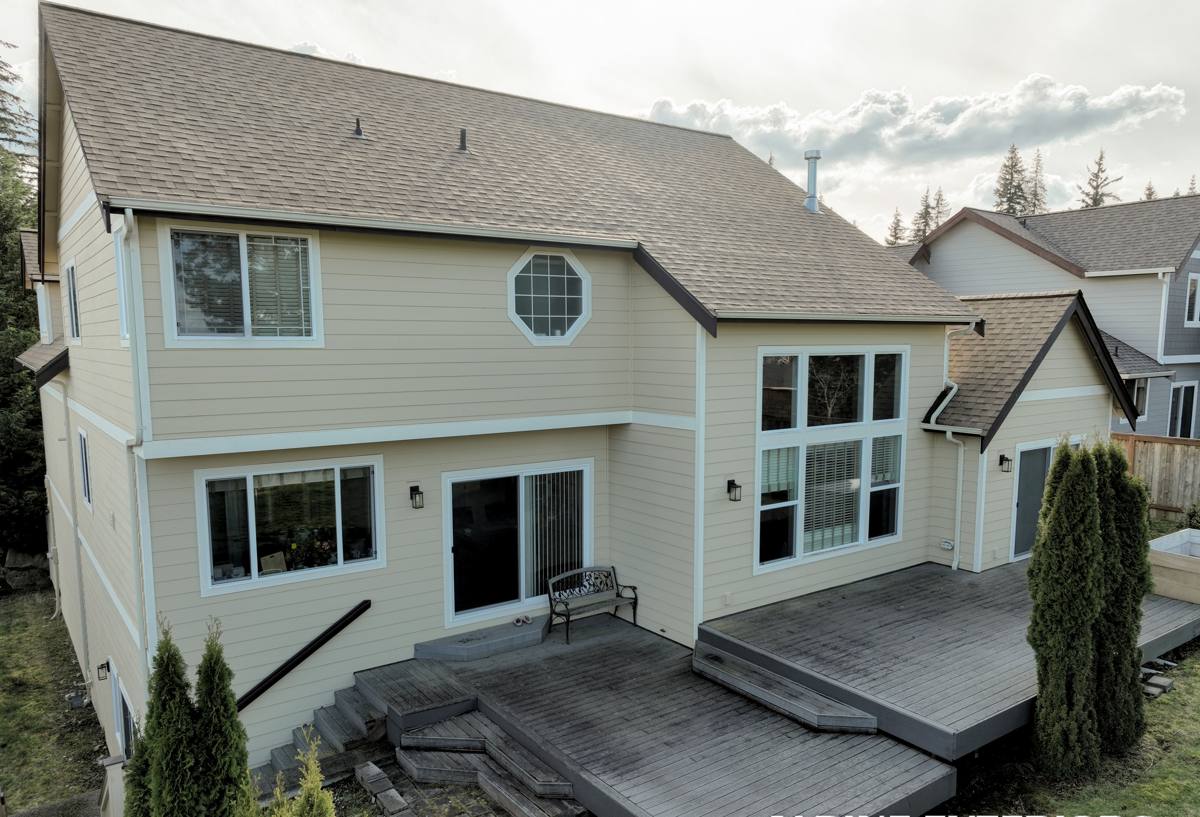
What This Climate Does to a Deck Over Time
Salt Air and Metal Fatigue
Even a few miles from open water, airborne salt accelerates corrosion on anything metal — fasteners, joist hangers, post bases, railing brackets. Standard galvanized hardware corrodes faster near the bay than the same hardware would in a landlocked yard. The corrosion often starts underneath the deck, out of sight, which is exactly why so many older decks in this area develop structural surprises long before the visible boards look bad.
UV Exposure
Florida sun is intense on a horizontal surface that catches direct light most of the day. UV breaks down the lignin in wood fibers, causing graying and surface roughness, and it fades and can eventually embrittle lower-grade composite decking that isn't formulated with adequate UV stabilizers. A deck facing full sun for most of the day needs materials and finishes chosen with that in mind, not generic products picked off a shelf.
Wind-Driven Rain and Moisture Cycling
Storms here don't just bring rain straight down — wind pushes it sideways, into railing joints, under ledger boards, and into any gap where end grain is exposed. Wood that isn't properly sealed at cut ends, and decking that's installed without adequate drainage gaps, holds moisture longer than it should. That constant wet-dry cycling is what drives rot, cupping, and fastener failure over the years, more than any single storm event.
Hurricane-Force Wind Loads
A deck attached to your home is a structural extension of it, and it has to resist uplift and lateral wind forces just like your roof does. Undersized ledger connections, missing hurricane ties at post-to-beam connections, or footings that don't meet local frost-free and wind-load depth requirements are the kind of shortcuts that don't show up on a walkthrough but matter enormously in a real wind event.
What a Correctly Built Deck Involves
A deck built to hold up here isn't about buying "premium" materials across the board — it's about matching the right material and the right structural detail to each part of the job:
- Pressure-treated framing lumber rated for ground contact where posts meet footings, with all field cuts re-sealed with an end-cut preservative
- Stainless steel or coated fasteners and structural connectors rated for coastal exposure, not generic zinc-galvanized hardware
- Proper ledger board flashing where the deck attaches to the house, so water is directed away from the band joist rather than trapped against it
- Footings poured to the depth and diameter required for the wind exposure category, not just a minimum "looks stable" pour
- Hurricane ties or approved structural connectors at every post-to-beam and beam-to-joist connection
- Consistent gapping between deck boards for drainage and material expansion, sized correctly for the specific decking product
- Railing systems fastened with load-rated hardware, since railings take direct wind and lateral load in storm conditions
Decking Material Options for a Bay-Adjacent Property
| Material | How It Handles This Climate | Trade-Offs |
|---|---|---|
| Pressure-treated wood | Affordable, familiar, repairable board-by-board; needs re-sealing to resist salt air and UV graying | Highest maintenance — regular cleaning and sealing required to prevent rot and fastener corrosion |
| Composite decking | Resists rot and doesn't need staining; quality matters — UV-stabilized formulations hold color far better than budget-grade boards | Higher upfront cost; can retain heat underfoot in full sun; not all composite is equal in salt-air durability |
| PVC/capped polymer decking | Fully sealed surface resists moisture intrusion and salt exposure better than any wood-based product | Highest material cost; expansion and contraction with heat cycles needs to be accounted for in installation |
| Tropical hardwoods (e.g., ipe) | Naturally dense and rot-resistant, ages well near water | Expensive, heavy, requires oiling to maintain color, and needs pre-drilled fastening due to density |
Our Deck Building Process
1. On-Site Assessment
We walk the property, look at grade, drainage, sun exposure, and how close the site is to open water or tidal influence, since that affects how aggressive the corrosion-resistant hardware and material choices need to be.
2. Design and Material Selection
We talk through decking material, railing style, and layout against your budget and how you'll actually use the space, being honest about which materials fit a full-sun bayfront lot versus a shaded interior yard.
3. Permitting
Deck construction in Pinellas County requires a building permit, and the structural design has to meet Florida Building Code wind-load requirements for this area. We handle the permit submission and coordinate the required inspections so you're not the one chasing paperwork.
4. Framing
Footings, posts, beams, and joists go in first, with every structural connection using corrosion-resistant hardware appropriate for coastal exposure. This stage is inspected before decking goes down, and it's the part of the job that determines how the deck performs in a storm.
5. Decking, Railing, and Finish
Boards are installed with correct spacing and fastening for the chosen material, railings are set to code height and load rating, and any wood surfaces get sealed before we walk you through care.
6. Final Inspection and Walkthrough
We schedule the final inspection and go over maintenance expectations specific to the material you chose, so you know what upkeep actually looks like here versus what it would be in a drier climate.
Permitting and Wind Requirements in Pinellas County
Pinellas County enforces the Florida Building Code, which sets specific wind-load and structural connection requirements based on your property's wind exposure category. A deck attached to your house needs an engineered or code-compliant ledger connection, footings sized for the load, and inspections at the framing and final stages before it's signed off. Skipping or shortcutting this process isn't just a code issue — it's the difference between a deck that stays attached to your house in a storm and one that doesn't. Any contractor pulling permits on your behalf should be able to show you the approved plan and walk you through what was inspected and when.
Maintenance Realities for This Climate
Whatever material you choose, plan on more frequent upkeep here than you would in a non-coastal climate:
- Rinse salt residue off decking and railings periodically, especially after storms with onshore wind
- Inspect fasteners and structural hardware yearly for early corrosion, particularly underneath the deck where it's out of sight
- Re-seal or re-stain wood decking on a regular schedule rather than waiting until it visibly grays
- Check that drainage gaps between boards haven't filled with debris that traps moisture
- Look at railing post connections after major storms — these take the most lateral load and loosen first
Signs an Existing Deck Needs Attention
- Soft or spongy spots underfoot, especially near the house connection
- Visible rust streaking from fasteners or connectors
- Railings that flex or wobble more than they used to
- Gaps opening up between boards or boards cupping and warping
- Any separation or daylight visible where the deck meets the house ledger board
If you notice any of these, it's worth having it looked at before the next storm season rather than after.
Why a Crew That Already Works Safety Harbor Matters
Building decks for this specific stretch of the Pinellas County coastline means already knowing which hardware grade holds up near the bay, what wind exposure category applies to a given lot, and which materials are worth the extra cost versus which ones are marketing dressed up as an upgrade. A crew that builds decks across a range of inland climates and treats Safety Harbor the same way is going to make choices that look fine on install day and show problems within a couple of storm seasons. Local experience isn't a slogan here — it directly affects what hardware gets specified and how the structure is detailed against wind and salt exposure.
If you're planning a new deck or need an honest look at one that's showing its age, we're happy to come take a look and give you a straightforward assessment. Reach out for a free, no-pressure estimate using the form below.