 Clearwater Window
 Fiber Cement Siding Built for Countryside's Climate
Countryside sits inland from the Gulf but is still very much part of Pinellas County's exterior-punishing weather pattern. Homes here take on the same intense year-round UV load, the same wind-driven rain during summer storms, and enough salt-laden air moving in off the coast to accelerate wear on siding that wasn't built for it. Add the risk of hurricane-force wind gusts during the season, and it becomes clear why so many original siding installs in this part of Clearwater are failing years ahead of schedule.
We install fiber cement siding exclusively — specifically James Hardie products — on homes throughout Countryside and the surrounding Clearwater area. This page walks through what that actually means for a house in this neighborhood: what the climate demands, what a correct installation looks like, and how our process works from first estimate to final walkthrough.
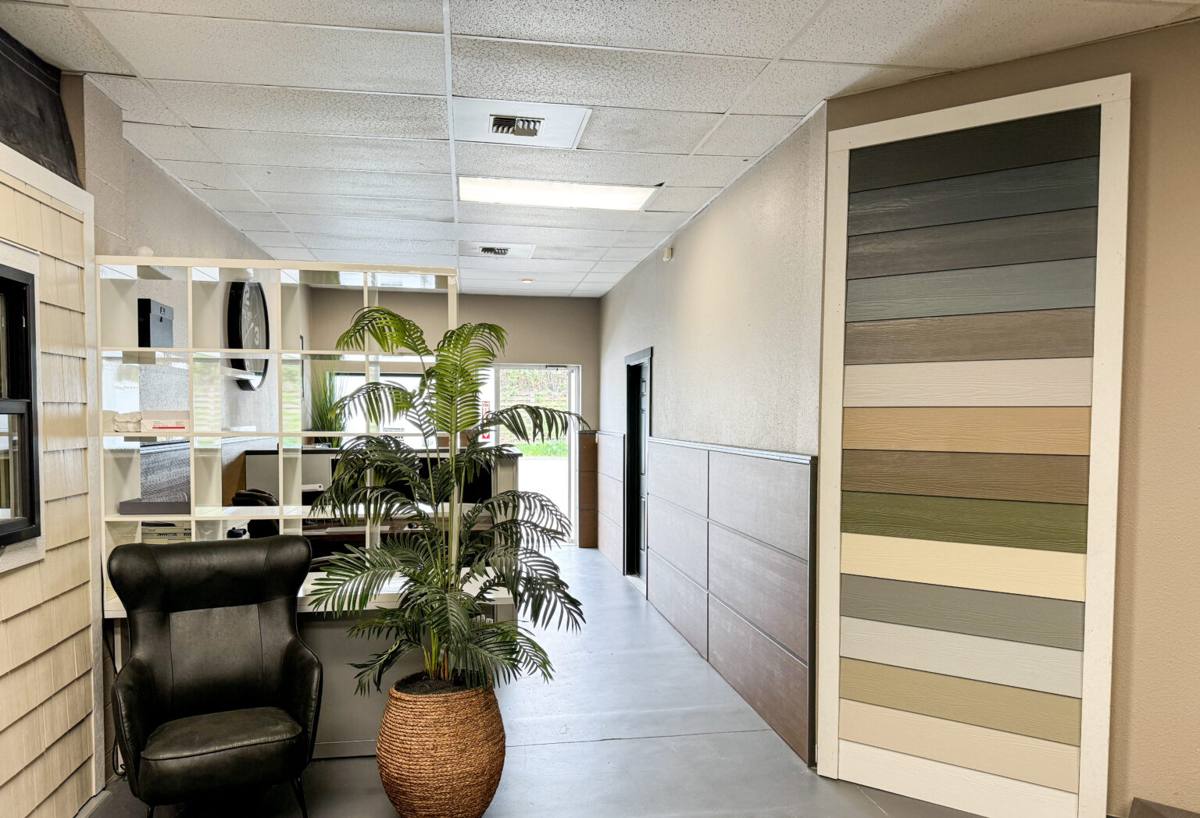
What Countryside Homes Are Up Against
Most siding failure we see in this area isn't random — it follows a predictable pattern tied to a handful of climate stresses that hit Pinellas County harder than most of the country.
Sun and Heat
Florida's UV index runs high nearly every month of the year. Siding materials that rely on paint film for color and protection take a beating — paint chalks, fades unevenly, and eventually cracks, exposing the substrate underneath. Over a decade or more, that constant UV exposure is one of the biggest reasons repaint cycles on lesser siding materials come faster here than in northern climates.
Wind-Driven Rain
Clearwater's storm pattern isn't just about rainfall totals — it's about rain hitting siding sideways at speed. Wind-driven rain finds every gap, seam, and undersized flashing detail in a wall assembly. Materials that swell, wick moisture, or delaminate when saturated are especially vulnerable to this kind of exposure, which is common well inland from the beach, including in Countryside.
Salt Air
Countryside is not a waterfront neighborhood, but Pinellas County as a whole sits in a salt-air environment. Airborne salt accelerates corrosion of fasteners and metal trim, and it can contribute to premature breakdown of coatings on siding products not engineered with coastal exposure in mind.
Hurricane-Force Wind
Even away from direct storm landfall, Countryside homes see high sustained winds and gusts during tropical systems. Siding attachment, fastener spacing, and edge details all matter more here than they would in a calmer climate — a marginal install might look fine for a few years and then fail exactly when it's tested hardest.
Why We Only Install James Hardie Fiber Cement
We made a standing decision as a company to install James Hardie fiber cement siding and nothing else — not vinyl, not LP SmartSide, not primed wood, not other fiber cement brands. That's not a marketing position; it's a practical one based on what actually holds up under Gulf Coast conditions over the long run.
- Non-combustible core — fiber cement doesn't contribute fuel to a fire the way wood-based products can
- Factory-applied ColorPlus finish — baked-on color that resists the fade and chalk cycle of field-applied paint under intense UV
- HZ5 climate-engineered formulation — Hardie's HZ product line is engineered by climate zone, and Florida's HZ5 formulation is specifically built to resist moisture and humidity
- Dimensional stability — fiber cement doesn't expand and contract with humidity swings the way wood-based sidings do, which matters when Countryside goes from humid summer to drier winter stretches
- Strong transferable warranty — backed by a manufacturer warranty that can transfer to a new owner if the home sells
James Hardie gets a fair amount right that other materials don't match on all these points at once. That's the entire reason we standardized on it rather than offering a menu of siding options.
What a Correct Fiber Cement Installation Involves
Fiber cement is only as good as the install behind it. A rushed or undersized job on a good product will still fail early in this climate. Here's what we consider non-negotiable on every Countryside project.
Substrate and Moisture Barrier
Before a single board goes up, the wall sheathing needs to be sound, and a proper weather-resistive barrier needs to be installed correctly — lapped shingle-style so water sheds outward, not into the wall cavity. Any rot or moisture damage found underneath the old siding gets addressed before new siding goes on, not covered up.
Flashing at Every Penetration
Windows, doors, hose bibs, light fixtures, vents — every penetration through the wall plane is a place wind-driven rain can get in. Correct flashing detail at each one is what actually keeps water out during a sideways summer storm, far more than the siding material itself.
Clearances and Gaps
James Hardie's installation instructions specify minimum clearances from grade, roofing, decks, and other transitions, along with proper gaps at butt joints and trim. Skipping these to save time is one of the most common ways an otherwise good product fails prematurely — trapped moisture at grade-level clearances is a frequent culprit.
Fastener Selection and Pattern
In a salt-air environment, fastener choice matters. Corrosion-resistant fasteners, installed at the manufacturer-specified pattern and depth, are what keep the siding attached through high wind events rather than working loose or streaking with rust over time.
Caulking and Sealant Details
Correct sealant at trim joints and terminations, using products compatible with fiber cement and the ColorPlus finish, keeps water out without trapping moisture where it shouldn't be.
Our Installation Process
Every Countryside project follows the same sequence, whether it's a full re-side or a partial replacement after storm or moisture damage.
- On-site assessment — we walk the exterior, check current siding condition, look for underlying moisture or rot, and note any problem areas like poor flashing or grade clearance
- Written estimate — scope, product selection (lap, panel, or shingle profile, and ColorPlus color), and a clear breakdown of what's included
- Tear-off and substrate inspection — old siding comes off, sheathing is inspected and repaired as needed before anything new goes up
- Weather barrier and flashing — proper house wrap and flashing at every penetration, installed to manufacturer spec
- Hardie installation — boards installed to specified fastener pattern, clearances, and joint gaps
- Trim, caulking, and finish details — corner trim, sealant, and touch-up as needed
- Final walkthrough — we go over the finished job with the homeowner before calling it complete
James Hardie Product Lines We Work With
Hardie's lineup covers most of what a Countryside home might need, and we help homeowners pick the right profile and finish for their house rather than defaulting to one option.
| Product Line | Typical Use | Notes for This Climate |
|---|---|---|
| HardiePlank lap siding | Most common full-house application | Available in multiple textures; HZ5 formulation for humidity resistance |
| HardiePanel vertical siding | Accent walls, gables, modern facades | Clean lines, fewer horizontal joints for water to track along |
| HardieShingle | Accent areas, gable ends, coastal-style homes | Shingle look without the moisture concerns of real wood shingles |
| HardieTrim | Corner boards, window and door trim, fascia | Matches siding durability so trim doesn't become the weak point |
Cost Factors for a Countryside Fiber Cement Project
Every home is different, but the same handful of factors drive most of the cost variation we see on jobs in this neighborhood.
| Factor | Why It Affects Cost |
|---|---|
| Home size and wall complexity | More square footage, gables, and cut-ins mean more material and labor |
| Substrate condition | Rotted sheathing found during tear-off requires repair before new siding goes on |
| Product profile and finish | Lap vs. panel vs. shingle, and standard vs. premium ColorPlus colors, affect material cost |
| Trim and accent scope | Full HardieTrim packages cost more than reusing sound existing trim where appropriate |
| Access and site conditions | Tight lot lines, landscaping, or multi-story sections affect labor time |
Maintenance After Installation
One of the practical advantages of Hardie's factory-applied finish is how little upkeep it demands compared to field-painted siding. Homeowners in Countryside can expect to:
- Rinse the siding periodically to clear salt residue and pollen buildup
- Inspect caulking at trim joints every year or two and touch up as needed
- Check for any settling, landscaping growth, or grade changes that reduce the required clearance at the base of the wall
- Watch for any signs of moisture intrusion around windows, doors, or roof-to-wall transitions after major storms
That's a shorter list than most siding materials require in this climate, and it's part of why the long-term cost of ownership tends to favor fiber cement even when the upfront investment is higher than vinyl.
Why Hire a Crew That Already Works in Countryside
Correct fiber cement installation isn't complicated in theory, but it's unforgiving of shortcuts in a climate like this one. A crew that already works Countryside and the broader Clearwater area understands the specific combination of UV exposure, wind-driven rain, and salt air these homes face, and installs to the clearances, fastener patterns, and flashing details that actually matter here — not a generic installation that happens to be technically within spec on paper. Local familiarity also means faster response for follow-up questions, warranty support, or storm-related concerns after the job is done, without the delay of a crew that has to relearn the area every time.
If you're weighing a siding replacement in Countryside, we're happy to walk your home, look at what's actually going on with your current siding, and give you a straightforward assessment of what fiber cement would involve for your specific house. There's no pressure and no cost to get an estimate — just a clear look at your options from a crew that installs one product because we believe it's the right one for this climate.