 Clearwater Window
 Custom Decks Built for Coachman Ridge Homes
Coachman Ridge sits inland from the coast, but "inland" in Pinellas County doesn't mean sheltered. Homes here still take the full brunt of a Gulf Coast summer: months of intense UV, sudden downpours, and the occasional tropical system pushing wind and rain sideways. A deck built without those conditions in mind will look fine for a season or two and then start showing its age fast — cupped boards, rusting fasteners, rails that wobble after the first hard blow. A deck built correctly for this climate holds up for decades with basic upkeep.
We build custom decks specifically with Clearwater's conditions in mind, and we've done enough of them around Coachman Ridge and the surrounding neighborhoods to know which details matter and which ones are just upsells. This page covers what a correct deck build looks like here, what it costs to get right, and how our process works from first call to final walkthrough.
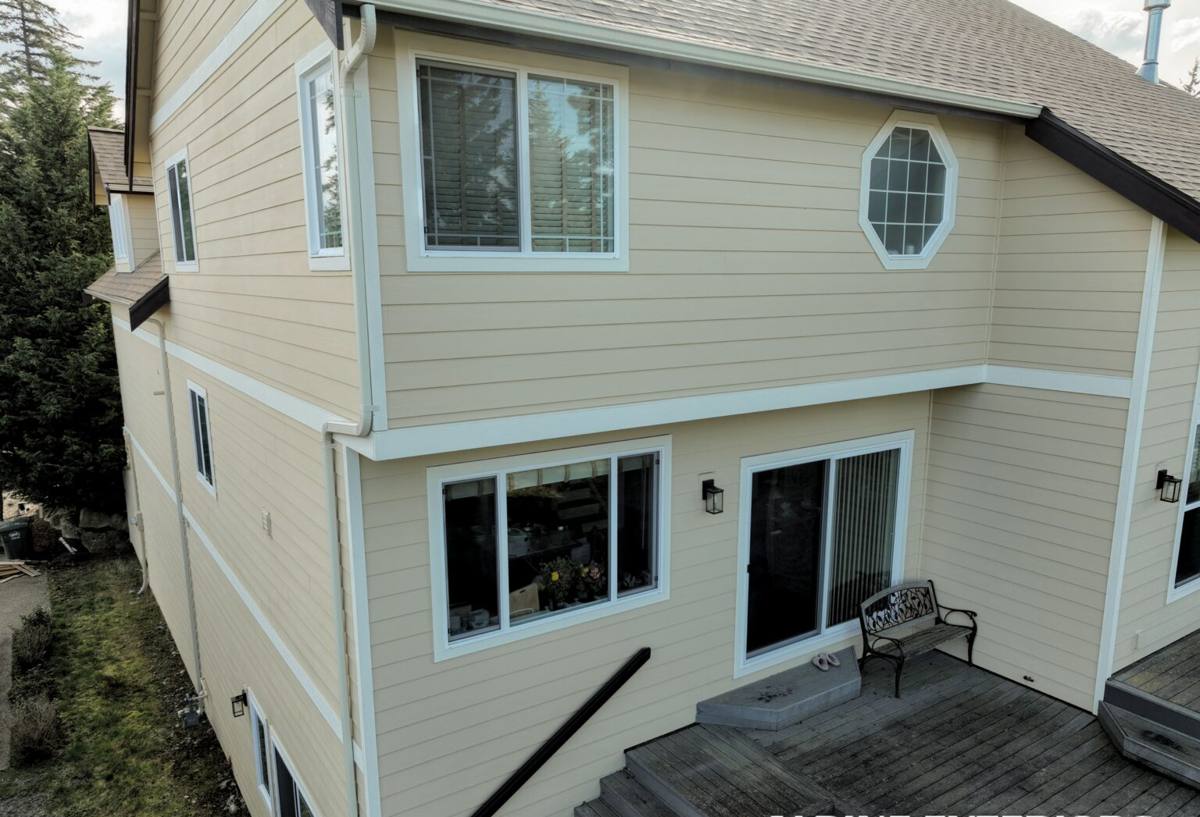
What Coachman Ridge's Climate Does to a Deck
Florida's climate doesn't destroy decks overnight — it works on them steadily, in a few specific ways.
UV Exposure
Central Florida gets sun intensity most of the country doesn't see. UV breaks down the lignin in untreated or poorly sealed wood, which is what gives boards their structural fiber. Over a few years that shows up as graying, splintering, and surface checking. Composite and PVC decking resist this far better, but even those products vary — cheaper composites can still fade or chalk under years of direct sun.
Wind-Driven Rain and Humidity
Pinellas County sees regular heavy rain, and during storm season that rain often comes in sideways with real force behind it. Water finds its way into ledger connections, post bases, and any spot where fasteners weren't properly flashed or sealed. Combined with year-round humidity, this is the single biggest cause of hidden rot in older decks — the surface can look fine while the framing underneath is failing.
Hurricane-Force Wind Loads
A deck attached to the house has to handle uplift and lateral loads during tropical storms and hurricanes, not just the static weight of furniture and people. Ledger attachment, post-to-beam connections, and railing anchoring all need to meet current wind-load requirements for this area — not the lighter framing standards used in calmer climates.
Salt Air
Coachman Ridge isn't beachfront, but salt-laden air still travels well inland across the Tampa Bay area, especially with onshore winds. It accelerates corrosion on any fastener, bracket, or hardware that isn't rated for coastal exposure. This is one of the most common corners cut on budget deck builds — standard hardware store fasteners instead of coated or stainless connectors.
What a Correctly Built Deck Includes
A deck that's going to hold up in this environment isn't about one premium material — it's about every component being matched to the climate, not just the visible decking surface.
- Ledger board attached with proper flashing and through-bolted (not just lag-screwed) into sound framing
- Corrosion-resistant, coastal-rated fasteners and structural connectors throughout — not standard galvanized
- Post bases set above grade with proper drainage, never buried or sitting in standing water
- Joist spacing and beam sizing calculated for actual local wind and load requirements, not the minimum code allows
- Decking material chosen for UV and moisture behavior, not just upfront cost
- Railing system anchored to resist lateral loads, meeting current height and baluster spacing rules
- Ventilation beneath the deck surface so trapped moisture can escape instead of sitting against framing
Choosing a Decking Material for This Climate
There's no single "best" decking material — there's a best material for a given budget, maintenance appetite, and how the deck will be used. Here's how the common options actually perform under Clearwater conditions.
| Material | UV/Fade Resistance | Moisture Behavior | Maintenance | Typical Lifespan Here |
|---|---|---|---|---|
| Pressure-treated pine | Fair — grays without sealing | Needs regular sealing to resist swelling/checking | Annual cleaning + sealant every 1-2 years | 10-15 years with upkeep |
| Tropical hardwood (e.g. ipe-type) | Good — grays gracefully | Naturally dense, resists rot well | Periodic oiling to maintain color | 20-25+ years |
| Capped composite | Very good on quality products | Excellent — won't rot or swell | Occasional washing, no sealing | 25-30 years |
| PVC decking | Very good | Excellent — fully moisture-proof | Lowest — soap and water | 30+ years |
We're honest about trade-offs rather than pushing whatever has the best margin. Pressure-treated wood is the lowest upfront cost but the highest lifetime maintenance burden in this climate — if a homeowner isn't going to reseal it on schedule, it will underperform. Composite and PVC cost more upfront but remove most of the maintenance and moisture risk that UV and humidity create here. Hardwoods sit in between: naturally durable, but installation-sensitive and pickier about fastening.
Framing and Fasteners: The Part Nobody Sees
Most deck failures we get called out to inspect aren't decking problems — they're framing and fastener problems that were invisible until something gave way. This is also where corner-cutting is hardest for a homeowner to catch during construction, because it's covered up by the time the deck looks finished.
For Coachman Ridge builds we treat the substructure as the part that actually determines whether the deck survives its first decade, not the boards on top. That means treated or engineered framing lumber sized for real loads, connectors rated for coastal exposure, and a ledger connection that's flashed and fastened to resist both water intrusion and wind uplift — since ledger failure is one of the more serious deck collapse causes nationally, and it's entirely preventable with correct installation.
Our Process for a Coachman Ridge Deck Build
- On-site assessment. We look at the ground condition, sun and rain exposure, how the space will be used, and any existing structure being replaced.
- Design and material selection. We walk through decking, railing, and layout options against your budget and maintenance preference, with honest trade-offs for each.
- Permitting. Deck additions and rebuilds in this area typically require a permit and inspection — we handle that process rather than leaving it to the homeowner.
- Framing and substructure. This is where load-bearing components, fastener selection, and drainage get set — the part that determines long-term durability.
- Decking and railing installation. Surface material and rail system go in per manufacturer spec, since composite and PVC products in particular have installation tolerances that affect warranty coverage.
- Final walkthrough and inspection sign-off. We confirm everything meets code and review basic care with you before we consider the job done.
Cost Factors for a Custom Deck
Every deck is different, so we won't quote a number without seeing the site, but these are the main variables that move the price up or down:
| Factor | Why It Matters |
|---|---|
| Decking material | Pressure-treated is lowest cost upfront; composite and PVC cost more but reduce lifetime maintenance |
| Deck size and height | Larger footprints and elevated decks require more framing and structural engineering |
| Railing style | Cable, glass, and composite rail systems cost more than standard baluster rail |
| Site access and grading | Sloped or hard-to-access yards add labor for excavation and post setting |
| Attachment type | Ledger-attached decks need proper flashing work at the house; freestanding decks avoid that but need more independent footings |
| Permitting and inspection | Required for most builds and rebuilds in this area, and factored into the timeline and cost |
Signs an Existing Deck Needs Attention
If you're weighing a rebuild versus a repair on an existing deck, these are the warning signs worth taking seriously before another storm season:
- Soft, spongy, or springy spots underfoot, especially near the house connection
- Visible rust staining around fasteners or connectors
- Gaps opening up between the ledger board and the house siding
- Railings that flex or feel loose when leaned on
- Wood that's splintering, cupping, or graying heavily despite past sealing
- Standing water or persistent damp spots underneath the deck after rain
Any one of these on its own might be minor. Several together usually mean the substructure is compromised, not just the surface.
Why a Local Crew Matters
Coachman Ridge sits in unincorporated Pinellas County, and permitting, inspection requirements, and wind-load standards are locally specific — a crew unfamiliar with the area can misjudge those requirements or build to a lighter standard used elsewhere. A local crew also knows how this neighborhood's lots typically drain, how afternoon storms roll in during summer, and how salt air behaves this far inland — details that come from doing the work here repeatedly, not from a general contracting playbook.
We're not the only deck builder that will show up and pour a slab of composite boards. What we bring is attention to the parts that fail first in this climate — the fasteners, the flashing, the framing — because those are the parts that decide whether a deck is still solid in year twelve or needs to be torn out.
Get a Free, No-Pressure Estimate
If you're planning a new deck or replacing one that's showing its age, we're happy to come take a look and walk you through honest options for your budget and how you use the space. There's no pressure and no obligation — just a straightforward assessment from a crew that builds decks for this climate every day. Use the form below to request your free estimate.