 Clearwater Window
 Coachman Ridge sits in one of Clearwater's older, well-established residential pockets, with a mix of homes that have been re-roofed at least once and homes still carrying original roofs well past their expected service life. Asphalt shingle roofing remains the most common choice here for good reason — it's cost-effective, widely understood by insurers, and when installed correctly, holds up well against what Pinellas County weather throws at it. The catch is that phrase: "installed correctly." A shingle roof is a system, not just a layer of material nailed to plywood, and in a hurricane-prone coastal market, the details of that system decide whether a roof lasts 20+ years or starts failing at year eight.
Why Asphalt Shingles Still Make Sense in Coachman Ridge
Homeowners sometimes assume metal or tile is automatically the "better" roof for Florida. That's not universally true. Asphalt shingle roofing, when specified with the right wind rating and installed to current Florida Building Code wind-uplift standards, performs well in this climate and costs meaningfully less upfront than metal or tile — both to install and to repair after storm damage. For a lot of Coachman Ridge homes, especially ranch-style and mid-century construction with straightforward roof lines, a properly built shingle system is the practical, honest recommendation rather than an upsell to a pricier material.
That said, "asphalt shingles" isn't one product. Quality varies enormously between a builder-grade 3-tab shingle and a modern high-wind-rated laminate/architectural shingle, and that difference matters more here than it would somewhere without hurricane exposure.
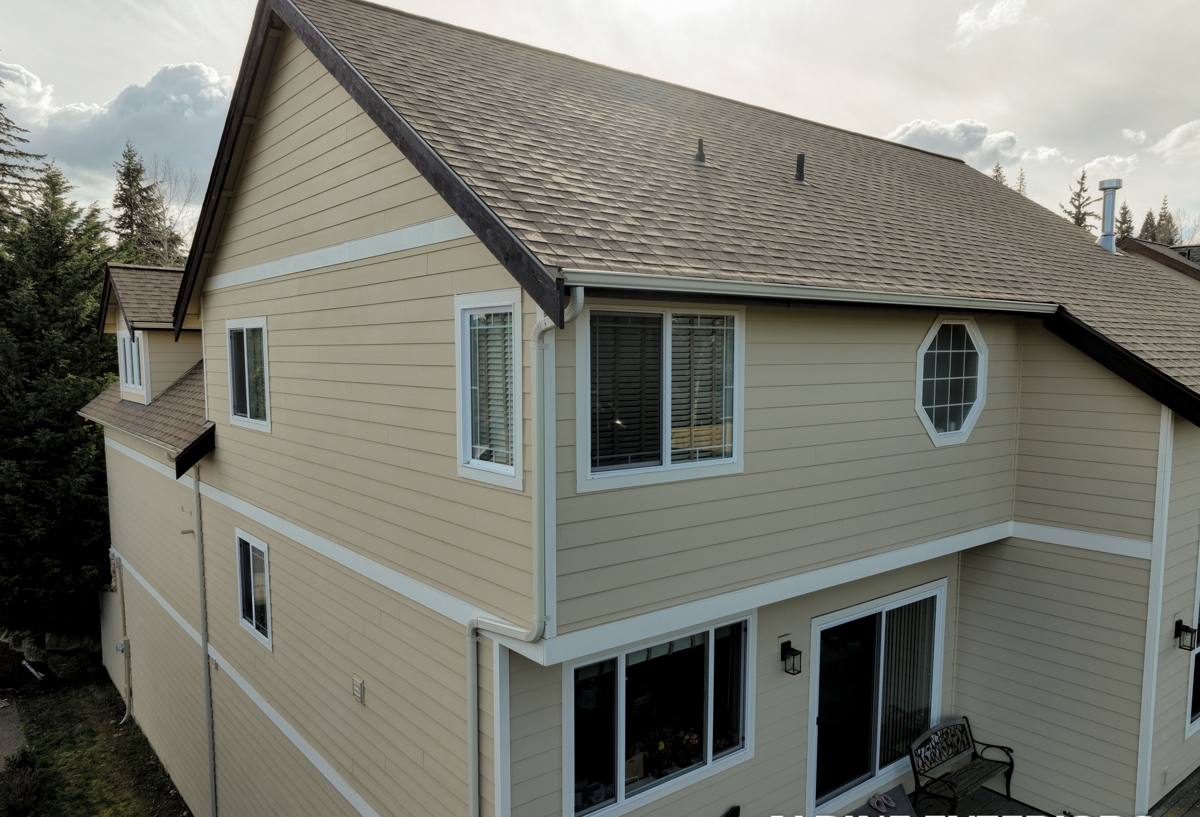
What Clearwater's Climate Actually Does to a Shingle Roof
Every roofing recommendation on this page traces back to the same set of stressors, and it's worth naming them plainly rather than treating them as marketing copy:
- Hurricane-force and tropical-storm winds — uplift at eaves, rakes, and ridge lines is where shingle failures start; nail pattern and shingle class matter more than shingle color or brand.
- Intense year-round UV — Florida's sun angle and day length age asphalt granules faster than in northern climates, which is why "20-year" and "30-year" shingle ratings behave differently once installed in Pinellas County than they do on a spec sheet written for a national average.
- Wind-driven rain — storms here rarely fall straight down; wind pushes rain sideways and under shingle tabs and flashing if the underlayment, sealant strips, and flashing details aren't built for it.
- Salt air — Clearwater's proximity to the Gulf means airborne salt accelerates corrosion on exposed metal fasteners, flashing, and vent boots faster than it would inland.
None of these are exotic problems. They're the same four forces every roof in this part of Clearwater deals with, and a correct asphalt shingle installation is built specifically to resist all four at once, not just to look finished on installation day.
What a Correct Shingle Roof System Includes
A shingle roof that's going to actually perform in Coachman Ridge's climate is made up of several layers working together. Skipping or under-specifying any one of them is where premature leaks and wind failures come from.
Deck Inspection and Repair
Before anything goes down, the plywood or OSB decking underneath needs to be sound — no soft spots, delamination, or old fastener damage. Roofing over a compromised deck is one of the most common corner-cutting problems we find on tear-offs in older Pinellas County neighborhoods, and it undermines everything installed above it.
Underlayment
Synthetic underlayment or a self-adhering peel-and-stick membrane (particularly at eaves, valleys, and penetrations) is the roof's real waterproofing layer. Shingles shed most water, but underlayment is what protects the deck when wind drives rain sideways under a tab or a shingle is compromised in a storm.
Flashing
Step flashing at walls, valley flashing, and properly sealed flashing around chimneys, skylights, and vents are where the majority of "mystery leaks" originate on older roofs. Reused or improperly lapped flashing during a re-roof is a common shortcut that shows up as a leak a year or two later, not immediately.
Shingle Selection and Wind Rating
Not all architectural shingles carry the same wind rating. For a Coachman Ridge re-roof, we specify shingles rated for the wind speeds the Florida Building Code requires for this part of Pinellas County, with a nailing pattern (and hand-sealing at eaves/rakes where needed) that matches that rating — not just whatever nail count is fastest to install.
Ventilation
Attic ventilation affects both shingle lifespan and energy costs. A hot, poorly ventilated attic bakes shingles from underneath, shortening their service life regardless of how good the shingle itself is. Ridge vents, soffit intake, and balanced airflow are part of a correct install, not an optional add-on.
Comparing Shingle Options for This Area
| Shingle Type | Typical Wind Rating | Best Fit | Trade-Offs |
|---|---|---|---|
| 3-Tab Shingle | Lower wind rating, generally 60-70 mph | Budget re-roofs, rental properties | Shortest lifespan in coastal wind exposure; least UV/impact resistance |
| Standard Architectural (Laminate) | Mid-range, commonly 110-130 mph installed properly | Most owner-occupied Coachman Ridge homes | Good balance of cost and durability; sealant strip performance depends on installation quality |
| High-Wind / Impact-Rated Architectural | Higher-tier ratings, often 130+ mph with specified nailing | Homes wanting stronger storm performance and potential insurance credit | Higher material and labor cost upfront; may qualify for wind-mitigation insurance discounts |
The wind ratings above are general manufacturer ranges, not guarantees — actual field performance depends heavily on installation method, deck condition, and how the roof is fastened, which is why the install matters as much as the shingle itself.
Our Process for a Coachman Ridge Re-Roof
- On-site inspection — we walk the existing roof, check the attic for ventilation and moisture issues, and assess deck condition before quoting anything.
- Honest scope and estimate — we tell you what's actually needed (full tear-off vs. repair, deck replacement extent, flashing scope) rather than a one-size number.
- Tear-off and deck prep — old materials removed down to the deck, damaged sheathing replaced, deck re-secured to current fastening standards where needed.
- Underlayment and flashing installation — synthetic underlayment plus peel-and-stick at vulnerable areas, new flashing at walls, valleys, and penetrations.
- Shingle installation — installed to the manufacturer's high-wind nailing pattern, with hand-sealing at edges where the climate calls for it.
- Ventilation check and correction — ridge and soffit venting balanced or upgraded as part of the job, not left as-is by default.
- Final walkthrough — we go over the completed roof, warranty paperwork, and maintenance basics with you before calling the job done.
Repair vs. Replacement: How to Tell Which You Need
Not every roofing issue in Coachman Ridge means a full replacement. A roof with isolated wind damage, a few cracked or missing shingles, or a single failed flashing point can often be repaired if the rest of the roof and deck are sound. Full replacement typically becomes the right call when:
- The roof is approaching or past its rated lifespan (commonly 15-20+ years for asphalt shingles in this climate)
- Granule loss is widespread rather than isolated to one storm-damaged area
- Multiple leaks are showing up in different locations, suggesting underlayment failure rather than a single flashing defect
- Deck damage is found once shingles are pulled back for inspection or repair
- Insurance wind-mitigation or coverage requirements make full replacement the more practical financial decision
We'll tell you honestly which category your roof falls into rather than defaulting to the more expensive recommendation.
Maintenance That Actually Extends a Shingle Roof's Life
A correctly installed shingle roof still needs basic upkeep to reach its full lifespan in this climate. A short seasonal checklist:
- Have the roof visually inspected after any major named storm, not just when a leak appears
- Keep gutters and valleys clear of debris so water doesn't pool or back up under shingle edges
- Trim back overhanging branches that can abrade shingle surfaces or drop debris during high wind
- Check attic ventilation isn't blocked by insulation or storage, which traps heat against the deck
- Address small flashing or sealant issues promptly — they're inexpensive to fix early and expensive once they've caused deck rot
Why Local Experience in This Neighborhood Matters
Coachman Ridge homes vary in age, roof pitch, and prior repair history, and a crew that regularly works this specific area already knows the common deck conditions, typical roof geometries, and the permitting expectations that come with re-roofing in Clearwater and Pinellas County. That familiarity shows up in small but real ways — knowing which older homes are more likely to need deck replacement before a quote is finalized, understanding local permitting timelines, and being available quickly if a storm causes damage rather than being a crew that has to relearn the area every time. A shingle roof installed by people who understand this specific coastal wind and salt-air environment is simply a safer bet than one installed to a generic national spec sheet.
Get a Straightforward Estimate
If you're dealing with an aging shingle roof in Coachman Ridge, or you just want an honest read on whether repair or replacement makes more sense for your home, we're glad to take a look. Use the form below to request a free, no-pressure estimate — we'll walk the roof, explain what we find in plain terms, and give you a clear scope and price before any work begins.