 Clearwater Window
 Building a Deck That Belongs on Clearwater Beach
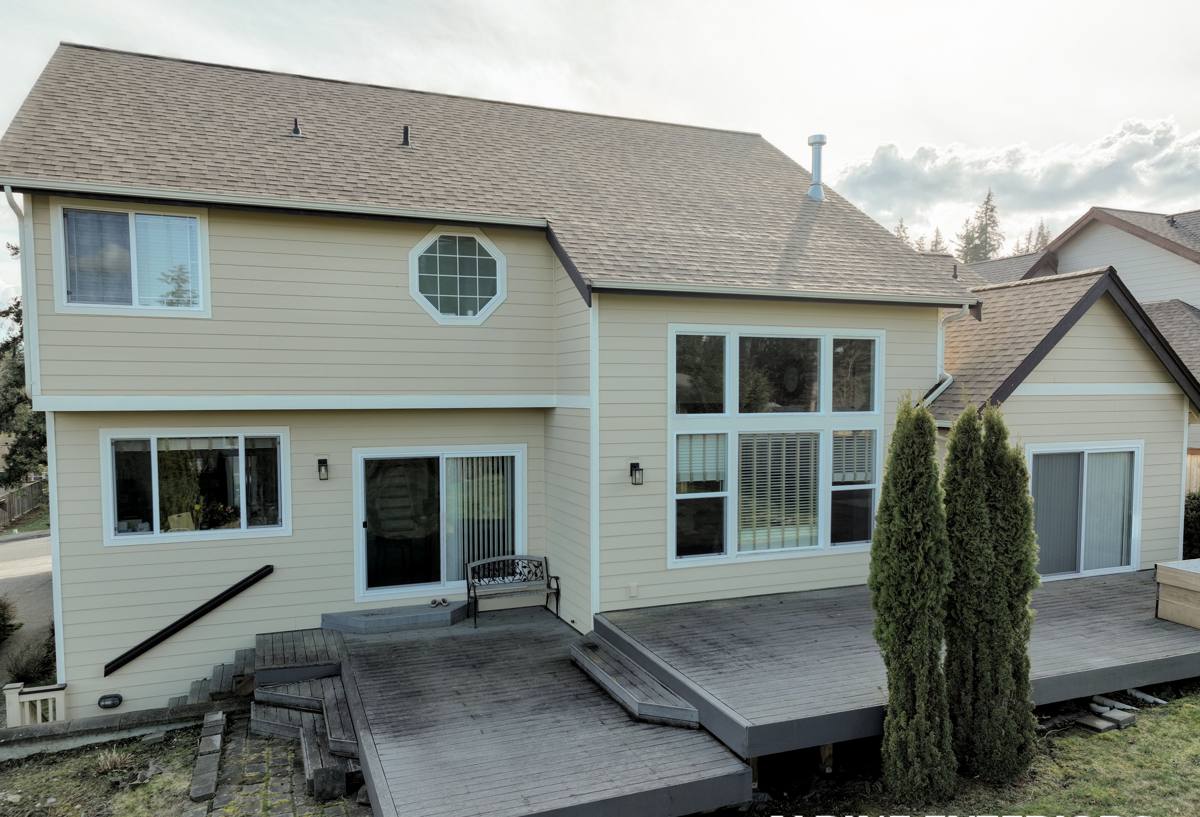
A deck on Clearwater Beach lives a harder life than a deck almost anywhere else in the region. It sits closer to open water, catches more direct salt spray, takes a longer, more intense dose of UV each year, and is first in line when a tropical system pushes wind-driven rain sideways across the barrier island. Building one correctly here isn't about picking a pretty board and nailing it down — it's about choosing the right materials, fastening system, and structural details for a corrosive, high-wind, high-sun environment, then following Pinellas County and City of Clearwater permitting and wind-load requirements so the deck is actually built to code, not just built to look finished.
This page covers what a Clearwater Beach deck project should include from the ground up: substructure, decking material, fasteners, railings, permitting, and the maintenance a homeowner should expect to keep it looking and performing well for years.
Why Clearwater Beach Conditions Change the Build
Salt Air and Corrosion
Airborne salt doesn't stay at the waterline — it travels on the wind and settles on everything, including framing hardware, fasteners, and structural connectors tucked under the decking where you can't see them. Standard hot-dip galvanized hardware that's fine a few miles inland can start showing corrosion within a couple of years this close to the Gulf. Once a joist hanger or ledger bolt starts rusting, it's losing holding capacity even if the wood or composite above it still looks new.
UV Exposure
Florida sun is intense everywhere, but a barrier island deck gets it with almost no shade interruption most of the day. UV breaks down the surface of wood fibers and can fade or chalk lower-grade composite and PVC products over time. Material choice and finish quality matter more here than on a shaded inland lot.
Wind-Driven Rain and Moisture Cycling
Wind-driven rain gets forced into places normal rainfall never reaches — up under railings, into ledger connections, behind fascia boards. Combined with Florida humidity, a deck here goes through constant wet-dry cycling. Any gap in flashing or sealant becomes a path for water to reach framing that then never fully dries out.
Hurricane and Tropical Storm Wind Loads
Clearwater Beach sits in a high-wind coastal zone under Florida Building Code, which means deck framing, ledger attachment, post connections, and railings all have to be engineered and installed to resist uplift and lateral loads — not just support foot traffic. This is one of the most commonly under-built parts of a deck when it's done without permits or by a crew that doesn't regularly work coastal jobs.
What a Correctly Built Clearwater Beach Deck Includes
Footings and Substructure
Footing depth and size depend on soil conditions and the deck's load, but on a barrier island lot, sandy soil and proximity to groundwater are common factors that affect footing design. Posts, beams, and joists need corrosion-resistant hardware throughout, and the substructure needs enough airflow underneath to let it dry out between rain events rather than staying damp against the ground.
Ledger Attachment
If the deck attaches to the house, the ledger board connection is one of the most important structural points on the entire project. It needs proper flashing to keep water from getting behind it and into the house's wall assembly, plus fasteners rated for the load and the coastal environment. A poorly flashed ledger is a common source of hidden rot — both in the ledger itself and in the wall framing behind it.
Fasteners and Hardware
This is where corner-cutting shows up years later, not on day one. Stainless steel or premium coated fasteners cost more than standard hardware, but standard galvanized hardware simply doesn't hold up as long this close to the Gulf. We treat fastener and connector grade as a structural decision, not a cosmetic one.
Decking Surface
Whether it's wood, composite, or PVC, the surface material has to handle constant sun and periodic saltwater exposure without cupping, fading unevenly, or becoming a maintenance burden. We'll walk through the trade-offs below.
Railings and Guards
Any deck elevated above a certain height requires code-compliant guardrails with baluster spacing and load ratings that meet Florida Building Code. On a coastal property, railing hardware faces the same corrosion exposure as the rest of the structure, so it needs the same material standard.
Choosing a Decking Material for This Environment
| Material | How It Handles This Climate | Maintenance | Typical Lifespan |
|---|---|---|---|
| Pressure-treated wood | Affordable, but UV and salt air accelerate graying, splintering, and fastener corrosion staining | Regular sealing/staining needed to slow weathering | Shorter without diligent upkeep |
| Composite decking | Resists rot and doesn't splinter; quality matters — lower-grade composite can fade or absorb moisture at cut ends | Periodic cleaning; minimal sealing | Long-lasting with quality product and installation |
| PVC/cellular decking | Fully synthetic, handles moisture and salt exposure well; among the most resistant to this coastal environment | Low maintenance, occasional cleaning | Long-lasting |
| Tropical hardwoods | Naturally dense and rot-resistant, but require diligent oiling to prevent graying and checking in intense UV | Regular oiling/maintenance | Long-lasting with upkeep |
There's no single "best" material for every homeowner — it depends on budget, how much maintenance you want to take on, and how the deck will be used. Our job is to walk you through the honest trade-offs for your specific project rather than push whatever has the best margin.
Why We're Selective About Composite Products We Install
Not all composite and PVC decking is built the same. Some lower-tier products are more prone to moisture absorption at cut edges, color fade, or surface degradation under sustained coastal UV exposure. Our standard is to install products with capping and warranty structures suited to Gulf Coast conditions, and to detail every cut edge and fastener penetration properly during installation — because even a good product installed carelessly will underperform here.
Permitting and Code on Clearwater Beach
Deck construction on Clearwater Beach falls under City of Clearwater building permitting and Florida Building Code's High-Velocity Hurricane Zone-adjacent wind provisions for coastal Pinellas County. That typically means:
- A permit application with structural details for footings, framing, and connections
- Engineering or code-prescribed specifications for wind uplift and lateral load resistance
- Inspection at footing/framing stage and at final completion
- Guardrail and stair code compliance if the deck is elevated
- Additional review if the property is in a flood zone or has elevation requirements tied to FEMA flood maps, which is common this close to the water
If a property is part of a condo association or has an HOA, there may also be design or material approval steps before construction begins. We handle the permitting process as part of the project so homeowners aren't stuck navigating city and county requirements on their own — and so the finished deck is one that will actually pass inspection and hold up in a storm, not just look finished.
Our Process for a Clearwater Beach Deck Project
- On-site assessment — we look at the existing structure (if replacing a deck), lot conditions, elevation, and how exposed the site is to wind and salt spray.
- Material and design discussion — honest trade-offs between wood, composite, and PVC based on your budget, maintenance preference, and how the space will be used.
- Permitting — we prepare and submit the permit package to the City of Clearwater, including any structural detail required for coastal wind loads.
- Construction — footings, framing, ledger flashing, decking, and railings installed to the coastal hardware and fastening standard described above.
- Inspection — framing and final inspections scheduled and passed as part of the project, not left for the homeowner to coordinate.
- Walkthrough — we go over care and maintenance specific to the material installed so it holds up as intended.
Maintenance That Actually Matters Here
- Rinse salt residue off the decking surface and railings periodically, especially after storms with onshore wind
- Check under-deck hardware annually for early corrosion, particularly on ledger bolts and joist hangers
- Keep the area under the deck clear of debris so airflow can keep the substructure dry
- Reseal or refinish wood decking on a regular schedule — UV here breaks down finishes faster than inland
- Inspect railing connections and stair stringers each year, since these take direct wind and rain exposure
- Address any soft or discolored decking boards promptly rather than waiting — moisture intrusion spreads
Why Local Experience on Clearwater Beach Matters
A crew that mostly builds decks a few miles inland, in yards shielded from direct Gulf wind and salt spray, is working from a different set of assumptions than one that builds regularly on Clearwater Beach itself. Knowing which hardware grade actually holds up here, how City of Clearwater permitting and inspection typically runs for coastal properties, and where wind-driven rain tends to find its way into a structure isn't something you learn from a general contracting background — it's something you learn by doing the work in this specific environment, repeatedly, and seeing how earlier projects age.
Pinellas County's barrier island properties also carry building requirements — flood zone considerations, wind load specifics, sometimes HOA or condo association review — that don't come up the same way on an inland deck project. Working with a contractor who already understands that process from prior local jobs means fewer surprises and fewer permitting delays.
Get an Honest Estimate for Your Clearwater Beach Deck
If you're planning a new deck or replacing one that's showing its age from salt air and sun, we're happy to take a look and talk through what makes sense for your property, your budget, and how you'll actually use the space. Reach out for a free, no-pressure estimate using the form below.