 Clearwater Window
 Belleair's Coastal Setting Is Hard on Exterior Walls
Belleair sits in the heart of Pinellas County, close enough to the Gulf of Mexico and the surrounding waterways that salt-laden air reaches nearly every home in town, whether it sits right on the water or several blocks back. That salt air, combined with the sun exposure and storm activity typical of the Clearwater area, is a tougher environment for exterior materials than most inland markets ever have to deal with. Siding here isn't just a cosmetic layer — it's the first line of defense against wind-driven rain, UV breakdown, and the slow corrosion that salt air causes to fasteners, trim, and paint film.
Homes in Belleair also tend to have real curb appeal to protect. Many properties have mature landscaping, established streets, and architectural character that homeowners want to preserve rather than cover up with something that looks temporary. That's part of why we bring one product to every siding job in this area: James Hardie fiber cement. We don't install vinyl, LP SmartSide, Cemplank, Allura, or primed wood siding, and we're glad to explain why when you ask — but the short version is that after years of working on homes in this climate, Hardie is the only system we're willing to put our name on.
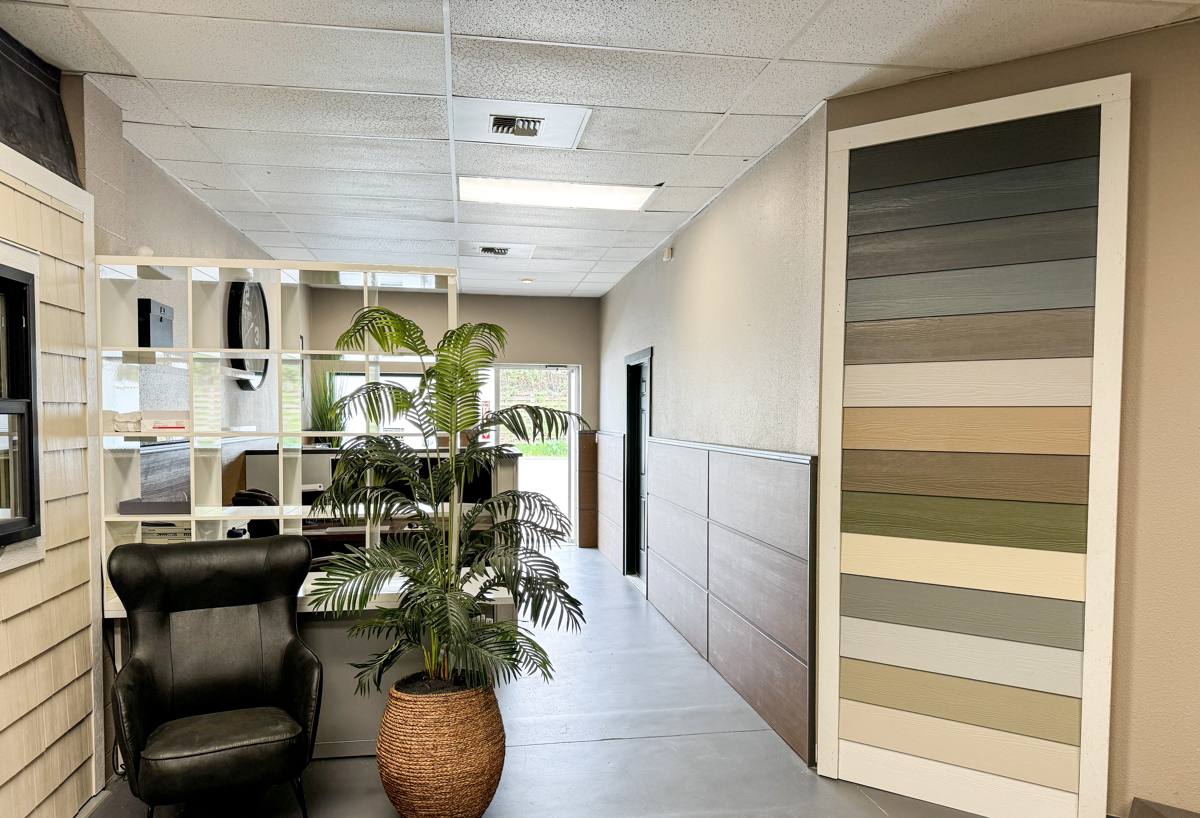
What Fiber Cement Actually Solves for a Home Like Yours
James Hardie siding is made from a blend of Portland cement, sand, and cellulose fiber, cured under pressure and heat. That process produces a material that doesn't rot, doesn't attract termites, and doesn't expand and contract with humidity the way wood-based products do. In a market like Belleair, where humidity swings are constant and afternoon storms roll through for months at a time, that dimensional stability matters more than it does in a drier climate.
Fiber cement is also non-combustible, which is a meaningful difference from wood-based siding options, including engineered wood products. It won't ignite from an ember or ambient heat source the way wood fiber composites can. For a coastal home that's also dealing with wildfire-adjacent brush in drier stretches of the year, that's one more layer of protection that doesn't cost the homeowner anything in appearance.
Built for Wind, Not Just Weather
Hurricane-force wind isn't a once-a-decade concern in this part of Florida — it's a design condition. Properly installed fiber cement siding, fastened according to manufacturer wind-load specifications, holds up to sustained wind pressure and windborne debris far better than lightweight cladding systems. That's a big part of why we treat the fastening pattern, not just the product itself, as the difference between siding that survives a storm season and siding that doesn't.
Why the HZ5 Product Line Matters Here
James Hardie engineers its siding differently depending on climate zone, and the HZ5 line is built specifically for high-humidity, high-moisture regions like the Gulf Coast of Florida. It's formulated to resist moisture intrusion and the freeze-thaw cycles are irrelevant here, but the humidity and rain exposure profile is exactly what HZ5 is designed around. Using the correct climate-engineered product line isn't a marketing detail — it affects how the siding performs over the next twenty or thirty years on your specific house.
This is one reason we don't mix and match fiber cement brands or substitute a generic version of the product. When we quote a Belleair job, we're quoting the HZ5-appropriate James Hardie products, matched to the exposure your home actually faces.
ColorPlus Finish vs. Field-Painted Siding
One of the most practical advantages of James Hardie siding is the ColorPlus factory finish option. Instead of painting the siding on site after installation, ColorPlus panels arrive with a baked-on, multi-coat finish applied under controlled factory conditions. That finish resists fading and chalking far longer than a field-applied paint job, which matters enormously in a market with this much year-round UV exposure.
Field painting still has its place for touch-ups, trim work, or homeowners who want a fully custom color outside the ColorPlus palette. But for the field of the house — the large flat areas that take the brunt of sun exposure — factory-applied color holds up longer and more evenly than paint applied after the siding is already on the wall.
What a Correct Installation Actually Involves
The siding material only performs as well as the installation behind it. A correct James Hardie install in a coastal climate like Belleair involves several details that are easy to skip and expensive to fix later:
- Removing old siding down to the sheathing and inspecting for hidden moisture damage or rot before anything new goes up
- Installing a compliant weather-resistant barrier (housewrap) with properly lapped and taped seams
- Flashing every window, door, and penetration so water is directed out and away from the wall assembly
- Following manufacturer-specified fastener type, spacing, and embedment depth — this is what gives the siding its wind resistance
- Maintaining correct clearance between the siding's bottom edge and grade, roofing, decks, and hardscape
- Leaving the manufacturer-required gaps at butt joints and trim, then sealing with a compatible sealant rather than caulking joints shut
- Using corrosion-resistant fasteners and trim accessories suited to a salt-air environment
Skip any one of these steps and you can end up with a wall that looks fine for a year or two before moisture finds its way in behind the cladding, or fasteners start bleeding rust through the finish. Most siding failures we get called out to inspect trace back to installation shortcuts, not the product itself.
Our Process From Estimate to Final Walkthrough
1. On-Site Assessment
We start by walking the exterior with you, looking at the current siding condition, trim, window and door flashing, and any signs of moisture intrusion at the sheathing level. This is also where we talk through color, plank exposure, and trim profile options within the Hardie product line.
2. Tear-Off and Sheathing Inspection
Old siding comes off entirely rather than being covered over. This lets us check the sheathing underneath for rot or soft spots — a step that's especially important on older homes in this area where past repairs or moisture events may not be visible from the outside.
3. Weather Barrier and Flashing
We install a new weather-resistant barrier and flash every penetration point before a single piece of siding goes up. This is the layer that actually keeps water out of the wall assembly long-term, and it's the part of the job a homeowner will never see again once the siding is on.
4. Installation to Manufacturer Spec
Panels, fasteners, and trim go in following James Hardie's published installation requirements for this climate zone, not a generalized nailing pattern. This includes joint spacing, fastener placement, and clearances from grade and roofline.
5. Final Walkthrough
Before we consider the job finished, we walk the exterior with you, check caulking and trim lines, and confirm everything meets both the manufacturer's specification and our own standard.
How James Hardie Compares to Other Siding Materials
| Material | Moisture/Humidity Resistance | Wind and Impact Resistance | Maintenance Burden |
|---|---|---|---|
| James Hardie Fiber Cement | Engineered for high-humidity climates (HZ5) | Strong when installed to fastening spec | Low — factory finish, no repainting cycle with ColorPlus |
| Vinyl Siding | Doesn't absorb moisture, but seams and panels can allow water behind cladding | Can crack, warp, or blow off in high wind if not rated for the area | Low upfront, but fades and becomes brittle over time in intense UV |
| Wood or Cedar Siding | Absorbs moisture, prone to rot and swelling in humid climates | Moderate; depends heavily on maintenance condition | High — regular painting, sealing, and rot inspection required |
| Engineered Wood (LP SmartSide and similar) | Treated to resist moisture, but wood-strand core is still vulnerable if the finish fails | Reasonable when new; performance depends on ongoing finish integrity | Moderate — finish and edge sealing need to be maintained over time |
Every product on this list has legitimate use cases somewhere. In a coastal, hurricane-exposed, high-UV market like Belleair, the combination of moisture stability, non-combustibility, wind performance, and factory-finish longevity is why we standardized on James Hardie and stopped installing the alternatives.
Maintaining Hardie Siding in a Salt-Air Environment
Fiber cement is low-maintenance, not no-maintenance. A little attention a couple of times a year keeps it performing for decades:
- Rinse the exterior periodically with a garden hose to remove salt residue, especially on sides of the house facing prevailing wind
- Inspect caulking at joints, trim, and penetrations annually, and re-caulk any cracked or separated sections
- Walk the exterior after any major storm to check for impact damage or displaced trim
- Keep mulch, soil, and plantings from building up against the bottom edge of the siding
- Avoid high-pressure washing directly against panel edges and joints, which can force water behind the cladding
- Watch for any rust staining at fastener points, which can indicate a fastener issue worth addressing early
Why Local Installation Experience Matters
Manufacturer specifications are written for a range of climates, but a crew that works in Belleair and the surrounding Clearwater area day in and day out knows how those specs need to be applied here specifically — where wind exposure is highest on a given lot, where salt air does the most damage to trim and fasteners, and which detailing choices hold up under real storm seasons rather than just passing an inspection. That local pattern recognition is difficult to replace with a crew that only occasionally works this coastline.
It also means a faster, more predictable process for the homeowner. A crew familiar with local permitting and inspection expectations in Pinellas County can move a project through without the delays that come from a contractor learning the area's requirements on your job.
If you're weighing a siding replacement on a Belleair home, we're happy to walk the exterior with you, look at what's there now, and talk through what a correct James Hardie installation would involve for your specific house. There's no pressure and no obligation — just a straight answer about what your home needs. Use the form below to request a free estimate.