 Clearwater Window
 Custom Decks Built for the Way Belleair Lives Outdoors
Belleair homeowners spend a lot of the year outside — morning coffee on the porch, evening dinners on the deck, weekends by the pool. A deck here isn't a weekend accessory, it's an extension of the house that has to hold up to real Gulf Coast conditions almost every day of the year. That changes what "custom" should mean. A custom deck for a Belleair property isn't just picked from a catalog of shapes and stains; it's sized, engineered, and detailed for this specific lot, this specific sun exposure, and this specific climate.
We build and repair decks throughout the Clearwater and greater Pinellas County area, and Belleair's mix of established, tree-shaded lots and open waterfront-adjacent properties means no two jobs look quite the same. What stays constant is the standard the deck has to meet: it needs to survive hurricane-force wind loads, take a beating from UV exposure nearly 365 days a year, shed wind-driven rain without trapping moisture, and resist the slow corrosion that salt air causes to anything metal.
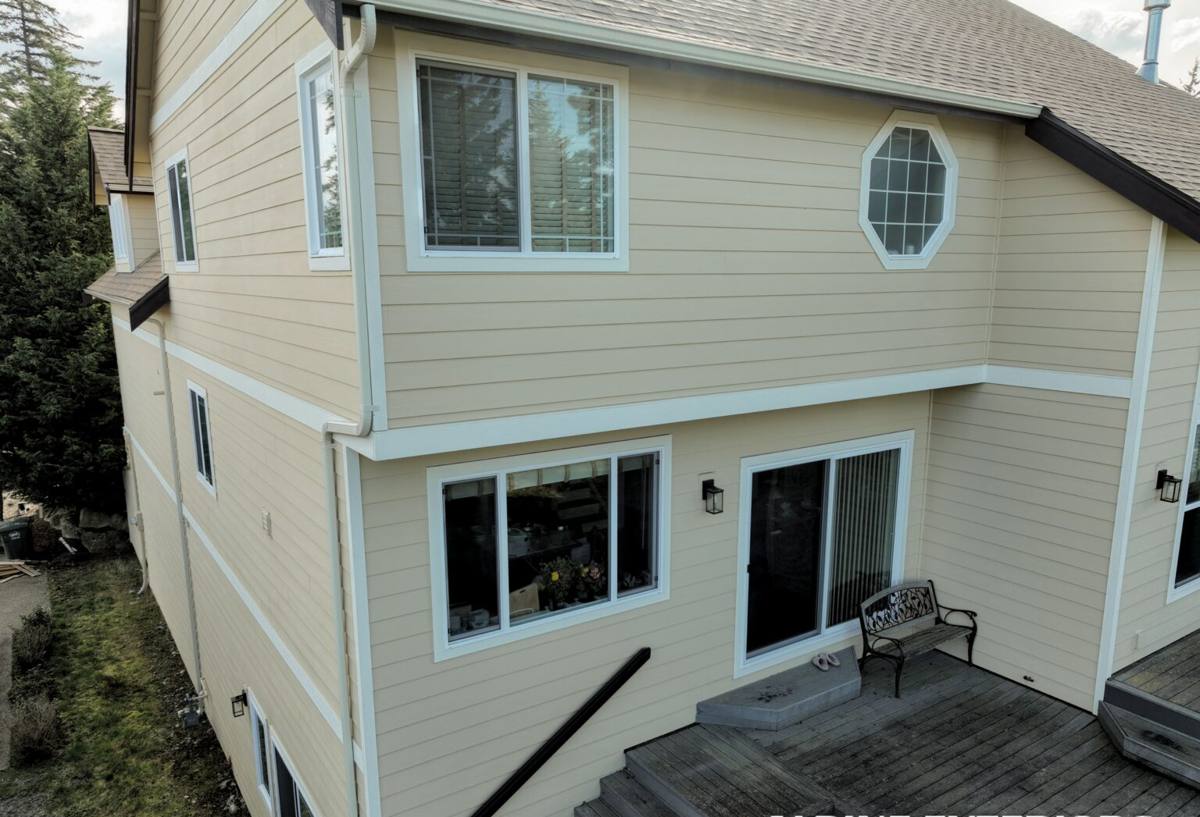
What Belleair's Climate Actually Does to a Deck
It helps to be specific about what "coastal Florida climate" means for a deck, because each factor damages a deck differently and calls for a different fix.
Sun and UV
Florida gets some of the most intense year-round UV exposure in the continental U.S. On an uncovered or lightly shaded deck, that UV breaks down the lignin in wood fibers, which is what causes graying, splintering, and surface checking. It also degrades sealants, fades composite decking pigments unevenly, and dries out gaskets and fastener coatings faster than manufacturers' generic warranty language usually accounts for.
Wind-Driven Rain
Rain in this region rarely falls straight down. Storm systems push it sideways, which means water gets driven under rail caps, into end grain, and behind ledger boards in ways a deck built to a "normal" rain assumption isn't designed for. Trapped moisture behind flashing or under improperly sealed boards is the single biggest cause of hidden rot we find on older decks in this area.
Salt Air
Belleair sits close enough to the water that airborne salt reaches structures even without direct ocean spray. Salt accelerates galvanic corrosion on fasteners, brackets, and any dissimilar metals in contact with each other. A deck built with standard interior-grade hardware can start showing rust streaks and weakening connections years before a deck built with the correct coastal-rated fasteners.
Hurricane-Force Wind
Pinellas County's wind load requirements exist because they have to. A deck attached to the house has to resist uplift and lateral load, not just hold up a grill and some patio furniture. Ledger attachment, post footing depth, and railing anchoring all get evaluated differently here than they would in a low-wind-zone state.
What a Correctly Built Deck Involves in This Area
A deck that's going to hold up in Belleair starts with decisions that aren't visible once the project is finished, but they're the difference between a deck that lasts and one that needs major repair in five years.
Structural Framing and Attachment
The ledger board connection to the house is the most safety-critical joint on an attached deck. It needs proper flashing to keep water from getting behind the house's siding or sheathing, and lag bolts or through-bolts sized and spaced to the actual load — not just "enough to hold it up." Footings need to go to the depth the local code and soil conditions call for, which matters more on lots with sandy or variable fill than homeowners often expect.
Material Selection
We size material choice to sun exposure and maintenance appetite, not just looks. A fully shaded deck under mature trees can often support a wood species that would bake and crack in an open, south-facing yard. An uncovered deck in full sun is usually better served by a composite or PVC decking product with UV-stable pigment, or a hardwood species genuinely rated for high-UV exposure — not a softwood that's been marketed as "weather resistant" without the density to back it up.
Fasteners and Hardware
This is where a lot of decks fail early, and it's an easy thing to get wrong if a crew is used to building inland. Stainless steel or coated coastal-rated fasteners, hidden fastener systems that don't create standing-water pockets, and post bases and joist hangers rated for the actual exposure category all cost more up front and save real money over the life of the deck.
Railings and Guard Systems
Railings take direct wind and rain load and are usually the first thing to show wear. We detail rail post attachment to resist the lateral loads that come with wind gusts, and we pay attention to how caps and balusters shed water instead of pooling it.
Decking Material Comparison for Belleair Conditions
| Material | UV/Sun Performance | Moisture & Salt Air Behavior | Maintenance |
|---|---|---|---|
| Pressure-treated pine | Fades and can check without regular sealing | Needs sealant renewed to resist wind-driven rain intrusion | Highest — annual inspection and periodic re-sealing |
| Dense hardwood (e.g., ipe-type species) | Very good natural UV resistance | Naturally dense and rot-resistant; still benefits from oiling | Moderate — periodic oiling to maintain color |
| Capped composite | Strong with UV-stable capping; verify pigment warranty | Doesn't absorb moisture or salt like wood | Low — occasional cleaning |
| PVC decking | Excellent, fully synthetic surface | Immune to rot; check for heat expansion detailing | Lowest — cleaning only |
There's no single "right" material for every Belleair property — it depends on how much sun the deck gets, whether it's covered, and how much upkeep the homeowner wants to do. We walk through this trade-off honestly rather than defaulting to whatever's easiest to install.
Our Process for a Belleair Deck Project
1. On-Site Assessment
We look at sun exposure, drainage, soil conditions, and how the deck will attach to the house before we talk materials. If it's a replacement, we also check the existing structure for hidden rot or corrosion that the new build needs to account for.
2. Design and Material Selection
We size the framing, footing depth, and hardware to actual wind and load requirements for this location, then match decking and railing materials to the sun exposure and maintenance level the homeowner wants.
3. Permitting
Attached and elevated decks generally require permitting and inspection in Pinellas County. We handle that process as part of the job so the finished deck is properly documented — which also matters at resale and for insurance.
4. Construction
Framing and structural connections go in first and get inspected before decking goes down. We flash the ledger board correctly, use coastal-rated fasteners throughout, and build railings to resist wind load, not just to look finished.
5. Final Walkthrough
We go over the finished deck with the homeowner, including what maintenance (if any) the chosen material needs and what to watch for over the first year.
Why It Matters That a Crew Already Works in Belleair
A deck built by a crew that mostly works inland or out of state will sometimes get the framing right and still get the coastal details wrong — standard fasteners instead of coastal-rated ones, ledger flashing sized for a lighter rain pattern, or decking picked without accounting for how much direct UV a Florida roofline actually lets through. Those mistakes don't usually show up in the first year. They show up as rust streaks, soft spots, or a rail connection that's loosened, three or four years in.
Working regularly in Belleair and the surrounding Clearwater area means we're familiar with the local permitting process, the wind load requirements Pinellas County actually enforces, and the specific ways sun, salt, and storm rain wear down a deck here versus elsewhere. That local familiarity is part of what keeps a project on schedule and built to hold up, not just to pass a first inspection.
Maintaining a Deck Once It's Built
Even a well-built deck needs some attention in this climate. A short, honest maintenance checklist goes a long way:
- Inspect fasteners and connection hardware annually for early signs of rust or loosening, especially after hurricane season
- Check ledger board flashing and any gaps where wind-driven rain could get behind the house's siding
- Clean decking surfaces periodically to remove salt residue, pollen, and organic buildup that traps moisture
- Reseal or re-oil wood decking on the schedule the specific species calls for — don't wait for visible graying
- Check railing post attachment points for movement after major storms
- Keep gutters and nearby drainage clear so water isn't sheeting directly onto or under the deck
None of this is complicated, but skipping it is how a well-built deck ends up needing early repairs anyway.
Common Mistakes We See on Older or DIY Decks
A lot of the repair calls we get in this area trace back to a handful of recurring issues: standard interior-grade fasteners used outdoors, ledger boards attached without proper flashing, footings poured too shallow for the soil conditions, and decking material chosen for price rather than sun exposure. Individually, any one of these might not cause a failure right away. Combined, and left through a few storm seasons, they compound into structural problems that cost far more to fix than they would have to build correctly the first time.
If you're evaluating an existing deck, the questions worth asking are simple: what are the fasteners made of, was the ledger board flashed, and how deep are the footings. A contractor who can answer those clearly, without hedging, is a good sign.
Get a Free, No-Pressure Estimate
If you're planning a new deck or replacing one that's showing its age, we're glad to take a look and walk you through what your property specifically needs — no pressure, no generic sales pitch. Use the form below to request a free estimate for your Belleair deck project.