 Clearwater Window
 Fiber Cement Siding Built for Belleair Bluffs Conditions
Belleair Bluffs is a small, tightly packed residential community wedged between Clearwater and Belleair on the Pinellas County peninsula, close enough to the Intracoastal Waterway that salt-laden air is a constant fact of life for every home in the area. Houses here take a different kind of beating than homes even twenty miles inland: more humidity, more salt exposure, more direct sun, and a longer, more serious hurricane season. Siding that works fine in a drier, calmer climate often doesn't hold up the same way here.
We install fiber cement siding for homeowners throughout Belleair Bluffs and the surrounding Clearwater area, and we've built our entire installation process around what this specific coastal environment does to exterior materials over time. This page covers what local homes actually need from their siding, what a correct installation looks like, and how our process works from first estimate to final walkthrough.
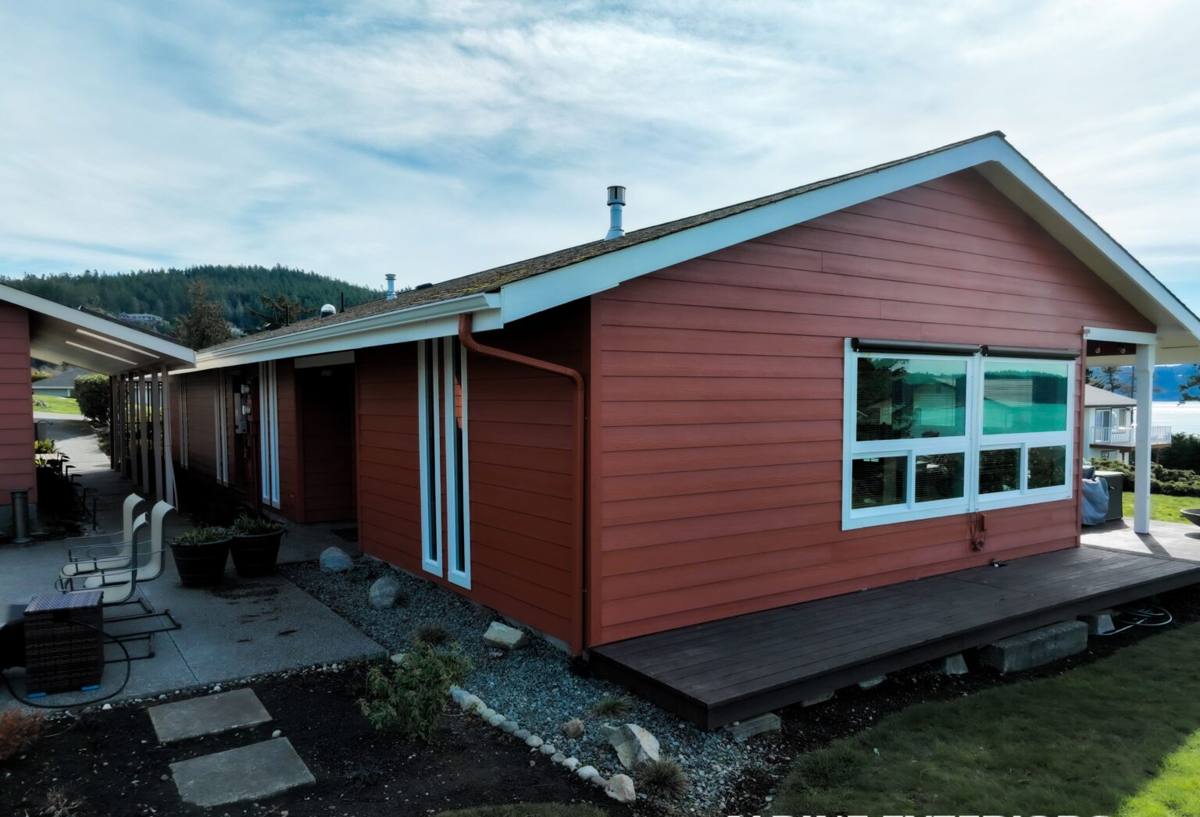
What Coastal Pinellas County Conditions Do to Ordinary Siding
Every material on the exterior of a Belleair Bluffs home is fighting the same combination of stressors around the clock. Understanding what those stressors actually do helps explain why product choice and installation quality matter more here than in most parts of the country.
Salt Air and Humidity
Proximity to the Intracoastal Waterway and the Gulf means airborne salt is present even on homes that aren't waterfront. Salt accelerates corrosion of fasteners and trim, and combined with Florida's near-constant humidity, it creates ideal conditions for moisture to work its way behind siding that isn't properly sealed or flashed. Materials that swell, absorb moisture, or trap water against the wall assembly tend to fail faster here than anywhere inland.
Intense, Year-Round UV Exposure
Pinellas County sun isn't seasonal — it's a twelve-month problem. UV breaks down pigments and resins in lower-grade paints and coatings, which is why field-painted or poorly finished siding fades, chalks, and needs repainting far sooner here than the manufacturer's timeline might suggest in a milder climate.
Wind-Driven Rain and Hurricane-Force Wind
During tropical storms and hurricanes, rain doesn't just fall — it's driven horizontally into walls under pressure. Siding systems that rely on gravity and loose overlap to shed water, rather than proper flashing and fastening to spec, are the ones that let water intrude during a storm. Wind uplift is a separate problem: siding that isn't fastened correctly can be pulled loose or torn off entirely in sustained hurricane-force gusts.
Why We Install Only James Hardie Fiber Cement
We made a deliberate decision years ago to install James Hardie fiber cement siding exclusively — not vinyl, not LP SmartSide, not Cemplank or Allura, not primed wood. That's not a marketing position; it's a standard we hold because of what we've seen these products do, and not do, in exactly the kind of coastal Florida conditions Belleair Bluffs homes deal with every year.
HZ5 Product Line, Engineered for This Climate
James Hardie manufactures regional formulations of its siding, and the HZ5 line is engineered specifically for high-humidity, high-moisture climate zones like ours. It's formulated to resist moisture-related damage better than a one-size-fits-all product, which matters directly in an area dealing with salt air and near-constant humidity year-round.
ColorPlus Factory Finish
Fiber cement siding painted on-site is only as good as the paint job and the weather conditions during application. James Hardie's ColorPlus finish is baked on in a factory-controlled environment with a coating engineered for UV resistance, and it carries its own finish warranty separate from the substrate. In a climate where field-applied paint fades and chalks fast, a factory finish is a meaningful, practical advantage — not a cosmetic upsell.
Non-Combustible and Backed by a Transferable Warranty
Fiber cement is non-combustible, which matters for insurance and safety alike. James Hardie also backs its siding with a strong limited warranty that's transferable to a new owner if the home sells — a real factor in resale, since it signals the siding was installed as a system rather than patched together from mismatched materials.
What a Correct Fiber Cement Siding Installation Actually Involves
Fiber cement siding is only as good as the installation behind it. The material can meet every manufacturer spec and still fail early if it's hung wrong. Correct installation isn't optional detail work — it's the difference between siding that lasts decades and siding that causes moisture problems within a few years.
Moisture Management Behind the Siding
Every correct installation starts with a weather-resistant barrier and proper flashing at every penetration — windows, doors, hose bibs, light fixtures, anywhere something interrupts the wall plane. Water needs a planned path off the wall, not just a hope that the siding itself keeps everything out. This is the single most common place we see prior installations cut corners, and it's the reason so many "siding problems" are actually flashing and moisture-barrier problems.
Fastening, Clearances, and Joints
James Hardie specifies exact fastener types, spacing, and penetration depth, along with minimum clearances from rooflines, decks, and grade. Butt joints need to be properly flashed or sealed, not just butted together and caulked over. In a hurricane-prone area, correct fastening isn't a best practice — it's what keeps siding on the wall during high wind events.
Caulking and Paint Touch-Up at Cut Edges
Any time a Hardie board is field-cut, the cut edge needs to be sealed per manufacturer spec to maintain the product's moisture resistance. Skipping this step is invisible at installation but shows up as premature edge deterioration years later.
Our Process for Belleair Bluffs Projects
- On-site assessment — we inspect the existing siding, sheathing, and any trouble spots (window flashing, trim, areas showing prior water intrusion) before quoting anything.
- Written estimate — a clear scope covering material, prep work, and any sheathing repair identified during the assessment, with no vague allowances.
- Removal and substrate check — old siding comes off and the sheathing underneath gets inspected; any rot or damage gets addressed before new material goes up, not covered over.
- Weather-resistant barrier and flashing — installed to spec at every penetration before a single piece of siding goes on.
- Hardie installation — fastened, spaced, and joined to manufacturer specification, sized for the HZ5 climate zone.
- Final walkthrough — we go over the finished work with the homeowner before calling the job complete.
Cost Factors for Fiber Cement Siding in Belleair Bluffs
Every home is different, and we don't quote pricing without seeing the property, but these are the main variables that move the cost of a fiber cement siding project up or down.
| Factor | Why It Matters |
|---|---|
| Home size and wall complexity | More square footage and more corners, gables, and cutouts mean more labor and material waste. |
| Existing substrate condition | Rotted or water-damaged sheathing found during tear-off adds repair scope before new siding can go on correctly. |
| Siding profile chosen | Lap width, shingle-style panels, and trim details vary in material and labor cost. |
| ColorPlus finish vs. primed-for-paint | Factory-finished boards cost more up front but eliminate a full-home paint job and its recurring maintenance cost. |
| Access and site conditions | Tight lot lines, landscaping, and proximity to neighboring structures affect setup and labor time. |
| Removal and disposal | Tear-off and haul-away of old siding is a real cost, especially with multiple layers of prior material. |
Signs Your Belleair Bluffs Home Needs New Siding
Some warning signs are obvious; others show up gradually and get dismissed as normal wear. In coastal Pinellas County, it's worth taking these seriously sooner rather than later:
- Visible warping, buckling, or soft spots when you press on the siding
- Paint that's peeling, bubbling, or chalking heavily, especially on sun-facing walls
- Cracks or gaps at butt joints, corners, or around window and door trim
- Discoloration or staining that suggests water is tracking behind the siding
- Visible mold, mildew, or a persistent musty smell near exterior walls
- Siding that's original to a home built before current hurricane-zone codes were in place
- Rising energy bills that suggest the wall assembly isn't sealing the way it should
Why Hiring a Crew That Already Works Belleair Bluffs Matters
Siding installation isn't generic. A crew that regularly works homes in Belleair Bluffs and the broader Clearwater area understands the local permitting process, has already seen how salt air and storm exposure affect siding on homes like yours, and knows how to detail flashing and fastening for wind and moisture conditions that don't show up the same way in a lot of national training material. That local repetition is what turns a correct-on-paper installation into one that actually holds up through a decade of Gulf Coast summers and storm seasons.
We stand behind fiber cement because we've watched it perform in this exact environment, and we stand behind James Hardie specifically because the product line, the factory finish, and the warranty structure all line up with what a coastal Pinellas County home actually needs. If your Belleair Bluffs home's siding is showing its age or you're planning ahead for storm season, we're happy to take a look and give you a straightforward, no-pressure estimate — just fill out the form below.