 Clearwater Window
 Deck Replacement Built for Belleair Bluffs Conditions
Belleair Bluffs sits in a stretch of Pinellas County where homes are close to open water and exposed to whatever the Gulf sends inland. That means a deck here works harder than a deck almost anywhere else in the country. Between the intense year-round UV, the salt-laden air blowing off the Intracoastal, wind-driven rain during summer storms, and the real possibility of hurricane-force gusts, a deck's structure and finish get tested constantly, not just during a named storm.
A lot of deck problems we see in this area aren't the result of bad luck. They're the result of a deck that was built or repaired for a milder climate and never stood a chance here. Replacing a tired, soft, or storm-damaged deck the right way means designing for these conditions from the ground up, not patching around them.
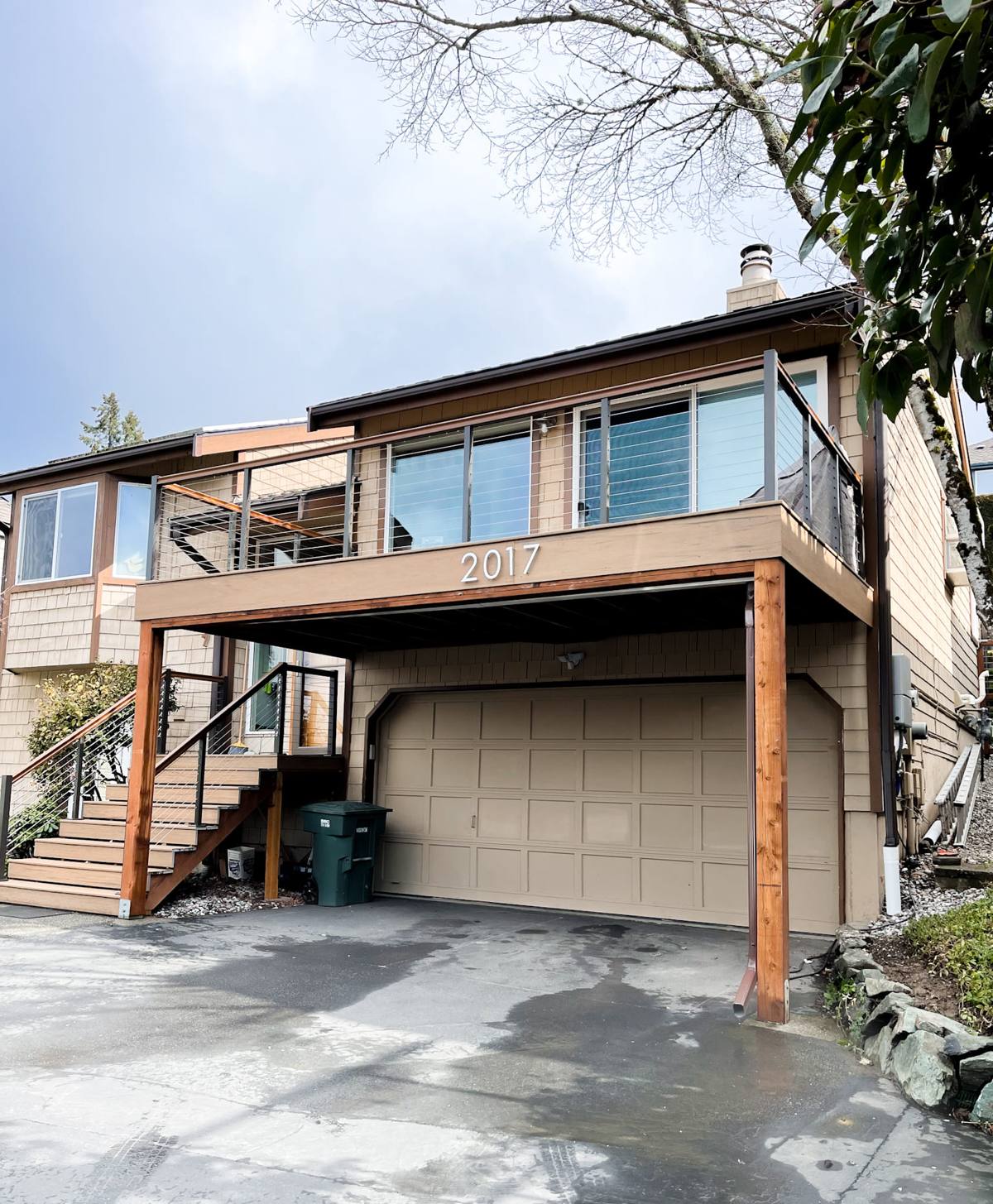
Why Decks Fail Faster on the Pinellas Coast
Salt Air and Metal Fasteners
Salt air accelerates corrosion on fasteners, brackets, and connectors far faster than it would inland. When a deck was built with standard hardware instead of coastal-rated stainless or hot-dip galvanized fasteners, the metal starts to weaken from the inside long before it's visible on the surface. That's how a deck can look fine and still have a compromised ledger board connection or failing joist hangers underneath.
UV Exposure
Florida sun is relentless on decking boards and railings. Wood dries out, checks, and splinters faster here than in northern climates. Composite and PVC boards that aren't UV-stabilized can fade unevenly or become brittle over a shorter span than the manufacturer's marketing suggests for a typical U.S. climate.
Wind-Driven Rain and Standing Water
Afternoon storms don't just fall straight down here — wind pushes rain sideways and up under railings, fascia boards, and ledger connections. Decks that don't have proper flashing at the house connection, or that lack drainage gaps between boards, trap moisture against wood framing. That's where rot starts, usually out of sight until a board feels soft underfoot.
Hurricane-Force Wind Loads
A deck attached to a house is a structural component, not just an outdoor surface. Ledger attachment, post connections, and railing anchoring all need to handle real wind loads, not just support foot traffic. This is the part most likely to get shortcut on a low-bid rebuild, and it's the part that matters most when a storm rolls through.
Signs Your Belleair Bluffs Deck Needs Replacing, Not Patching
- Boards that feel spongy, springy, or soft when you walk across them
- Visible gaps, cracking, or splintering across multiple boards, not just one or two
- Rust staining around fasteners or visible corrosion on brackets and hangers
- A ledger board connection to the house that looks separated, stained, or soft
- Railings that wobble or flex when leaned on
- Persistent mildew, dark staining, or a musty smell near ground-level framing
- A deck that's more than 15-20 years old and has never had the substructure inspected
If you're only seeing surface wear on newer, well-built framing, repair may be enough. Once the structure itself is compromised, patching becomes a short-term fix that costs more in the long run.
What a Correct Deck Replacement Involves
Full Structural Assessment First
Before we talk materials or design, we look at what's underneath: the ledger board attachment, footings, posts, and joists. In coastal Pinellas County, we're specifically checking for fastener corrosion, moisture damage at the house connection, and whether the original footings were sized for the loads they're actually carrying. Replacing decking boards over a compromised frame just delays the real problem.
Proper Ledger and Flashing Detail
The ledger board — where the deck attaches to your house — is the single most common point of failure we find on rebuilds in this area. It needs correct flashing to keep wind-driven rain from getting behind it, and it needs fasteners rated for the load and the coastal environment, not general-purpose hardware.
Hardware Rated for Salt Air
We use stainless steel or hot-dip galvanized fasteners and connectors throughout, sized and rated for the actual structural loads. This isn't an upgrade option, it's a baseline for how we build decks near the water here.
Wind-Rated Railing and Post Connections
Railings need to be anchored to resist real lateral force, not just meet a minimum height code. Post-to-frame connections get the same attention as the ledger — this is where a lot of storm damage happens on decks that weren't built with local wind conditions in mind.
Drainage and Airflow Beneath the Deck
Proper board spacing and substructure ventilation let water move off the deck and framing dry out between storms. A deck that holds moisture against wood framing is on a shorter clock, regardless of what decking material sits on top.
Choosing Decking Material for a Belleair Bluffs Home
There's no single "best" decking material for every home — it depends on your budget, how close you are to the water, and how much maintenance you're willing to keep up with. Here's how the common options actually compare under this climate.
| Material | UV / Sun Behavior | Salt Air Durability | Maintenance |
|---|---|---|---|
| Pressure-treated wood | Fades, checks, and splinters over time without regular sealing | Vulnerable if fasteners aren't coastal-rated | Annual sealing/staining recommended |
| Tropical hardwoods | Very good natural UV resistance; will gray without oiling | Dense grain resists moisture well | Periodic oiling for color retention |
| Capped composite | Good with UV-stabilized cap; avoid uncapped composite in full sun | Strong, won't corrode or rot | Low — occasional cleaning |
| PVC decking | Excellent UV stability in most product lines | Excellent, fully synthetic | Low — occasional cleaning |
We install what fits your home and your budget honestly — including wood, when that's the right call for the look and price point you want. What we won't do is install uncapped composite in a full-sun, coastal exposure and let you find out the hard way that it wasn't built for this environment. That's a maintenance and warranty headache we'd rather steer you away from up front.
Our Deck Replacement Process
- On-site inspection of the existing deck, structure, and house connection
- Honest assessment of repair vs. full replacement, with reasoning explained
- Design and material discussion based on your budget, use, and maintenance preference
- Permitting handled for you, in line with Pinellas County requirements
- Removal of the old deck and inspection of framing/ledger condition once exposed
- Build-out with coastal-rated hardware, proper flashing, and wind-rated connections
- Final walkthrough so you understand what was built and why
Why Hire a Crew That Already Works in Belleair Bluffs
A contractor who mostly works inland projects doesn't always think about ledger flashing, fastener corrosion, or wind load the same way a crew working the Pinellas coastline every week does. We're already familiar with what this exposure does to a deck over 5, 10, and 20 years, because we're the ones called back out to fix decks that were built without it in mind. That local experience shapes every replacement we do — it's not an add-on service, it's how we build by default.
We also know the practical side of working in this area: permitting expectations, common house construction types in Pinellas County, and how proximity to the water should change material and hardware decisions on a case-by-case basis, not as a blanket upsell.
Cost Factors to Expect
Every deck is different, but the main things that move the price on a replacement are consistent. Understanding them up front helps you set a realistic budget before we ever put together a quote.
| Factor | Why It Affects Cost |
|---|---|
| Deck size and shape | More square footage and complex angles mean more material and labor |
| Decking material chosen | Wood, composite, and PVC carry different material costs and install labor |
| Substructure condition | Rotted or undersized framing may need full replacement, not reuse |
| Railing style and code requirements | Cable, glass, or custom railing systems cost more than standard rail |
| Height and stairs | Elevated decks and multi-run stairs add framing and labor complexity |
| Permitting and inspections | Required for most structural deck work in Pinellas County |
We'll never quote a job without seeing the actual structure first — a deck that looks straightforward from the yard can have hidden framing issues that change the scope once we open it up.
Ready to Talk About Your Deck
If your deck in Belleair Bluffs is showing its age, feels unstable, or came through a storm season looking worse for it, we're happy to take a look and give you a straight answer about repair versus replacement. Fill out the form below for a free, no-pressure estimate.