 Clearwater Window
 Why Dunedin Roofs Wear Differently Than Roofs Inland
Dunedin sits close enough to the Gulf that its roofs deal with a combination of stresses that inland Florida homes simply don't face in the same way. Salt-laden air corrodes exposed metal faster. Wind-driven rain during summer storms and tropical systems finds its way into any gap in flashing or underlayment that a rushed installation left behind. Year-round UV exposure bakes the asphalt in shingles, drying out the oils that keep them flexible long before a roof in a milder climate would show the same wear. None of this is unique to any one street or neighborhood in Dunedin — it's the reality of roofing anywhere close to Pinellas County's coastline, and it's the starting point for how we approach every shingle roof we install here.
A roof that was built to a generic spec, or installed by a crew used to drier, calmer regions, tends to show its age early in this environment. Granule loss accelerates, nail fasteners back out as decking expands and contracts, and flashing seams that were sealed but not properly integrated into the shingle courses start leaking during the next hard blow. Understanding these specific failure points is the difference between a roof that holds up through hurricane season after hurricane season and one that needs attention every couple of years.
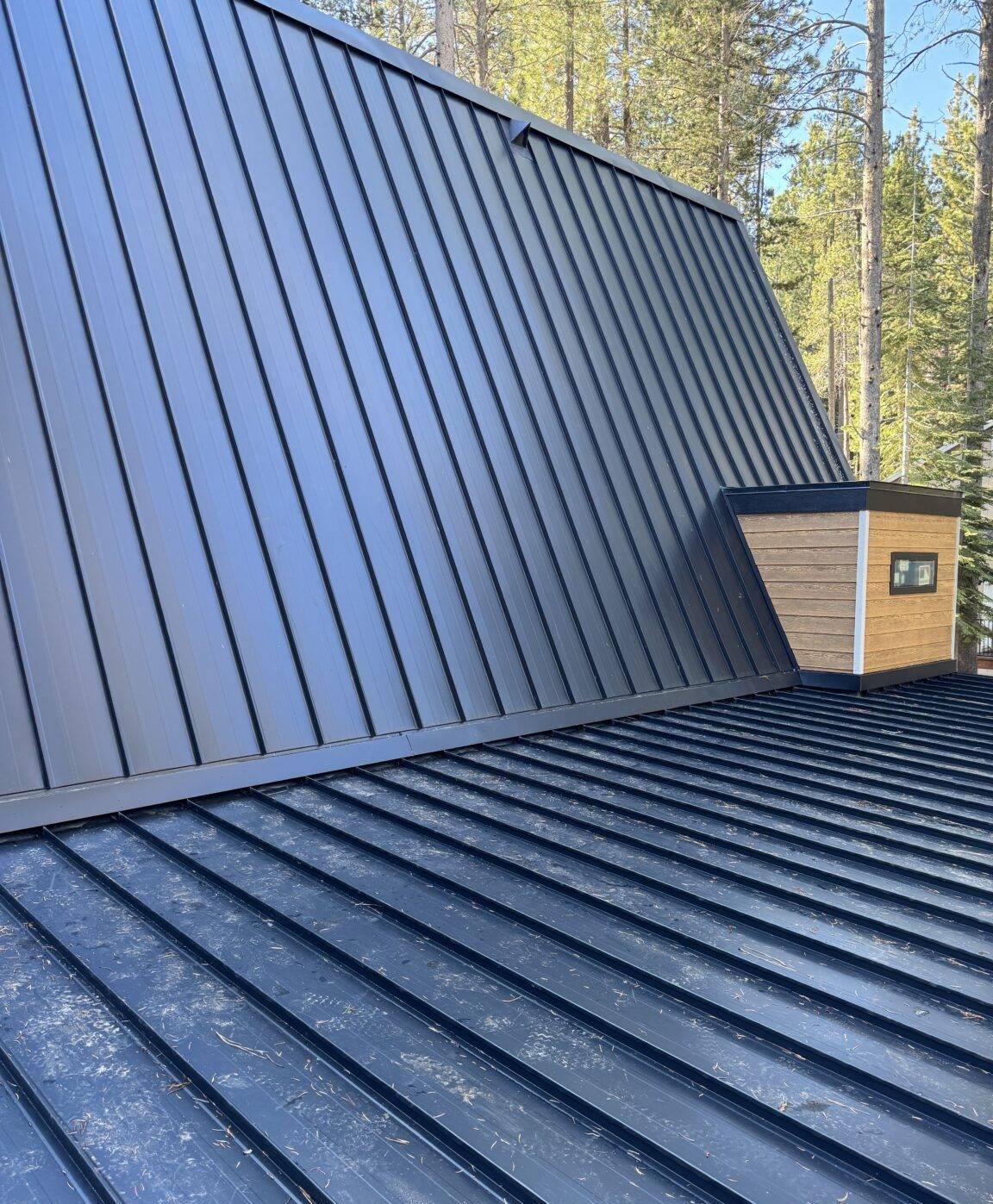
What an Asphalt Shingle Roof Actually Needs to Handle Here
Wind Resistance
Florida Building Code sets minimum wind resistance requirements for roofing in coastal counties, and Pinellas County enforces them closely. For asphalt shingles, that means proper nailing patterns (six nails per shingle is standard in high-wind zones, not the four sometimes used elsewhere), correct starter strip installation along eaves and rakes, and shingle products rated for the wind speeds our building code requires. Skipping any one of these doesn't just risk a few missing shingles in a storm — it risks wind getting up under a whole section of roof, which is when real damage happens.
Moisture Management
Wind-driven rain in this area doesn't just fall on a roof, it gets pushed sideways and upward under shingle edges. That makes underlayment quality and flashing detail work more important here than in places where rain falls mostly straight down. A synthetic underlayment with proper lap and fastening, ice-and-water shield style membrane at vulnerable areas like valleys and penetrations, and flashing that's woven into the shingle courses rather than just caulked on top are what actually keep water out.
Heat and UV Exposure
Attic ventilation matters more in Dunedin than the shingle brochure will tell you. A hot, poorly ventilated attic bakes shingles from underneath as well as from sun exposure above, shortening their usable life regardless of the product's rated lifespan. Balanced intake and exhaust ventilation is a basic requirement we check on every roof, not an upsell.
What a Correct Installation Involves
A shingle roof is a system, not just a layer of shingles nailed to plywood. Each part below has to be done right for the roof to perform as a whole.
- Full tear-off of the old roofing material so the deck can be inspected directly, rather than covering over hidden problems
- Deck inspection and replacement of any rotted, delaminated, or soft plywood sections before anything new goes down
- Drip edge installed at eaves and rakes, under the underlayment at the eaves and over it at the rakes, per code
- Synthetic underlayment installed with correct overlap, and self-adhered membrane at valleys, skylights, and other penetrations
- Flashing integrated into the shingle courses at walls, chimneys, and roof-to-roof transitions, not just surface-sealed
- Shingles installed with the manufacturer's specified nail count and placement for our wind zone
- Ridge vent or equivalent exhaust ventilation paired with adequate soffit intake
- Final walk-through inspection before we consider the job complete
Any one of these steps done poorly can undercut the rest. A properly nailed shingle over a poorly lapped underlayment will still leak eventually. A well-sealed valley on a deck with hidden rot is just delaying a bigger repair.
Shingle Options and What Drives the Cost
Homeowners in Dunedin are usually choosing between a few tiers of asphalt shingle product, plus a decision about impact rating. There's no single right answer — it depends on budget, how long you plan to stay in the home, and how much weight you put on wind performance versus upfront cost.
| Shingle Type | Typical Wind Rating | Notes for Coastal Use |
|---|---|---|
| 3-tab shingles | Lower end of code-compliant range | Lowest upfront cost; thinner profile means less margin for error in wind and less resistance to granule loss over time |
| Architectural (laminated) shingles | Mid-to-high, product dependent | Heavier, more layered construction holds up better to UV and wind; the common choice for this area |
| Impact-rated architectural shingles | Highest, often paired with Class 4 impact rating | Best long-term performance in coastal wind and debris exposure; may qualify for insurance premium credits |
Beyond the shingle tier itself, cost is driven by roof size and pitch, how many layers of old roofing need to come off, deck repairs discovered during tear-off, the complexity of the roofline (valleys, dormers, chimneys), and ventilation upgrades if the current attic system is inadequate. We give a written estimate that breaks these out rather than a single number, so you know what you're actually paying for.
How Our Process Works
We start with an on-roof inspection, not a drive-by estimate. That means getting on the roof to check the deck condition where accessible, look at existing flashing and ventilation, and identify any problem areas before we ever talk numbers. From there we put together a written proposal that spells out the shingle product, underlayment, flashing approach, and any deck repair allowances, so there's no ambiguity about scope once work starts.
Once a job is scheduled, we handle the permit through the local building department, protect landscaping and the property perimeter before tear-off begins, and do the work in a single continuous job rather than stretching it across multiple partial days whenever weather allows. At the end of the job we do a final walk-through with you, and we make sure the permit closes out with a passed final inspection — that inspection record matters later for insurance and resale, so we don't treat it as a formality.
Why a Crew That Already Works Dunedin Matters
Roofing code requirements, permitting steps, and inspection expectations are set at the county and state level, and a crew that works Pinellas County regularly already knows how the local building department wants documentation submitted and what inspectors look for on final walk-throughs. That familiarity avoids the delays that come from a contractor learning the local process on your project.
There's also a practical side to being local: we're not driving in from another region to do a one-off job and disappearing afterward. If a question comes up during a storm season after the install, or you need documentation for an insurance renewal, you're dealing with a crew that's still working in the same area and stands behind the job.
Maintenance and Warning Signs Worth Acting On
Asphalt shingle roofs don't usually fail all at once — they show signs first. Catching these early is almost always cheaper than waiting for an active leak.
- Granules collecting in gutters or at downspout outlets, a sign shingles are wearing down
- Shingles that look curled, cupped, or are visibly lifting at the edges
- Cracked or missing shingles after a storm, even if there's no visible leak yet
- Rust staining or gaps around flashing at chimneys, walls, or vent pipes
- Dark streaking or algae growth, which is cosmetic but worth monitoring for underlying moisture
- Any soft spots, sagging, or staining visible from inside the attic
An annual visual check, especially after hurricane season, catches most of these before they become a bigger repair.
Permits, Wind Mitigation, and Insurance in Pinellas County
A shingle roof replacement in Dunedin requires a building permit, and the final inspection on that permit is what documents the work was done to code. That documentation matters beyond the job itself — insurers in this part of Florida increasingly ask for a wind mitigation inspection when underwriting or renewing a policy, and a properly permitted, code-compliant roof with modern fastening and, where applicable, impact-rated shingles can affect the premium credits available to you. We can't quote you an insurance number, since that's between you and your carrier, but we build the roof and hand over the documentation you'd need to have that conversation with them.
If you're weighing a repair against a full replacement, or just want an honest read on what condition your roof is actually in, we're glad to take a look. Fill out the form below for a free, no-pressure estimate — we'll tell you what we see, plain and simple.