 Clearwater Window
 Siding Built for Skycrest's Climate, Not Just Its Curb Appeal
Skycrest sits inland enough from the beaches to feel like a quieter, older Clearwater neighborhood, but it isn't sheltered from what Pinellas County weather does to a house. The siding on a Skycrest home still takes the full brunt of the Gulf Coast's combination of punishments: sustained summer humidity, intense UV exposure nearly year-round, wind-driven rain that finds every gap in a wall system, and salt-laden air that drifts inland further than most homeowners assume. A siding installation here has to be judged by how it performs against all four of those factors at once, not by how it looks in a showroom.
That's the lens we use on every Skycrest siding project. We're not selling a look — we're building an exterior wall system that has to survive Florida conditions for decades with minimal drama.
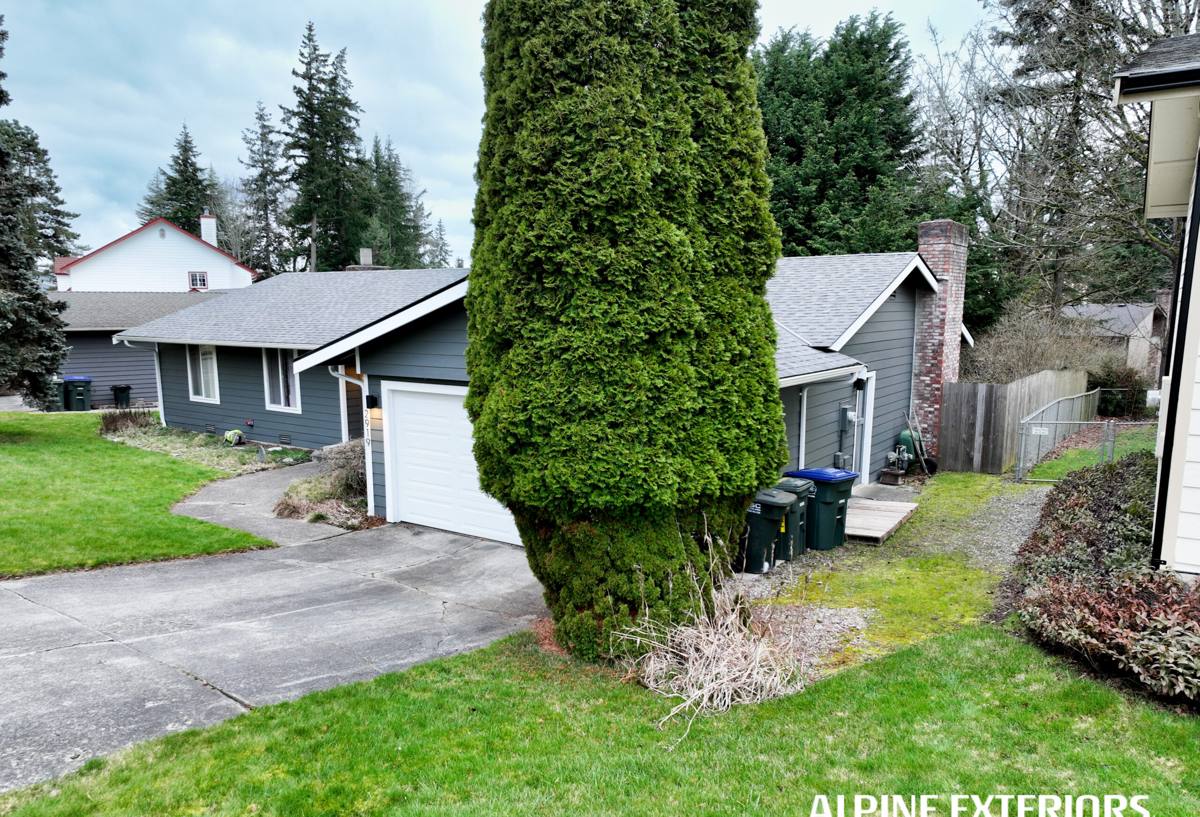
What Skycrest Homes Actually Need From Their Siding
Wind Resistance That Matches Real Storm Exposure
Clearwater is squarely in hurricane country, and Skycrest's mature tree canopy — while a neighborhood asset — also means more wind-driven debris impact risk during storms than a treeless subdivision. Siding needs to stay fastened and intact under sustained high winds and gusts, not just look fine on a calm day. That comes down to the fastening schedule, the substrate behind the siding, and whether the product itself is rated for it — not the brand name on the piece.
UV Stability Without Fading or Chalking
Central Florida sun is relentless. Painted wood and many composite sidings chalk, fade, or need repainting within a handful of years under this kind of UV load. Whatever goes on a Skycrest home needs a factory finish engineered to hold color under direct, near-daily sun exposure — not a field-applied paint job that starts breaking down almost immediately.
Moisture and Rot Resistance
Wind-driven rain in a Gulf Coast storm doesn't fall straight down — it gets pushed sideways into wall assemblies, seams, and butt joints. Any siding material that absorbs water or swells when wet is a long-term liability here. The material itself needs to be dimensionally stable when saturated, and the installation needs correct flashing and clearances so water sheds away from the wall instead of sitting against it.
Salt Air Corrosion Resistance
Skycrest isn't beachfront, but Pinellas County salt air travels well inland on Gulf breezes, and it attacks fasteners, trim, and unprotected substrates over time. Correct fastener selection and a siding material that doesn't corrode are basic requirements, not upgrades.
Why We Install Only James Hardie Fiber Cement
We standardized on James Hardie fiber cement siding for every home we side in Clearwater, Skycrest included, because it's the one product we've found that answers all four of the demands above without asking the homeowner to compromise. Hardie board is non-combustible fiber cement, which means it doesn't burn, warp, or attract wood-boring pests. Its ColorPlus factory finish is baked on under controlled conditions specifically to resist UV fading, which matters enormously in a market that gets as much direct sun as ours does. And Hardie engineers specific product lines for humid, storm-prone climates like ours — that's not marketing language, it's a real difference in how the board is formulated and tested.
We don't install LP SmartSide, vinyl, Cemplank, Allura, or raw wood siding like primed spruce or cedar. Each of those has legitimate uses in other climates or budgets, but we've made a professional decision that they don't hold up to the specific combination of wind, UV, moisture, and salt air that Clearwater delivers year after year — and we'd rather turn down that work than install something we don't believe will perform here.
What a Correct Siding Installation Involves
The material is only half the equation. A James Hardie installation done to spec in a wind-and-moisture climate like Skycrest's involves several steps that are easy to skip and impossible to verify after the fact without tearing the wall back open:
- Removal of old siding down to the sheathing, with an inspection for hidden rot, moisture damage, or pest issues before anything new goes up
- Repair or replacement of any compromised sheathing — new siding over bad substrate just hides a problem, it doesn't fix it
- Installation of a code-compliant weather-resistant barrier, correctly lapped so water sheds downward and outward
- Proper flashing at every window, door, and penetration point, since these are the highest-risk spots for wind-driven rain intrusion
- Fastening per James Hardie's published specifications for our wind zone — including nail type, spacing, and placement, not a generic fastening pattern
- Correct clearances at the ground, roofline, and any abutting surfaces so the siding never sits in standing water or trapped moisture
- Factory-finished ColorPlus caulking and touch-up procedures at cut ends and seams to preserve the finish warranty
Skip any one of these and you can end up with siding that looks right for a year or two and then fails at the seams, the corners, or the fastener points — exactly where Florida weather concentrates its stress.
Our Process for a Skycrest Siding Project
1. On-Site Assessment
We walk the exterior with you, look at the current siding's condition, check for moisture or structural issues, and talk through which James Hardie product line and profile fits the home and your goals.
2. Detailed, Written Estimate
You get a scope of work and a price before anything is scheduled — no vague verbal quotes, no surprise add-ons once the crew arrives.
3. Tear-Off and Substrate Inspection
Old material comes off, and we don't cover up problems we find underneath. If sheathing needs repair, we tell you before proceeding, not after.
4. Installation to James Hardie Specification
Weather barrier, flashing, fastening, and clearances are all done per manufacturer spec for our wind and moisture zone — this is what keeps the transferable warranty valid and the wall performing for decades.
5. Final Walkthrough
We review the finished work with you, confirm caulking and touch-up details, and make sure you understand basic care and warranty coverage going forward.
Comparing Siding Options for a Skycrest Home
| Factor | James Hardie Fiber Cement | Vinyl | Wood (primed spruce/cedar) |
|---|---|---|---|
| Hurricane wind performance | Engineered and rated for high-wind installation | Can crack or blow off in sustained high wind | Performs adequately if maintained, but fasteners loosen over time |
| UV/fade resistance | Factory ColorPlus finish resists fading | Colors fade and can become brittle in strong UV | Paint fades and requires repainting on a regular cycle |
| Moisture/rot resistance | Dimensionally stable, doesn't rot | Doesn't rot but can trap moisture behind panels | Vulnerable to rot without diligent maintenance |
| Salt air durability | Not affected by salt corrosion | Generally stable but can become brittle near coast | Vulnerable if finish is compromised |
| Maintenance burden | Low — occasional wash, repaint on a long cycle | Low, but damage often requires panel replacement | High — regular repainting and sealing required |
Why Local Experience in Skycrest Matters
A crew that already works Clearwater neighborhoods like Skycrest understands the practical realities that don't show up in a manufacturer's install manual: how mature tree cover affects drying time and moisture patterns against a wall, what permitting looks like with the City of Clearwater and Pinellas County, and how to sequence a project around our rainy season so a home isn't left exposed mid-installation. That local knowledge is the difference between a technically correct install and one that's actually built for how this specific neighborhood weathers.
We also know that Skycrest has a mix of older homes and updated ones, which means every project starts with an honest look at what's underneath the current siding rather than assuming a one-size-fits-all approach.
Signs Your Skycrest Home May Need New Siding
- Visible warping, buckling, or gaps between siding panels or boards
- Soft spots or discoloration that suggest moisture has reached the sheathing
- Paint that's chalking, peeling, or fading noticeably faster than it used to
- Rising energy bills that may point to a compromised building envelope
- Visible fastener corrosion or streaking near nail heads
- Siding that's more than 20-25 years old, especially wood or older vinyl products
If you're seeing any of these, it's worth getting an honest assessment before storm season stresses the wall system further.
Get a Straight Answer for Your Skycrest Home
We're happy to take a look at your siding, tell you honestly what condition it's in, and walk you through what a James Hardie installation would involve for your specific home — no pressure, no hard sell. Reach out for a free estimate using the form below.