 Clearwater Window
 Building a Deck That Actually Holds Up in Skycrest
Skycrest sits inland from the beaches but still well within Pinellas County's coastal weather belt, which means a deck here faces the same basic stresses as one built two blocks from the Gulf: hurricane-force wind gusts, intense UV exposure nearly every day of the year, wind-driven rain that finds its way into any gap in the framing, and salt-laden air that never fully lets metal or wood rest. A deck built with generic, big-box-store specs might look fine for a season or two. Out here, that gap between "looks fine" and "built right" shows up fast — usually as rust bleeding through fasteners, boards cupping and splitting, or railings that work loose because the connections were never rated for what this climate throws at them.
A correctly built deck in Skycrest isn't a different product than a deck anywhere else in America — it's the same deck, but every material and connection decision has to account for the fact that this structure lives outdoors, in Florida, year-round.
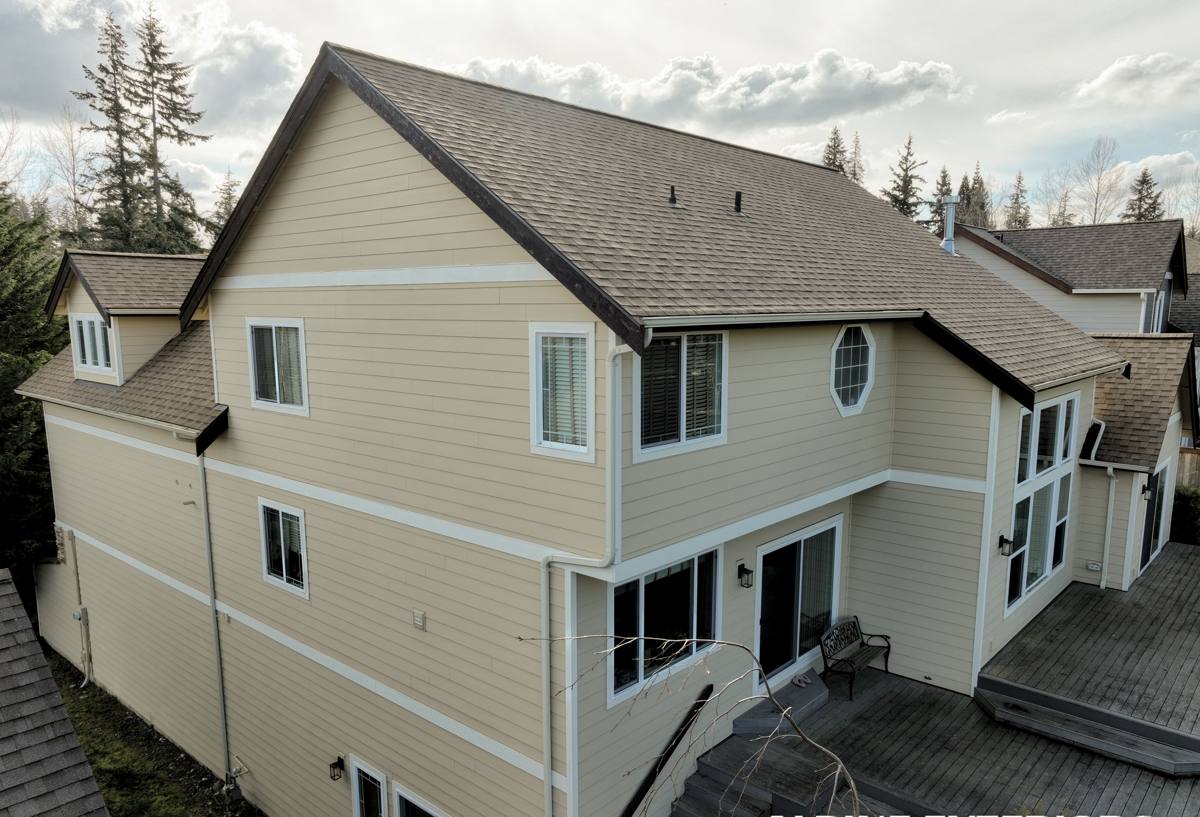
What Clearwater's Climate Actually Does to a Deck
Wind Load
Pinellas County sits in a high-wind zone under the Florida Building Code, and Skycrest is no exception. A deck attached to your home has to resist uplift and lateral loads during a tropical storm or hurricane, not just support foot traffic on a calm afternoon. That means the ledger board attachment to the house, the post-to-beam connections, and the railing posts all need hardware rated for those loads — not just nailed or screwed together the way a casual DIY deck might be.
UV Exposure
Florida sun is relentless. Untreated or poorly finished wood grays, checks, and splinters within a couple of years under this kind of UV load. Composite decking that isn't UV-stabilized can fade unevenly or become brittle faster than the manufacturer's marketing suggests. Sun exposure is a design input, not an afterthought.
Wind-Driven Rain
Storms here rarely come straight down. Rain gets pushed sideways into ledger connections, under railing base plates, and into any joint that isn't properly flashed or sealed. Water that gets trapped instead of shedding is the single biggest cause of hidden rot and hardware corrosion in Gulf Coast decks.
Salt Air
Even away from the immediate coastline, salt-laden air moves inland on sea breezes and settles on exposed metal. Standard zinc-coated fasteners and connectors corrode faster here than in a landlocked climate, which is why fastener spec matters as much as the decking material itself.
The Structural Basics That Can't Be Skipped
Before any conversation about decking material or railing style, the structure underneath has to be right. This is the part homeowners rarely see once the project is done, but it's the part that determines whether the deck is still solid in ten years.
- Footings sized and set to local frost-free depth requirements and soil conditions, not guessed at
- Ledger board through-bolted (not just lag-screwed) into the home's rim joist where structurally appropriate, with proper flashing behind it
- Joist hangers, post bases, and hurricane ties rated for the applicable wind zone
- Stainless steel or heavy hot-dip galvanized fasteners throughout — not the lighter coated screws sold for general framing
- Proper joist spacing for the decking material chosen, since composite and wood often have different span requirements
- Railing posts anchored with through-bolts and blocking, not just screwed to the rim joist
None of this is exotic. It's standard good practice — but it's also the first thing a rushed or underbid job leaves out, because it's invisible once the boards go down.
Choosing Materials for This Environment
There's no single "best" decking material for Skycrest — there's a best material for your budget, your maintenance appetite, and how much sun and rain a given deck will see. Here's how the common options actually compare under Clearwater conditions.
| Material | UV / Sun Behavior | Moisture Behavior | Maintenance | Typical Lifespan Here |
|---|---|---|---|---|
| Pressure-treated pine | Grays and checks without regular sealing | Resists rot when properly sealed and detailed; vulnerable if finish is neglected | Re-seal or re-stain every 1–2 years | 10–15 years with upkeep |
| Composite decking | UV-stabilized boards hold color well; cheaper composites can fade or chalk | Doesn't rot, but poor-quality cores can absorb moisture at cut edges | Periodic washing; no staining or sealing | 20–25+ years |
| Tropical hardwoods (e.g., ipe) | Grays without oiling; holds up structurally regardless | Naturally rot- and insect-resistant | Oiling 1–2 times a year to maintain color | 25+ years |
| Aluminum decking | Excellent — coatings don't fade or chalk | Immune to rot and moisture damage | Occasional rinse | 30+ years |
We'll walk through these trade-offs honestly during your estimate rather than steering you toward whatever has the best margin. A lot of Skycrest homeowners land on quality composite for the low-maintenance factor, but plenty of others prefer the feel of real wood and are fine with the upkeep — both are legitimate choices when the underlying structure is built correctly.
Hardware and Fasteners: Where Corner-Cutting Shows Up First
If there's one place we won't compromise, it's fasteners and connectors. In a salt-air climate, the difference between standard coated hardware and true stainless or marine-grade galvanized hardware is the difference between a railing that's solid in year eight and one that's wobbling and rust-stained in year three. This is a small line item on a bid and an enormous factor in how the deck ages. We spec corrosion-resistant hardware throughout — ledger bolts, joist hangers, post anchors, and railing connectors — as a baseline, not an upgrade.
Railings, Code, and Permitting in Pinellas County
Any elevated deck in Clearwater needs railings that meet Florida Building Code height and baluster-spacing requirements, and most deck projects require a permit through Pinellas County or the City of Clearwater depending on jurisdiction and scope. Skipping the permit might save a little time up front, but it creates real problems later — unpermitted work can complicate a home sale, cause issues with insurance claims after storm damage, and in some cases require the deck to be torn out and rebuilt to code. We handle the permitting and inspection process as part of the job, not as a separate hassle for you to manage.
How We Approach a Skycrest Deck Project
- On-site visit and consultation — we look at your yard's sun exposure, drainage, soil, and how the deck will attach to your home before recommending anything
- Design and material selection — sized and specced for your household's use, budget, and maintenance preference
- Permitting — drawings and applications filed with the correct local jurisdiction
- Framing and structural work — footings, ledger, joists, and hurricane-rated connections built first and inspected
- Decking, railings, and finish work — installed to the spec agreed on up front
- Final walkthrough — we go over care and maintenance specific to the material you chose before we consider the job done
Living With Your Deck: Maintenance for This Climate
Every deck material needs some upkeep in Florida — the question is how much and how often. A quick seasonal routine keeps small issues from becoming structural ones.
- Rinse off salt residue and pollen buildup every few weeks, more often close to the coast
- Check railing posts and stair connections twice a year for looseness — a good early warning sign of hardware fatigue
- Re-seal or re-stain wood decking on the schedule appropriate to the product (typically every 1–2 years)
- Keep gutters and downspouts clear so runoff isn't dumping extra water onto or under the deck
- After any major storm, do a quick visual check of footings, ledger flashing, and railings before heavy use resumes
Why a Crew That Already Works Skycrest Is Worth Choosing
A contractor unfamiliar with this specific pocket of Clearwater has to relearn the same things every time: which permitting office to file with, how the local soil and drainage behave, what wind-zone hardware spec applies, and how salt air actually treats different materials over years, not months. A crew already working in and around Skycrest has that knowledge built in, which means fewer surprises during permitting, fewer callbacks for hardware that wasn't rated for this environment, and a build that's designed for how this neighborhood's weather actually behaves — not a generic national spec applied without local judgment.
If you're weighing a new deck or replacing one that didn't hold up, we're glad to come take a look, walk the site with you, and put together a clear, honest estimate — no pressure, no upsell games, just a straight assessment of what your home needs. Use the form below to get started.