 Clearwater Window
 Siding That Has to Work in Del Oro's Climate, Not Just Look Good on Day One
Del Oro sits inside Pinellas County, which means every siding decision made on a home here is really a decision about how that material will hold up against the same four forces year after year: hurricane-force wind events, intense and near-constant UV exposure, wind-driven rain that gets forced sideways into wall assemblies, and salt-laden air drifting in off the Gulf. None of these are occasional stressors in Clearwater. They're the baseline. A siding product that performs fine in a mild inland climate can fail years early here, and the failure usually shows up as cupping, fading, soft spots, or fastener corrosion long before a homeowner expects to think about siding again.
This page is specifically about James Hardie fiber cement siding for Del Oro properties — what the climate demands, what a correct installation actually involves, and why we install this product exclusively rather than offering a menu of cheaper alternatives.
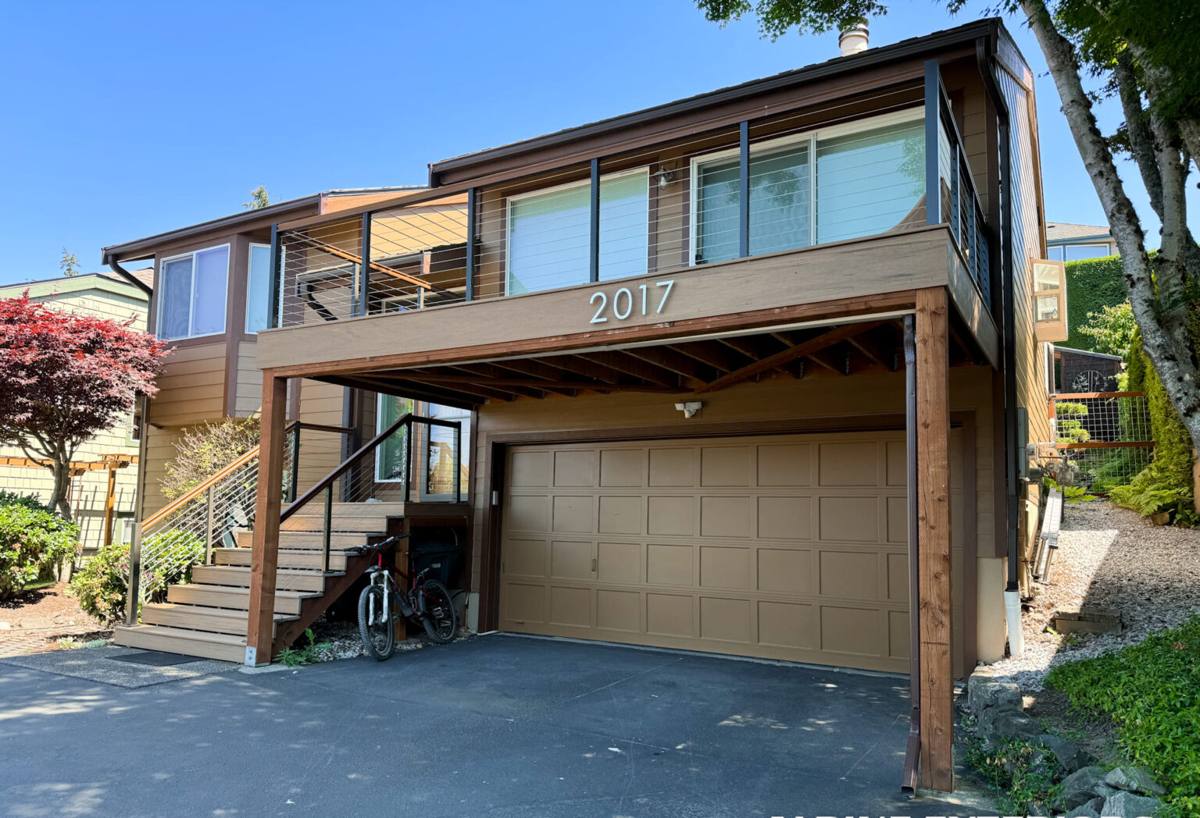
What Del Oro Homes Are Up Against
Wind
Pinellas County sits in a designated high-velocity hurricane zone, and Florida's building code reflects that with wind-load and impact requirements that are stricter than most of the country. Siding isn't just a cosmetic layer here — it's a component in a wall system that has to stay attached and intact when wind is pushing and pulling on it from multiple directions during a storm.
UV exposure
Florida's sun angle and year-round daylight hours mean exterior surfaces take a heavier UV dose than almost anywhere else in the continental U.S. Paints and coatings that aren't engineered for this fade, chalk, and break down faster than their rated lifespan would suggest.
Wind-driven rain
It's not just how much rain falls, it's how it arrives. Storm systems push rain horizontally into siding, seams, and trim, which puts real pressure on flashing details, caulk joints, and butt seams that would barely get tested in a calmer climate.
Salt air
Even homes that aren't waterfront in the traditional sense sit close enough to the Gulf and Tampa Bay to get salt-laden air on a regular basis. Salt accelerates corrosion on fasteners and metal components and works into porous or poorly sealed materials over time.
Why We Don't Treat Del Oro Like a Generic Job Site
Homes in established Clearwater neighborhoods like Del Oro come in a mix of ages and construction styles, which means every project starts with an honest look at what's actually underneath the existing siding — sheathing condition, past repairs, prior water intrusion, and how the home was originally detailed. We don't assume a one-size approach works, and we don't push a product spec that ignores what the substrate is telling us. That said, we're not going to guess at facts about any specific property or block here — every Del Oro home gets its own assessment before we talk about scope.
What we can say in general is that a large share of siding problems we're called out to inspect in this climate trace back to one of three things: siding that was never rated for coastal wind and moisture exposure, installation that didn't follow manufacturer clearances and fastening patterns, or trim and flashing details that were treated as an afterthought. All three are avoidable.
Why James Hardie, Specifically
We install James Hardie fiber cement siding exclusively — not vinyl, not LP SmartSide or other engineered wood products, not Cemplank or Allura fiber cement, not primed spruce or cedar. That's a deliberate standard, not a sales pitch, and it's worth explaining honestly.
- Vinyl is inexpensive and low-maintenance in mild climates, but it softens and can deform in high heat, and in a wind event it's more prone to cracking or blowing off than fiber cement when installed to the same fastening standard.
- Engineered wood products (like LP SmartSide) perform well in many parts of the country, but any wood-based substrate carries more moisture sensitivity than fiber cement, and Florida's humidity and wind-driven rain are exactly the conditions where that sensitivity matters most over a 20-30 year horizon.
- Primed wood or cedar requires an ongoing repainting and sealing commitment that most homeowners underestimate, and any gap in that maintenance schedule shows up as rot risk in a climate this wet.
- Other fiber cement brands compete on price but don't carry the same factory-finish system, product-line depth, or track record we've chosen to standardize our crews and warranty process around.
James Hardie is non-combustible, engineered specifically for high-humidity and high-wind regions in its HZ5 product line, and finished with a factory-applied ColorPlus coating that's baked on and UV-cured rather than field-painted — which matters directly for the fading problem described above. It also carries a strong, transferable limited warranty when installed by a contractor following Hardie's published specifications, which protects the investment if the home changes hands.
Product Lines and What They're For
James Hardie isn't a single product — it's a system, and matching the right line to the home matters as much as the installation itself.
| Product | Typical Use | Why It Fits This Climate |
|---|---|---|
| HardiePlank lap siding | Most common horizontal siding application | Available in HZ5 formulation engineered for high-humidity, high-wind regions like ours |
| HardiePanel vertical siding | Modern or accent facades, gable ends | Fewer horizontal seams for wind-driven rain to work into |
| HardieShingle | Accent siding, gables, dormers | Adds visual texture without sacrificing the moisture and impact performance of fiber cement |
| HardieTrim boards | Corners, window and door trim, fascia | Matched material system avoids the mismatched expansion and moisture behavior of mixing trim materials |
| ColorPlus finish | Factory-applied color on all of the above | Baked-on, UV-cured finish resists Florida's fade and chalking better than field-applied paint |
What a Correct Installation Actually Involves
The product only performs to spec if the installation matches Hardie's published requirements, and this is where a lot of the real-world failures we get called to look at actually originate — not in the material, but in how it was hung.
- Proper drainage plane and weather-resistive barrier behind the siding, not just siding fastened directly over old sheathing
- Correct fastener type, spacing, and penetration depth — under-driven or over-driven fasteners are a common source of early failure
- Manufacturer-specified clearances from rooflines, decks, and grade to prevent moisture wicking at the bottom edge
- Properly lapped and sealed flashing at every window, door, and penetration, since wind-driven rain finds any gap left in these details
- Caulked and painted (or factory-matched) cut ends, since an unsealed cut edge is one of the fastest ways moisture gets into fiber cement
- Butt joints and seams detailed to shed water rather than trap it
None of this is exotic — it's published in Hardie's own installation guidelines — but skipping steps is how a 30-year product ends up with 8-year problems.
Our Process for a Del Oro Project
Every job follows the same sequence regardless of home size, because the sequence is what protects the outcome.
- On-site assessment — we look at existing siding condition, trim, flashing, and any signs of past moisture intrusion before quoting scope.
- Tear-off and substrate check — once old siding is off, we inspect sheathing for rot or damage that needs to be addressed before anything new goes on.
- Weather barrier and flashing — house wrap or building paper and flashing details are installed or corrected to current code and manufacturer spec.
- Hardie installation to spec — correct fastening pattern, clearances, and seam treatment throughout, following the product lines chosen for the home.
- Trim, caulking, and finish work — cut ends sealed, joints caulked, and a final walkthrough before we call the job done.
Signs Your Current Siding May Already Be Failing
A lot of homeowners in this climate live with early-stage siding failure for years without recognizing it, because the damage starts subtle. Worth checking for:
- Soft or spongy spots when you press on siding, especially near the bottom edge or below windows
- Visible cupping, warping, or separation at seams
- Paint that's chalking heavily or fading unevenly compared to shaded areas
- Rust streaking from fasteners or trim hardware
- Increased pest activity, which often follows moisture intrusion in wood-based siding
- Interior drywall or paint issues on exterior walls, which can indicate moisture getting through from outside
Why Hiring a Crew That Already Works This Area Matters
Wind zone requirements, permitting expectations, and inspection standards in Pinellas County aren't identical to a neighboring county, and a crew that installs siding here regularly already knows what a Clearwater inspector is going to check. More importantly, a local crew has seen firsthand what actually fails on homes in this exact climate — which flashing shortcuts cause problems three years later, which clearances matter most near mature landscaping, and how salt air exposure changes fastener choices close to the coast. That local pattern-recognition is different from general contracting experience, and it's the difference between a siding job that looks right at handoff and one that's still performing correctly a decade later.
Ready to Talk About Your Home
If your Del Oro home has siding that's aging, showing early wear, or you're planning ahead of a renovation, we're happy to take a look and give you a straight, no-pressure assessment of what's going on and what your options are with James Hardie. Fill out the form below to request a free estimate.