 Clearwater Window
 A Waterfront Neighborhood That's Hard on Siding
Island Estates sits on manmade islands connected to Clearwater Beach, which means nearly every home there deals with conditions that inland Pinellas County properties simply don't face to the same degree. Water surrounds the neighborhood on multiple sides, so salt-laden air moves through the area constantly, not just during storms. Add in direct Gulf Coast sun exposure and the wind funneling effect that waterfront and causeway-adjacent lots often experience, and you have a siding environment that punishes weak materials fast.
We're not describing a hypothetical. It's the reason siding choices that hold up fine in a shaded inland subdivision can fail early on a home a few miles closer to the water. Homeowners in Island Estates need a siding system engineered for salt, UV, and wind — not just a siding system that looks good on install day.
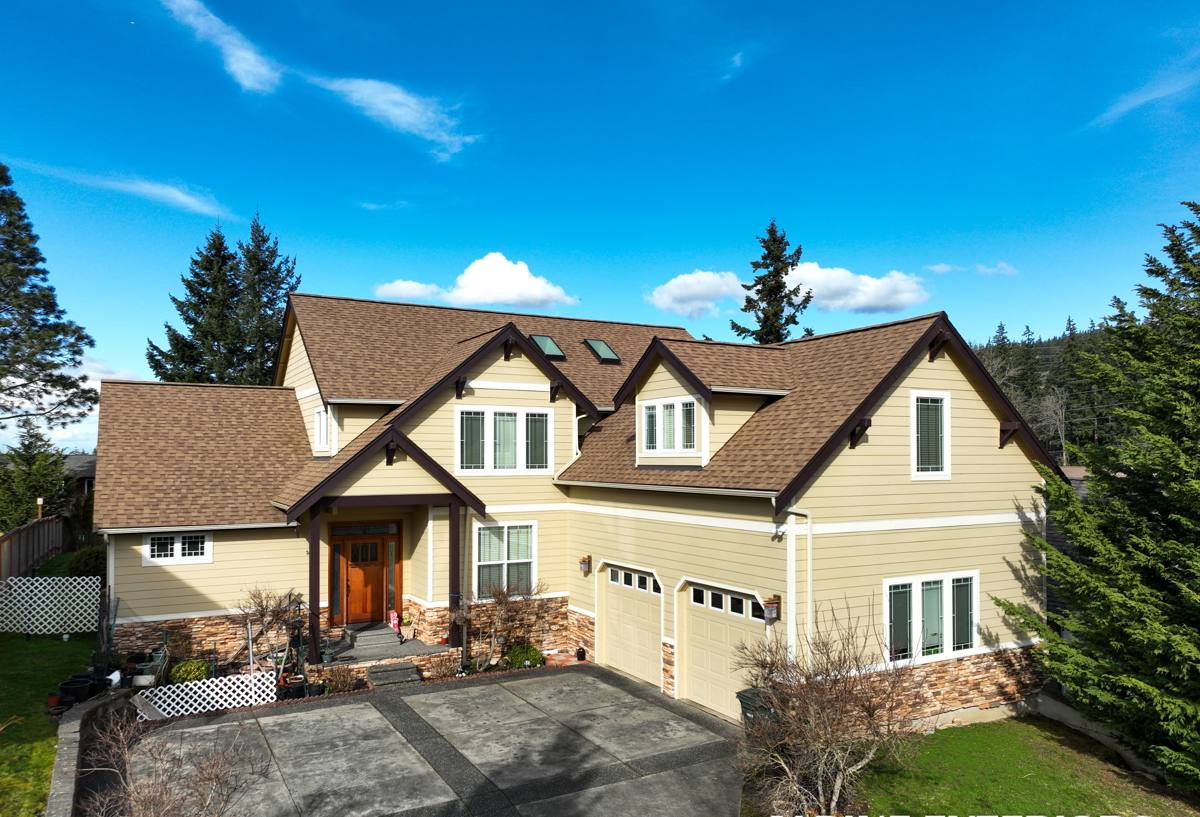
What Salt Air, UV, and Wind-Driven Rain Actually Do
Each of these stressors attacks siding differently, and on a waterfront lot they're working on your home simultaneously, year-round.
Salt Air
Airborne salt is corrosive and hygroscopic — it pulls moisture out of the air and holds it against whatever surface it lands on. Fasteners, trim, and siding materials that aren't rated for coastal exposure corrode or degrade faster near open water than they would even a mile or two inland.
UV Exposure
Florida's sun is intense nearly year-round, not just in summer. UV breaks down pigments and surface coatings over time. Paint fades unevenly depending on sun exposure per elevation, and lower-quality siding substrates can become brittle or chalky well before a homeowner expects to repaint.
Wind-Driven Rain
Clearwater's storms don't just bring rain — they push it sideways, forcing water into laps, seams, and fastener penetrations that would stay dry in a calmer climate. Siding that isn't installed with the right clearances and flashing details will let that water find a way behind the cladding, where it causes rot and mold problems that are invisible until they're expensive.
Why James Hardie Fiber Cement Fits This Environment
We install James Hardie exclusively, and Island Estates is exactly the kind of neighborhood that explains why. Fiber cement is non-combustible, dimensionally stable in humidity swings, and resistant to the moisture absorption and pest issues that affect wood-based and some engineered wood siding products. It doesn't provide a food source for termites or fungal decay the way wood-based products can, which matters in a humid coastal climate where moisture is a constant background condition rather than an occasional problem.
Just as important: James Hardie's ColorPlus factory finish is baked on and warranted, rather than being a field-applied coating fully exposed to Florida sun from day one. That matters directly for UV performance on a home with unshaded, water-facing elevations.
HZ5 Products: Built for This Specific Climate
James Hardie engineers its siding by climate zone, and homes in our area fall under the HZ5 product line, built specifically for high-humidity, storm-prone Gulf and Atlantic coastal regions. That's a meaningful distinction from siding sold as a one-size-fits-all national product. HZ5 products are formulated for the moisture and humidity conditions we deal with in Pinellas County, which is a large part of why we don't treat "siding" as a single generic category — the product engineered for your specific climate zone matters as much as the installation.
| Factor | Why It Matters on Island Estates |
|---|---|
| Climate-engineered formulation | Resists moisture-related warping and damage specific to Gulf Coast humidity |
| Non-combustible core | Doesn't contribute fuel in wildfire-adjacent or ember-exposure conditions |
| Factory ColorPlus finish | Resists UV fade better than field-applied paint, especially on sun-heavy elevations |
| Dimensional stability | Minimizes expansion/contraction stress on seams during humidity and temperature swings |
What a Correct Installation Looks Like on a Waterfront Home
Product quality only matters if the installation respects it. On Island Estates homes, a handful of details separate a siding job that lasts decades from one that fails at the seams within a few years.
- Proper clearance between the siding's bottom edge and roofing, decks, or grade — too tight, and wind-driven rain wicks moisture into the material
- Correct flashing and weather barrier integration behind every window, door, and penetration
- Fasteners rated for coastal, corrosion-prone environments, driven to the manufacturer's specified depth and pattern — not simply "snugged down"
- Proper joint and seam treatment, including caulking specified for coastal UV and moisture exposure
- Ventilation behind the siding system so any incidental moisture can dry out rather than getting trapped
- Cut edges sealed per manufacturer specification, since an unsealed cut edge is one of the more common points of early failure
These aren't optional upgrades — they're the difference between a system that performs the way James Hardie's engineering and warranty assume it will, and one that doesn't.
Our Process for Island Estates Projects
Every project starts with an on-site inspection of your home's current siding, trim, and any moisture or rot issues hiding behind it — something you can't fully assess from the street. From there we walk you through product line and color options, confirm measurements, and put together a clear, written scope so you know exactly what's being installed and how.
During installation, our crew removes old siding, inspects and repairs any sheathing damage found underneath (a step that's easy to skip but shouldn't be), and installs house wrap or weather barrier detailing before a single piece of Hardie board goes up. We follow James Hardie's fastening and clearance specifications precisely, because those details are what the manufacturer's warranty is actually based on. We finish with a walkthrough so you can see the completed work and ask questions before we consider the job done.
Cost Factors for a Siding Project in This Area
Every Island Estates home is different, and we don't publish blanket per-square-foot pricing because it would be misleading — the honest answer depends on your home's specifics. That said, these are the main factors that move the number up or down:
| Factor | Why It Affects Cost |
|---|---|
| Tear-off vs. new construction | Removing and disposing of old siding, plus any sheathing repair, adds labor |
| Home size and elevation count | More square footage and more architectural corners/angles mean more material and labor |
| Trim and accent complexity | Board-and-batten sections, shake accents, or custom trim details add time |
| Underlying moisture or rot damage | Sheathing repair discovered mid-project is common on older coastal homes |
| Color and finish selection | Factory ColorPlus finishes vs. field-painted options affect material cost |
We give every homeowner a real, itemized estimate after seeing the home in person — not a phone-quote guess.
Caring for Hardie Siding on a Waterfront Property
James Hardie siding is low-maintenance compared to wood or vinyl alternatives, but "low-maintenance" isn't "zero-maintenance," especially this close to the water. A few habits go a long way toward protecting your investment:
- Rinse salt residue off exterior walls periodically with a garden hose, especially on elevations facing open water
- Inspect caulking at seams, windows, and trim annually and have gaps resealed before they become moisture entry points
- Trim back landscaping so foliage isn't holding moisture against the siding surface
- Watch for any soft spots, discoloration, or staining near the base of the siding, which can indicate a drainage or clearance issue worth a professional look
- Keep gutters and downspouts clear so water is directed away from siding rather than sheeting down it
Why Hiring a Crew That Already Works This Neighborhood Matters
Siding installation isn't uniform across Pinellas County. A crew that mostly works inland subdivisions may not think twice about clearance details or fastener corrosion resistance that are non-negotiable on a waterfront lot. A crew that's already familiar with Island Estates and similar Clearwater waterfront communities knows to check those details as a matter of course, because they've seen what happens when a previous installation skipped them.
That familiarity also shows up in smaller ways — knowing how wind exposure differs by elevation on a given lot, recognizing early signs of salt-related wear on existing trim, and understanding what "built for this climate" actually requires rather than treating it as a marketing phrase. It's the difference between siding that's installed and siding that's installed correctly for where it's going.
If you own a home in Island Estates and want an honest look at your current siding's condition, or you're ready to talk through a James Hardie installation built for this exact environment, we're happy to come take a look. Reach out for a free, no-pressure estimate using the form below.