 Clearwater Window
 Island Estates Sits Right at the Edge of What Siding Has to Survive
Island Estates is a waterfront community, and waterfront in Pinellas County means the siding on every home is doing more work than siding a few miles inland. Canal and bay-adjacent homes take on a steady diet of salt-laden air, humidity that rarely drops, direct Gulf-Coast sun, and the kind of wind-driven rain that finds every gap in a building envelope during a summer squall or a tropical system. Add in the hurricane-force winds Clearwater has to plan for every season, and it's a rough environment for exterior materials that weren't engineered with that combination in mind.
Most siding failures we see on waterfront and near-waterfront homes aren't dramatic. They're slow: a coating that starts chalking and fading a few years in, seams that trap moisture, panels that swell or delaminate at the bottom edge where splash-back and standing humidity live. None of that shows up on day one. It shows up in year five or six, and by then the fix is a full re-side instead of a simple repair. That's the problem we're solving for on this page — not "what siding looks nice," but "what siding actually holds up a few blocks from the water in Pinellas County."
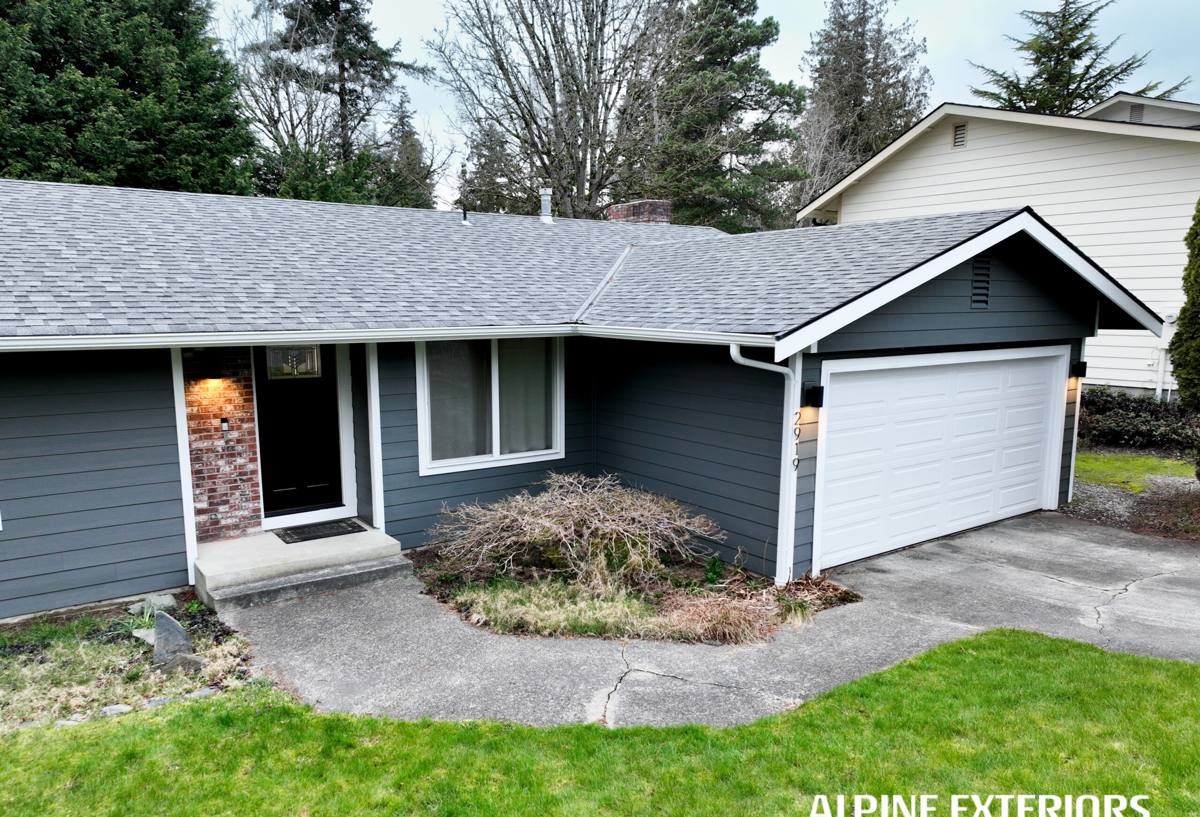
Why We Only Install James Hardie Fiber Cement
We install one siding system: James Hardie fiber cement. We don't carry LP SmartSide, vinyl, Cemplank, Allura, or primed wood species like spruce or cedar, and that's a deliberate standard, not a limitation on what we're capable of installing. Fiber cement is cement, sand, and cellulose fibers — it doesn't rot, it isn't a food source for insects, and it's non-combustible, which matters in a state where wildfire and lightning-strike house fires are both real risks. Vinyl softens and can warp in prolonged direct sun and high heat, which Clearwater has no shortage of. Wood-based and wood-composite products need consistent field maintenance — caulking, repainting, edge-sealing — to keep moisture out, and a missed maintenance cycle on a waterfront home compounds fast.
James Hardie's HZ5 product line is engineered specifically for humid, high-moisture climates like ours, with a moisture and freeze-thaw performance profile matched to Gulf Coast conditions rather than a one-size-fits-all national spec. That's the detail that matters for Island Estates: this isn't generic siding that happens to be sold in Florida, it's a version of the product built around what Florida does to a house.
What We're Not Saying
We're not telling homeowners that other products are junk. Vinyl is inexpensive and easy to source. LP SmartSide and engineered wood have real fans and legitimate use cases in drier climates. What we're saying is that after years of doing exterior work along this coastline, we've standardized on the one material that consistently holds its finish, its shape, and its seal in salt air and hurricane wind without demanding constant homeowner upkeep — and that's the standard we're willing to put our name behind.
What a Correct Fiber Cement Install Actually Involves
Fiber cement is only as good as the installation underneath it. A rushed or under-specified install on a waterfront home will fail faster than a correctly installed version of a cheaper product, because moisture management is where the real performance lives.
- Weather-resistive barrier: a continuous, properly lapped water barrier behind the siding, with all penetrations (outlets, spigots, vents) flashed and sealed before a single board goes up.
- Rainscreen or proper drainage plane: a gap or furring strategy that lets any moisture that gets behind the siding actually drain and dry out, instead of sitting against the sheathing.
- Clearances: James Hardie specifies minimum clearance from the siding's bottom edge to grade, roofing, decks, and patios — corners cut here are one of the most common causes of early moisture damage, and they're exactly the corners a waterfront lot with landscaping close to the house tempts a crew to cut.
- Fastening pattern: correct nail or screw type, spacing, and embedment depth, per Hardie's published fastening schedule for the wind zone the home sits in.
- Field-cut edge sealing: every cut edge sealed with the specified primer/sealer before installation, not after — an exposed cut edge is a moisture entry point waiting to happen.
- Caulking and joint treatment: butt joints, trim intersections, and penetrations sealed with a paintable, flexible sealant rated for the exposure.
Every one of those steps is inspectable, and every one of them is invisible once the siding goes up and the caulking cures. That's exactly why the installer matters as much as the product.
Matching the Product Line to a Waterfront Home
James Hardie makes several siding profiles, and the right one for an Island Estates home depends on the architecture and the specific exposure of each elevation.
| Product | Best fit | Why it fits waterfront exposure |
|---|---|---|
| HardiePlank lap siding | Traditional and coastal-style homes | Most common profile; wide range of textures and exposures, proven long-term performance in humid coastal climates |
| HardiePanel vertical siding | Modern facades, gable accents, porch ceilings | Clean vertical lines that also shed wind-driven rain efficiently on tall wall sections |
| HardieTrim boards | Corners, window and door surrounds, fascia | Non-combustible, dimensionally stable trim that won't cup or rot the way wood trim does in constant humidity |
| ColorPlus factory finish | Any of the above | Baked-on, UV-cured finish designed to resist fading and chalking better than field-applied paint under intense year-round sun |
For most waterfront homes we lean toward ColorPlus finishes specifically because of the UV load this area gets. A factory-applied, baked finish holds color consistency far longer than a job-site paint job, and it comes with its own finish warranty separate from the substrate warranty.
Our Process for an Island Estates Siding Job
- On-site assessment: we walk the exterior, check current siding condition, clearances, flashing, and any moisture damage already present at grade level, deck ledgers, or window openings.
- Scope and product selection: we recommend the Hardie profile, texture, and finish based on the home's style and which elevations take the worst sun and weather exposure.
- Tear-off and substrate check: once old siding comes off, we inspect sheathing for hidden rot or moisture damage — common on older waterfront homes — and address it before anything new goes up.
- Water barrier and flashing: a continuous weather-resistive barrier goes on first, with every window, door, and penetration properly flashed.
- Installation to Hardie spec: siding, trim, and fastening installed to the manufacturer's published wind-zone requirements, not just "how it's always been done."
- Sealing and finish work: cut-edge sealing, caulking, and touch-up so every joint and seam is weathertight.
- Final walkthrough: we go over the finished exterior with the homeowner before calling the job done.
Cost Factors for a Waterfront Fiber Cement Project
Every home is different, so exact numbers require an on-site estimate, but the factors that move the price on an Island Estates job are fairly consistent:
| Factor | Why it matters |
|---|---|
| Existing siding removal | Tear-off and any hidden sheathing repair add labor before new siding can start |
| Home size and wall complexity | More corners, gables, and trim detail mean more cutting, fitting, and sealing |
| Profile and finish choice | ColorPlus factory finishes and premium textures cost more upfront but reduce repainting over the life of the siding |
| Access and site conditions | Canal-front lots, seawalls, docks, and tight side yards can affect staging and equipment access |
| Trim and accent work | HardieTrim on corners, window surrounds, and porch ceilings adds material and labor beyond field siding |
What Homeowners Can Do Between Professional Inspections
James Hardie siding is low-maintenance compared to wood or vinyl, but "low-maintenance" isn't "no-maintenance," especially in a salt-air environment. A short seasonal checklist goes a long way:
- Rinse salt residue off the siding periodically, especially on canal-facing and bay-facing walls, using a garden hose or soft wash — never a high-pressure setting directly on the siding.
- Walk the exterior after major storms and check caulking at trim joints and penetrations for cracking or gaps.
- Keep irrigation heads and sprinklers from spraying directly and constantly on siding, which accelerates mineral buildup and finish wear.
- Trim landscaping back from the siding to maintain the manufacturer's clearance and let the wall breathe and dry after rain.
- Watch for any soft spots, staining, or bubbling at the bottom courses near grade — early signs are far cheaper to address than late ones.
Why the Crew Matters as Much as the Product
Fiber cement siding installed to a generic national spec on a waterfront Pinellas County home is a different job than the same product installed by a crew that already accounts for this area's wind exposure, salt air, and storm patterns. A crew that regularly works Clearwater's waterfront neighborhoods knows to double-check clearances on lots where landscaping and hardscaping crowd the foundation, knows which elevations on an Island Estates-style layout take the worst weather over a Florida hurricane season, and doesn't treat flashing and sealing as an afterthought because they've seen what happens when it is. That local pattern-recognition is the difference between siding that looks right at handoff and siding that's still performing correctly in year ten.
If you're weighing a siding replacement or repair on an Island Estates home, we're happy to walk the property, look at what's there now, and talk through what a correctly installed James Hardie system would look like for your specific home — no pressure, no obligation. Use the form below to request a free estimate.