 Clearwater Window
 Why Harbor Oaks Siding Takes a Different Kind of Beating
Harbor Oaks is one of Clearwater's older, established neighborhoods close to the water, and that proximity comes with a trade-off. Homes here sit in the direct path of everything Pinellas County's coastal climate can throw at an exterior wall: hurricane-force wind gusts that flex and pry at siding panels, wind-driven rain that gets pushed sideways into seams and trim joints, near year-round UV exposure that bakes finishes and fasteners, and salt-laden air that speeds up corrosion on anything metal. None of these forces act alone. Wind loosens a seam, rain finds the opening, salt air corrodes the nail holding the panel in place, and UV breaks down whatever caulk was supposed to keep it all sealed. That combination is why siding in this part of Clearwater tends to fail faster and in different ways than siding installed a hundred miles inland.
A repair crew that only works occasionally in coastal Florida often treats siding damage as a cosmetic issue — patch it, paint it, move on. In Harbor Oaks, that approach usually doesn't hold. A proper repair here has to account for what the coastal climate is doing to the wall assembly, not just what's visible from the curb.
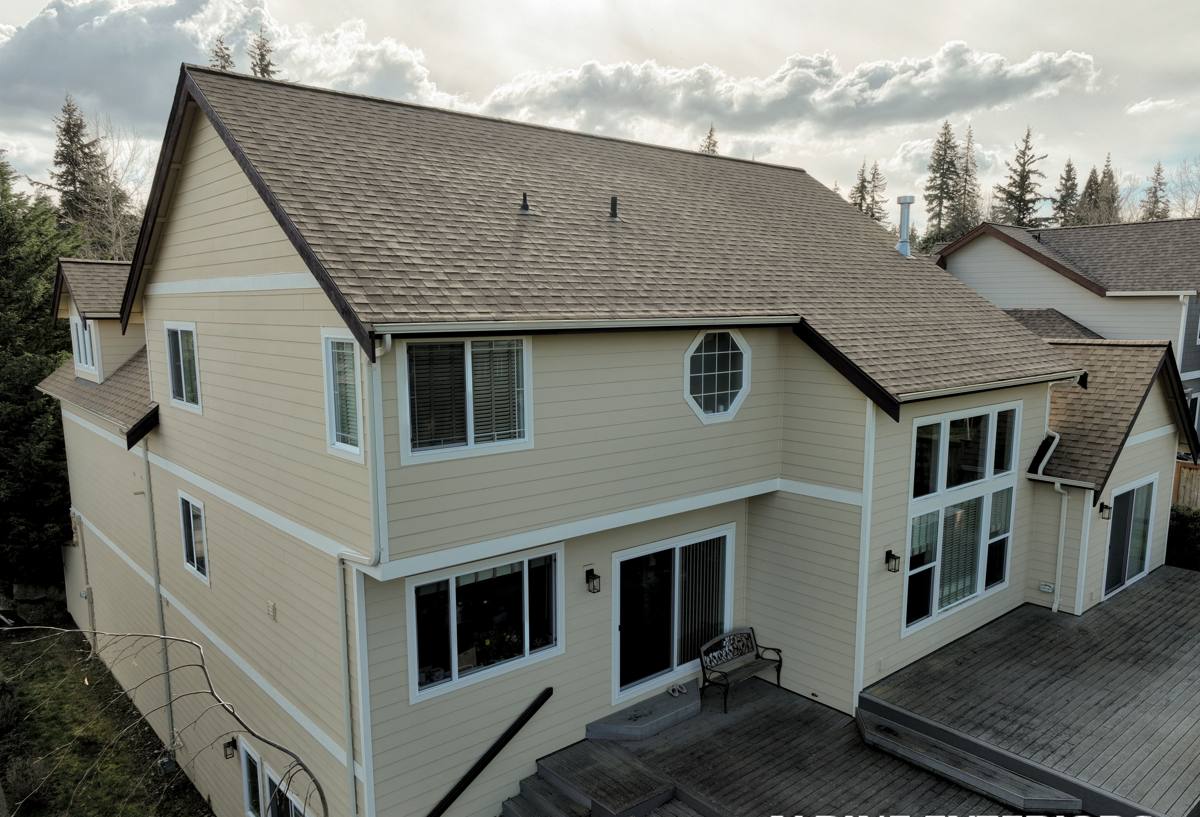
Signs Your Siding Needs Repair, Not Just Paint
Some damage is obvious. Some isn't, and that's the kind that costs homeowners the most if it's ignored. Here's what we look for on Harbor Oaks homes:
- Cracking or splitting along panel edges or at butt joints, often worse on the sides of the house that take the most direct sun and wind.
- Soft, spongy, or crumbling spots — a strong sign of moisture that's already gotten behind the surface.
- Buckling or waviness in panels, which usually points to trapped moisture or a fastening problem, not just age.
- Staining or dark streaking at seams, corners, and under windows — a common marker of water finding a path it shouldn't have.
- Gaps opening up around trim, window frames, or corner boards as caulk and sealant break down under UV exposure.
- Rust bleed around fasteners, which is common near the water and tells you the hardware is failing before the siding itself is.
- Blistering or peeling paint in a pattern that keeps coming back in the same spot, no matter how many times it's repainted.
Any one of these can be a minor fix. Several together, especially clustered in one area, usually mean there's a moisture problem working underneath the surface.
What's Happening Behind the Siding Matters More Than What You See
The visible crack or gap is rarely the whole story. Behind every siding panel is a wall assembly — sheathing, a weather-resistive barrier, flashing at penetrations and openings — that's supposed to manage any water that gets past the surface. When that system is compromised, water can travel behind sound-looking siding for months before it shows up as a stain, a soft spot, or an interior wall problem. This is especially true in a wind-driven rain climate like Clearwater's, where rain doesn't just fall on siding, it gets forced into it.
That's why a repair that only addresses the outer layer — caulking a crack, screwing a loose panel back down, slapping on paint — can leave the actual problem untouched. A repair that's done right starts by figuring out whether the wall behind the siding is dry and intact, and only then decides what needs to come off, what needs to be replaced, and what can be sealed and left alone.
Questions a Correct Diagnosis Should Answer
- Is the damage limited to the siding surface, or has moisture reached the sheathing or framing?
- Is the underlying weather barrier and flashing still doing its job, or does it need to be repaired as part of this work?
- Is this an isolated failure, or a sign that the same issue is developing elsewhere on the house?
- Will a patch actually last in this location, given its sun and wind exposure, or is replacement the more honest answer?
What a Correct Siding Repair Actually Involves
Matching Material and Profile
A repair that doesn't match the existing plank width, reveal, and texture stands out immediately, and a mismatched patch is often a sign the crew prioritized speed over doing it right. Getting this right takes more care when the home has been sided in a product line that's been updated or discontinued — which is common on older Harbor Oaks homes.
Flashing and Sealant Done Correctly
Most siding failures in this climate trace back to a flashing or sealant detail that wasn't done right the first time — around a window, at a roofline, where two wall planes meet. A repair that just recaulks the surface without correcting the underlying flashing is a repair that fails again on the next hard rain.
Fastening to Spec
Fastener type, spacing, and placement affect how well siding holds up to wind uplift — a real concern given the wind speeds this area can see. Repairs need to use fasteners rated for the material and the exposure, not just whatever's on the truck.
Why We Repair and Replace With James Hardie Fiber Cement Only
We install and repair with James Hardie fiber cement siding exclusively. We don't work with vinyl, LP SmartSide, Cemplank, Allura, or primed wood siding, and that's a deliberate standard, not a limitation of what we're capable of installing.
In a climate like Clearwater's — heat, UV, salt air, and wind-driven rain in constant rotation — the materials on a wall matter as much as the workmanship. James Hardie's fiber cement is non-combustible, holds up to moisture exposure without the swelling or rot risk that wood-based products carry, and its HardieZone HZ5 engineering is built specifically for humid, high-moisture regions like ours. The factory-applied ColorPlus finish is baked on and warranted against fading in exactly the kind of relentless sun Harbor Oaks gets, rather than relying on a field-applied paint job that has to be redone every several years. It also carries a strong transferable warranty, which matters to a homeowner who may sell the house down the road.
When we're called out to repair a section of Hardie siding, we're repairing a system we understand end to end — how it was engineered, how it should be flashed and fastened, and how it ages in this exact climate. That's a different job than repairing a product we don't otherwise install.
Patch Repair, Panel Replacement, or Full Re-Side: How to Decide
Not every repair call ends the same way. Once we know what's happening behind the siding, the right scope of work usually falls into one of three categories:
| Approach | Best For | What to Expect |
|---|---|---|
| Spot / Patch Repair | Isolated damage — one cracked panel, a section pulled loose in a storm, localized fastener failure | Fastest and least invasive option; only makes sense when the surrounding wall assembly is confirmed dry and sound |
| Panel or Section Replacement | Damage concentrated on one elevation or wall section, often from a specific flashing or drainage problem | Involves removing and replacing a defined area, correcting the underlying cause, and matching material carefully |
| Full Re-Side | Widespread failure, aging original siding nearing the end of its service life, or repeated repairs in different spots | The most significant investment, but it resets the clock with a consistent, correctly installed system instead of a patchwork of repairs |
We'll always recommend the least invasive option that actually solves the problem. If a patch will genuinely hold, that's what we propose — not an upsell to a full re-side.
Our Siding Repair Process for Harbor Oaks Homeowners
- On-site inspection. We look at the full exterior, not just the spot you called about, since related damage often shows up nearby.
- Diagnosis behind the surface. Where there's any sign of moisture, we check what's happening beneath the siding before proposing a fix.
- Clear, written scope and estimate. You'll know exactly what's being repaired, why, and what it involves before any work starts.
- The repair itself. Matched material, corrected flashing and sealant where needed, and fastening done to spec for this area's wind exposure.
- Cleanup and final check. We walk the finished work with you before we consider the job done.
Why a Crew That Already Works Harbor Oaks Makes a Difference
Harbor Oaks isn't a generic subdivision, and it doesn't get treated like one when we show up. A crew that already works in this part of Clearwater has a feel for how the neighborhood's mix of home ages and styles was originally built out, what the salt air off the harbor does to siding and trim over time, and how quickly wind and rain damage here needs to be addressed before it turns into something bigger. That familiarity also means faster response after a storm, when a lot of homeowners in the same area are calling around at once, and a contractor who already knows the neighborhood can prioritize and get to real damage sooner.
It also means less guesswork on our end. We're not learning the local exposure conditions on your dime — we already know what a Harbor Oaks wall assembly is up against, and that shapes every recommendation we make.
Keeping Your Repaired Siding in Good Shape
A correct repair should last, but a little attention keeps it — and the rest of your siding — performing the way it should:
- Walk the exterior after any major storm and look for loosened panels, new gaps, or debris damage.
- Keep an eye on caulk lines around windows, doors, and trim — this is usually the first thing UV exposure breaks down.
- Rinse siding periodically to clear salt residue and grime buildup, especially on walls that face the water.
- Address small issues — a hairline crack, a slightly loose panel — before the next storm season, not after.
- Keep gutters and downspouts clear so water is directed away from the wall instead of running down it.
If you're seeing any of the warning signs above on your Harbor Oaks home, or you just want an honest read on what shape your siding is in, we're happy to take a look. Reach out for a free, no-pressure estimate using the form below.