 Clearwater Window
 Downtown Clearwater's Siding Environment Is Tougher Than It Looks
Downtown Clearwater sits close enough to the water that homes deal with a combination most inland Florida neighborhoods don't: salt-laden air moving in off the Gulf and Clearwater Harbor, intense year-round UV that doesn't let up for a real "off season," and wind-driven rain that gets pushed sideways into wall assemblies during tropical storms and hurricanes. Add Pinellas County's humidity, and you have a climate that is constantly testing whatever material is on the outside of a house.
Cheaper siding materials tend to show their weaknesses here faster than they would somewhere with milder weather. Vinyl gets brittle and can warp or blow off in sustained wind. Untreated wood and lower-grade composite panels absorb moisture at cut edges and start to swell or delaminate. Paint on wood siding chalks and fades quicker under this UV load than manufacturers' warranties typically assume. None of that is a defect in the product on paper — it's just what happens when a product built for a national average climate meets a Gulf Coast one.
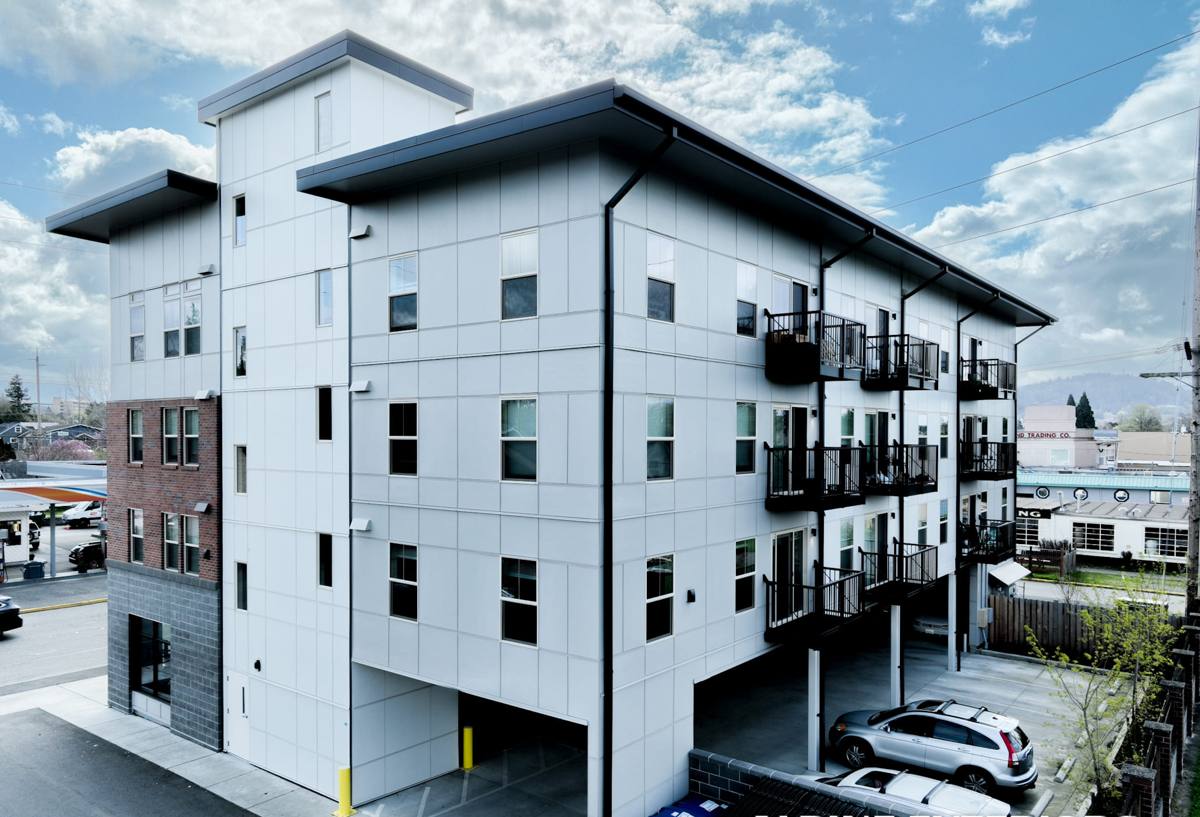
Why We Only Install James Hardie in This Neighborhood
We install James Hardie fiber cement siding exclusively — not vinyl, not LP SmartSide, not Cemplank or Allura, not primed spruce or cedar. That's not a marketing position, it's a practical one built around what actually holds up on homes in this specific climate over the long term.
Fiber cement is non-combustible, doesn't expand and contract with heat the way vinyl does, and doesn't rely on a surface coating alone to resist moisture the way raw wood does. James Hardie also engineers specific product lines for humid, high-UV, storm-exposed regions — the HZ5 line is formulated for exactly the climate zone Clearwater sits in. When we stand behind one product line, we can also stand behind the installation details, the flashing methods, and the warranty conversation, instead of switching techniques and expectations from job to job depending on what material a homeowner picked.
What This Means for a Downtown Clearwater Homeowner
In practice, it means the siding on your home is matched to the zone it was engineered for, not a generic national spec. It also means our crews aren't learning a new material's quirks on your house — we install one system, correctly, every time.
What a Correct James Hardie Install Actually Involves Here
James Hardie siding fails prematurely almost exclusively because of installation mistakes, not because the material itself gave out. In a coastal, storm-prone area like Downtown Clearwater, a few details matter more than they would elsewhere:
- Proper fastener spacing and type — corrosion-resistant fasteners driven to Hardie's spec, not overdriven or underdriven, which affects wind resistance and how the panel handles thermal movement
- Correct clearances — Hardie requires specific gaps from roof lines, decks, and grade so water sheds away from the bottom of the siding instead of wicking up into it
- Rain screen or drainage plane behind the panel — critical in a climate where wind-driven rain gets forced against walls during storms; this gap lets moisture that does get behind the siding actually dry out and drain
- Sealed and flashed penetrations — every hose bib, vent, and fixture through the siding is a potential entry point for wind-driven rain if not flashed correctly
- Factory-primed or ColorPlus finished edges — any field-cut edge needs to be sealed per Hardie's specification so raw cement isn't left exposed to humidity
Skipping any one of these doesn't usually cause an obvious problem in year one. It shows up two, five, or ten years later as moisture intrusion, paint failure, or panels that come loose in a windstorm — which is exactly the kind of failure that gets blamed on the material when the real cause was the installation.
James Hardie Product Lines That Fit Downtown Clearwater Homes
Downtown Clearwater has a mix of housing stock — older single-family homes, bungalow-style construction, and newer infill builds. James Hardie's lineup covers this range without forcing a one-size-fits-all look:
| Product | Best Fit For | Local Advantage |
|---|---|---|
| HardiePlank lap siding | Traditional single-family homes | Classic profile, factory ColorPlus finish resists Gulf-Coast UV fading |
| HardiePanel vertical siding | Accent walls, gables, modern or bungalow mixes | Clean lines, pairs well with trim for a distinct street presence |
| HardieTrim boards | Corners, windows, fascia | Won't rot at cut ends the way wood trim does in humid conditions |
| HZ5 engineered formulation | All of the above, in this zone | Formulated specifically for high-humidity, storm-exposed regions like Pinellas County |
ColorPlus factory-applied finish matters more here than in drier climates. A factory-baked finish resists UV fading and doesn't require repainting on the same schedule as field-applied paint, which is a real advantage given how much direct sun this area gets across the full calendar year.
Our Process, Start to Finish
Every Downtown Clearwater project follows the same sequence, whether it's a full re-side or a section replacement after storm damage:
- On-site assessment — we look at the existing wall assembly, current siding condition, moisture points, and any storm damage before quoting anything
- Product and color selection — walking through HardiePlank vs. HardiePanel options and ColorPlus color choices for the home's style
- Permit and code check — confirming wind zone and fastening requirements with the local building department before work starts
- Removal and substrate inspection — old siding comes off and we check sheathing and house wrap for hidden moisture damage before anything new goes up
- Installation to Hardie spec — correct clearances, fastening, drainage plane, and flashing at every penetration
- Trim and joint finishing — sealed, factory-finished edges at every cut
- Final walkthrough — reviewing the finished work and warranty paperwork with the homeowner
Signs a Downtown Clearwater Home May Need New Siding Soon
Some warning signs are easy to spot from the ground; others take a closer look. Worth checking for:
- Visible warping, buckling, or gaps between siding panels
- Soft spots when you press on wood or composite siding, especially near the bottom edge
- Paint that's peeling, bubbling, or chalking heavily in one season
- Staining or discoloration that keeps returning after cleaning, which can point to moisture behind the siding
- Visible fastener corrosion or nail pops along seams
- Higher cooling bills without another clear cause, which can indicate compromised siding letting heat and moisture through the wall assembly
Any one of these on its own isn't necessarily an emergency, but a combination is usually a sign it's time for an inspection rather than another round of patching.
Wind Codes, Permits, and Working in an Established Neighborhood
Pinellas County's building code sets wind-load and fastening requirements that vary based on a home's exposure and elevation, and siding work generally requires a permit and inspection. In an established neighborhood like Downtown Clearwater, that also means working around mature landscaping, closer lot lines, and homes with a mix of original and previously renovated exteriors — all things that affect scheduling, staging, and how a crew protects the surrounding property during the job. A contractor who's done this work in the immediate area already has a feel for these logistics instead of figuring them out for the first time on your project.
Why Local Experience in Downtown Clearwater Matters
Siding installed correctly on paper can still underperform if it's not adapted to how weather actually behaves at a specific site — which side of the house takes the worst of the wind-driven rain, how much direct afternoon sun a wall gets, how close the property is to salt air exposure. A crew that has worked other homes in this neighborhood has already seen how these variables play out here, not in a generic climate zone. That local pattern recognition is part of what separates a correct installation from one that just meets minimum code.
Maintenance After Installation
James Hardie siding is low-maintenance, not no-maintenance. A rinse down once or twice a year removes salt residue and airborne grime before it builds up, and it's worth a visual check after any major storm for loose trim, damaged caulk lines, or debris impact. ColorPlus finishes don't need repainting on the schedule field-applied paint does, but caulking at trim joints and penetrations should still be inspected periodically since sealant is the first thing to wear out, well before the panels themselves.
If your Downtown Clearwater home needs new siding, storm repair, or you're just trying to figure out whether what's on the walls now still has useful life left, we're happy to take a look and give you a straight answer. Reach out for a free, no-pressure estimate — there's a form right below this page.