 Clearwater Window
 Decks in Largo Wear Out Faster Than Most Homeowners Expect
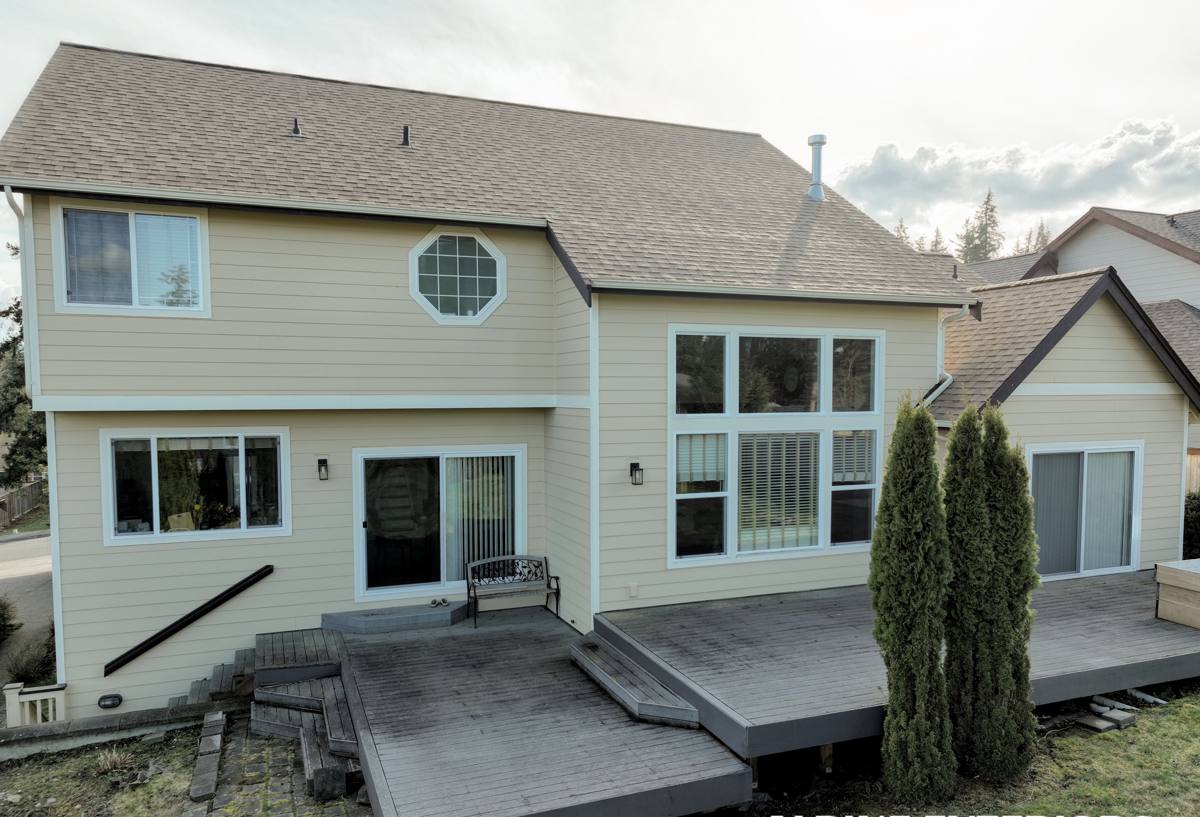
Largo sits close enough to Tampa Bay and the Gulf that its outdoor structures absorb a lot of punishment most inland decks never see. Between the humidity, the UV load, and the salt-tinged air drifting in off the water, a deck built with corners cut — or built correctly but now past its service life — starts showing problems years before it should. If your deck has reached the point of soft boards, rusted fasteners, or a railing that flexes when you lean on it, replacement is usually the more honest answer than another round of patchwork repair.
We work on homes throughout the Largo and greater Clearwater area, and deck replacement is one of the services we get called out for most often once a structure passes the ten-to-fifteen-year mark, sooner if it was built with untreated fasteners or minimal ventilation underneath.
What Pinellas County Climate Does to a Deck
Every deck material has a weak point, and our climate finds it. A few of the specific ways local conditions accelerate wear:
- UV exposure: Florida gets strong, direct sun nearly year-round. Wood fibers break down, finishes chalk and fade, and composite boards without adequate UV inhibitors can discolor unevenly.
- Wind-driven rain: Storms here don't just fall straight down — wind pushes rain sideways into ledger connections, under railings, and into any gap where water can collect instead of drain.
- Salt air: Even away from the immediate coastline, airborne salt corrodes standard fasteners, hinges, and metal railing hardware faster than it would inland, which is why fastener spec matters more here than in most parts of the country.
- Heat cycling and humidity: Daily swings between scorching afternoon sun and heavy overnight humidity cause wood to expand and contract repeatedly, which loosens fasteners and opens joints over time.
- Hurricane-force wind loads: A deck attached to the house has to handle real lateral and uplift forces during tropical systems, not just carry static weight.
None of this means a deck can't last — it means the build has to account for these conditions from the ledger board down to the last screw, not just look good on install day.
Signs a Deck Needs Replacement, Not Another Repair
Repair makes sense when the problem is isolated — one soft board, one loose rail. Replacement is the right call when the issues are structural or widespread. Common warning signs we see on Largo homes:
- Soft, spongy, or discolored decking boards, especially near the house or in shaded areas that stay damp
- Rust streaks around fasteners or visibly corroded screws and brackets
- A ledger board pulling away from the house, or gaps opening where the deck meets the structure
- Railings or posts that wobble under normal pressure — this is a safety issue, not cosmetic
- Footings that have shifted, cracked, or were undersized for the deck's actual load to begin with
- A deck that was never properly flashed at the ledger, leading to hidden rot in the rim joist or wall framing behind it
That last one is the reason we always recommend a real inspection before deciding between repair and replacement. A deck can look fine on the surface while the connection to the house is failing underneath.
Choosing the Right Material for a Largo Deck
There's no single "best" decking material — there's a best fit for your budget, maintenance appetite, and how much direct sun and moisture the deck sees. Here's how the common options stack up for our climate specifically:
| Material | How it handles our climate | Maintenance | Typical lifespan here |
|---|---|---|---|
| Pressure-treated wood | Affordable, needs consistent sealing to resist Florida sun and moisture cycling | Re-seal or stain every 1–2 years | 10–15 years with upkeep |
| Composite decking | Resists rot and moisture well; quality matters for UV fade resistance | Occasional cleaning, no sealing | 20–30 years |
| PVC/capped polymer | Fully sealed surface, strong performer against humidity and salt air | Minimal — soap and water | 25+ years |
| Tropical hardwoods (e.g. ipe) | Naturally dense and rot-resistant but sensitive to installation quality and sun bleaching | Periodic oiling to maintain color | 20–25 years |
We don't push one product line over another as a rule — we walk you through the real trade-offs (upfront cost, upkeep, how it ages under our sun) and let you decide what fits the way you'll actually use the deck.
Fasteners and Hardware Matter as Much as the Boards
A composite deck built with standard-grade screws and brackets in a salt-air environment will show corrosion at the connections long before the boards themselves fail. We spec stainless steel or coated fasteners rated for coastal exposure, along with corrosion-resistant joist hangers and structural screws at every load-bearing connection. It's a small line item on an estimate that has an outsized effect on how long the deck actually lasts.
What a Correct Deck Replacement Involves
A deck replacement done right isn't just pulling old boards and dropping new ones on the existing frame. Depending on the condition of your current structure, the job typically includes:
- Full tear-off of decking, railings, and any framing that's compromised
- Ledger board inspection and re-flashing — this connection point is where most water damage originates, and proper flashing keeps water from tracking behind it into your home's structure
- Footing and post evaluation — confirming footings meet current load requirements, not just matching what was there before
- Joist layout appropriate for the decking material — composite and PVC boards often need tighter joist spacing than wood to prevent flexing
- Corrosion-resistant fastening throughout, sized and spaced to current code
- Proper railing and guard installation meeting Florida Building Code height and baluster spacing requirements
- Final grading and drainage check underneath the deck so water doesn't pool against the house foundation
Skipping any of these steps is how a deck ends up needing replacement again in half the time it should have lasted.
Permits and Local Code Considerations
Deck replacement in Largo and unincorporated Pinellas County generally requires a building permit, particularly for structural work involving footings, framing, or attachment to the house. Permitted work gets inspected at key stages — footing, framing, and final — which is a genuine benefit to you as the homeowner: it's a second set of eyes confirming the structure meets wind load and safety requirements before it's covered up or signed off.
We handle the permitting process as part of the job. If a contractor offers to skip the permit "to save time," that's worth pausing on — it usually means skipping the inspections too, and you're the one who owns that risk later, especially at resale or with insurance claims after a storm.
Our Replacement Process
We keep the process straightforward and communicate at each stage:
- On-site inspection — we assess the existing deck, ledger connection, framing, and footings, and give you an honest read on repair versus replacement
- Material and design walkthrough — we go over decking material options, railing style, and layout based on how you actually use the space
- Written estimate — clear scope, materials, and timeline, no vague line items
- Permitting — we pull the required permits and coordinate inspections
- Tear-off and build — full demo of the old structure, then framing, decking, and railings built to spec
- Final walkthrough — we go over the finished deck with you before calling the job done
Why Hiring a Local Largo Crew Matters
A crew that regularly works in Largo and the surrounding Clearwater area already knows the county's permitting process, the typical soil and drainage conditions around local homes, and what our climate actually does to a deck over time — because we've seen it firsthand on other jobs nearby. That's different from a traveling crew building the same deck design regardless of region. We also stick around after the job: warranty work and follow-up questions are easier to handle when the same company that built your deck is still working in your neighborhood next month.
Local presence also matters after a storm. If a named tropical system rolls through and you need someone to look at storm damage, a contractor already established here can respond faster than one working out of the area.
What This Typically Costs
Deck replacement pricing depends on square footage, material choice, height off the ground, railing style, and how much of the existing structure (footings, framing) can be reused versus fully replaced. Broad honest ranges for the Largo/Clearwater area:
| Factor | Impact on cost |
|---|---|
| Decking material | Pressure-treated wood is the lowest upfront cost; composite and PVC run higher but reduce long-term maintenance spend |
| Deck size and height | Larger decks and multi-level or elevated decks require more framing, footings, and labor |
| Railing type | Basic wood or aluminum rail vs. cable or glass systems significantly changes cost |
| Structural condition | If footings and framing are sound, reusing them lowers cost versus a full structural rebuild |
| Permits and inspections | Included in a proper project cost; not optional for structural work |
We give exact numbers only after seeing the deck in person — anyone quoting a firm price sight unseen is guessing.
Before You Hire, Ask These Questions
- Will you pull a permit and schedule the required inspections?
- What fasteners and hardware do you use, and are they rated for coastal/salt-air exposure?
- Will you inspect and, if needed, replace the ledger flashing — not just the visible boards?
- What's the warranty on labor, separate from the manufacturer's material warranty?
- Can you show me examples of decks you've built in this area?
If your deck in Largo is showing its age — soft spots, rust, a wobbly rail, or you just want a professional opinion on whether repair still makes sense — we're happy to come take a look. The estimate is free, there's no pressure to move forward, and you'll get a straight answer about what your deck actually needs.