 Clearwater Window
 Belleair Bluffs Decks Face a Tougher Environment Than Most
Belleair Bluffs sits close to the water, and that proximity is exactly why decks here wear out faster than the same structure would inland. Salt-laden air corrodes fasteners and hardware from the inside out, often before any problem is visible on the surface. Intense, near-constant Florida UV breaks down wood fibers and the finishes meant to protect them. Wind-driven rain during summer storms and the occasional hurricane-force gust push moisture into joints, seams, and end grain that a dry-climate deck would never have to deal with. None of this means a deck can't last — it means it has to be built and repaired with those conditions in mind from the start.
We work on decks throughout Pinellas County, and the coastal neighborhoods consistently show a different failure pattern than decks a few miles inland: earlier fastener corrosion, faster finish breakdown on south- and west-facing exposures, and more moisture damage around ledger boards and post bases. A repair plan that ignores that pattern is a repair that fails again in a year or two.
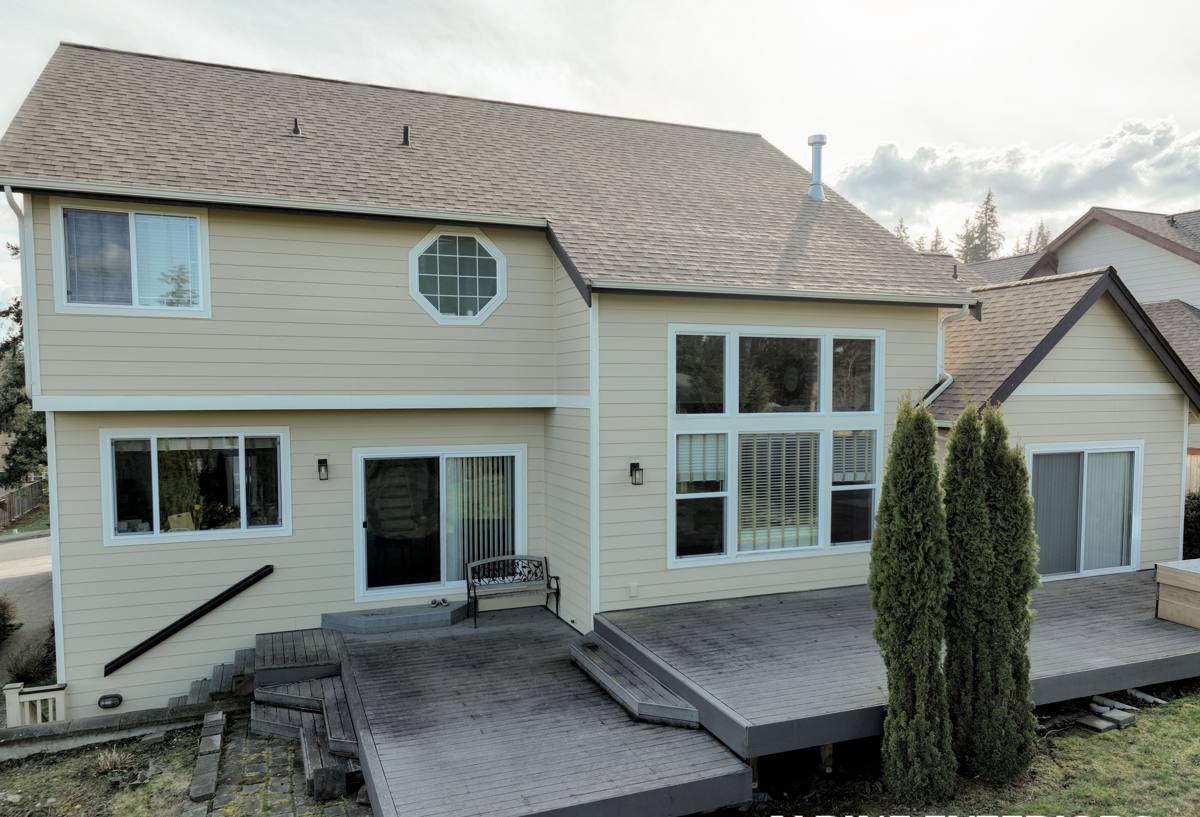
Signs Your Deck Needs Real Repair, Not Just a Fresh Coat
Homeowners often reach for a stain or sealer when a deck starts looking tired, but cosmetic products can't fix structural or moisture problems — they just hide them for a while. Here's what actually signals a repair is needed:
- Boards that feel spongy, springy, or soft underfoot, especially near the house or around posts
- Visible rust streaks bleeding from screw or nail heads
- Gaps widening between boards, or boards cupping and warping
- Railings or stair stringers that wobble or flex under normal weight
- Dark staining or a musty smell near the ledger board where the deck meets the house
- Visible daylight or gaps where the ledger board attaches to the house framing
- Rust-stained or corroded joist hangers, post bases, or other metal connectors
- Nails that have backed out or popped above the board surface
Any one of these on its own might be a small fix. Several together usually mean moisture has been working on the structure for a while, and it's worth having someone look at the framing underneath, not just the surface boards.
Why the Ledger Board Deserves Special Attention
The ledger board — the piece that bolts the deck to the house — is the single most important connection on the entire structure, and it's also the one most exposed to trapped moisture. Wind-driven rain gets pushed sideways into the gap between deck and siding, and if flashing wasn't installed correctly (or wasn't installed at all) that moisture has nowhere to go but into the wood. We check this connection on every inspection, because a failure here isn't cosmetic — it's the difference between a deck that's safe and one that isn't.
What a Correct Deck Repair Actually Involves
A proper repair isn't just swapping out the boards that look bad. It starts underneath, with the framing, and works outward:
Framing and Structure
Joists, beams, and posts get checked for rot, splitting, and insect damage. Any structural member that's compromised gets replaced — sistered joists or partial patches are a shortcut that doesn't hold up under Florida humidity cycles. Post bases and joist hangers get inspected for rust and replaced if corrosion has weakened them.
Fasteners and Hardware
This is where coastal repairs differ most from inland ones. Standard zinc-coated screws and nails corrode fast in salt air, and once a fastener starts rusting, it weakens the connection and stains the surrounding wood. We use fasteners and hardware rated for coastal exposure, matched to the decking material.
Decking Boards
Individual boards are replaced to match existing spacing and fastening patterns, or, where damage is widespread, full board runs are replaced so the repair doesn't end up as a patchwork of old and new material aging at different rates.
Railings and Stairs
Railing posts take a lot of stress at their base connection, and that's usually the first place to fail. Stair stringers get checked for rot at ground contact points. Both get repaired or rebuilt to current code requirements for height and baluster spacing, not just patched to look the way they did before.
Flashing and Waterproofing
Where the deck meets the house, correct flashing (and a proper gap or drainage path) keeps water from being driven back into the ledger connection and the house's wall assembly. This step gets skipped more often than any other in low-cost repairs, and it's usually the reason the same rot problem comes back.
Wood or Composite: What Makes Sense for a Repair
When a deck needs significant board replacement, homeowners often ask whether it's worth switching materials rather than replacing like-for-like. There's no universally right answer — it depends on budget, how much of the structure needs work, and how much upkeep you want going forward.
| Factor | Wood (Pressure-Treated / Hardwood) | Composite Decking |
|---|---|---|
| Upfront cost | Lower | Higher |
| Maintenance | Periodic sealing/staining needed, especially with intense UV exposure | Minimal; occasional cleaning |
| UV/fade resistance | Fades and grays without upkeep | Better color retention with quality products |
| Moisture/rot risk | Vulnerable if finish isn't maintained | Doesn't rot, but check manufacturer specs for coastal use |
| Repair approach | Individual boards easy to match and replace | Color/profile matching can be harder on older product lines |
| Feel/appearance | Natural wood look and texture | Consistent, uniform appearance |
We'll walk through this trade-off honestly during an inspection — sometimes a full composite conversion makes sense, and sometimes replacing wood framing and boards with proper fasteners and finish is the more practical, lower-cost fix. What we won't do is talk you into a bigger job than your deck actually needs.
Our Deck Repair Process
- On-site inspection. We check framing, fasteners, ledger connection, and every board and railing, not just the areas you flagged as a concern.
- Written scope and estimate. You get a clear breakdown of what's structural, what's cosmetic, and what it costs — no vague allowances.
- Repair or replacement. Compromised framing and hardware get addressed first, then decking, railings, and stairs.
- Fastener and flashing upgrade where needed. If corrosion or moisture intrusion caused the original failure, we fix the underlying cause, not just the symptom.
- Final walkthrough. We check the deck with you before calling the job done, and point out anything worth watching going forward.
Why Hardware Choice Matters More Here Than Inland
It's tempting to treat fasteners as an afterthought, but in a bluff-side, near-water setting, the hardware is often the first thing to fail — well before the wood itself is done. Salt-laden air accelerates galvanic corrosion, especially where dissimilar metals touch. Choosing the right fastener type for the decking material, and installing it correctly, is one of the most cost-effective things we do on any coastal repair.
| Fastener/Hardware Type | Coastal Performance | Typical Use |
|---|---|---|
| Standard zinc-coated screws/nails | Corrodes fastest in salt air; not recommended near the water | Not used in our coastal repairs |
| Hot-dip galvanized | Improved corrosion resistance over standard coatings | Structural connectors, framing hardware |
| Stainless steel (grade-appropriate) | Best long-term corrosion resistance | Visible decking screws, railing hardware |
| Coated composite-rated screws | Matched to specific composite manufacturer specs | Composite board fastening |
Permitting and Code Considerations
Depending on the scope of the repair, work on a deck's structural framing, railings, or stairs may fall under Pinellas County or local permitting requirements — this is more likely when framing, footings, or railing height/spacing are involved, and less likely for simple board-for-board surface replacement. We handle the determination and any required permitting as part of the job so you're not left guessing whether a repair was done to code.
Why Hiring a Crew That Already Works Belleair Bluffs Matters
A contractor who mainly works inland jobs may default to standard fasteners, skip flashing details that matter here, or underestimate how fast salt air and UV degrade materials in this specific setting. A crew that regularly works Belleair Bluffs and the surrounding Clearwater and Pinellas County coastline already knows what fails first in this environment and builds the repair to account for it — the right hardware grade, correct flashing at the ledger, and a realistic sense of how often a deck here needs a maintenance check versus a full repair. That local pattern recognition is the difference between a repair that lasts and one you're paying for again in two years.
What Deck Repair Typically Costs — And Why the Range Is Wide
Deck repair costs vary widely because "repair" covers everything from a few board swaps to a partial framing rebuild. Rather than quote a number that doesn't apply to your situation, here's what actually drives the price:
| Cost Factor | Why It Matters |
|---|---|
| Extent of framing damage | Structural work (joists, beams, posts) costs more than surface board replacement |
| Decking material | Composite generally costs more than wood, per board |
| Ledger/flashing condition | Fixing a failed ledger connection properly adds labor and materials |
| Railing and stair condition | Code-compliant rebuilds cost more than simple tightening or board swaps |
| Deck size and accessibility | Larger, harder-to-access decks take more time and labor |
| Fastener/hardware upgrade | Coastal-grade hardware costs more upfront but avoids repeat failures |
Because of this range, we don't quote a price without seeing the deck. An honest estimate depends on what's actually happening under the surface, not just what's visible from the top.
If your deck is showing any of the warning signs above, or it's simply been a while since anyone looked at the framing and fasteners underneath, we're glad to come take a look. The estimate is free, there's no pressure to book anything on the spot, and you'll get a straight answer about what your deck actually needs — just fill out the form below to get started.