 Clearwater Window
 Siding Replacement for Countryside Homes
Countryside sits inland from the coast, but "inland" in Pinellas County still means salt-laden air, hurricane-force wind gusts, torrential summer storms, and some of the most intense year-round UV exposure in the continental United States. The siding on a Countryside home works harder than most homeowners realize, and when it starts to fail, the signs are often subtle until they aren't: a soft spot near a window trim, paint that won't hold a finish anymore, or a wall that feels warm and swollen after a heavy rain. Siding replacement in this part of Clearwater isn't a cosmetic upgrade — it's a structural and moisture-management decision that determines how well the rest of the house holds up for the next 20-plus years.
We work Countryside regularly, alongside the rest of Clearwater and Pinellas County, and we install one product system: James Hardie fiber cement siding. This page covers what local homes actually need from a siding replacement, what correct installation involves, and how our process works from first estimate to final walkthrough.
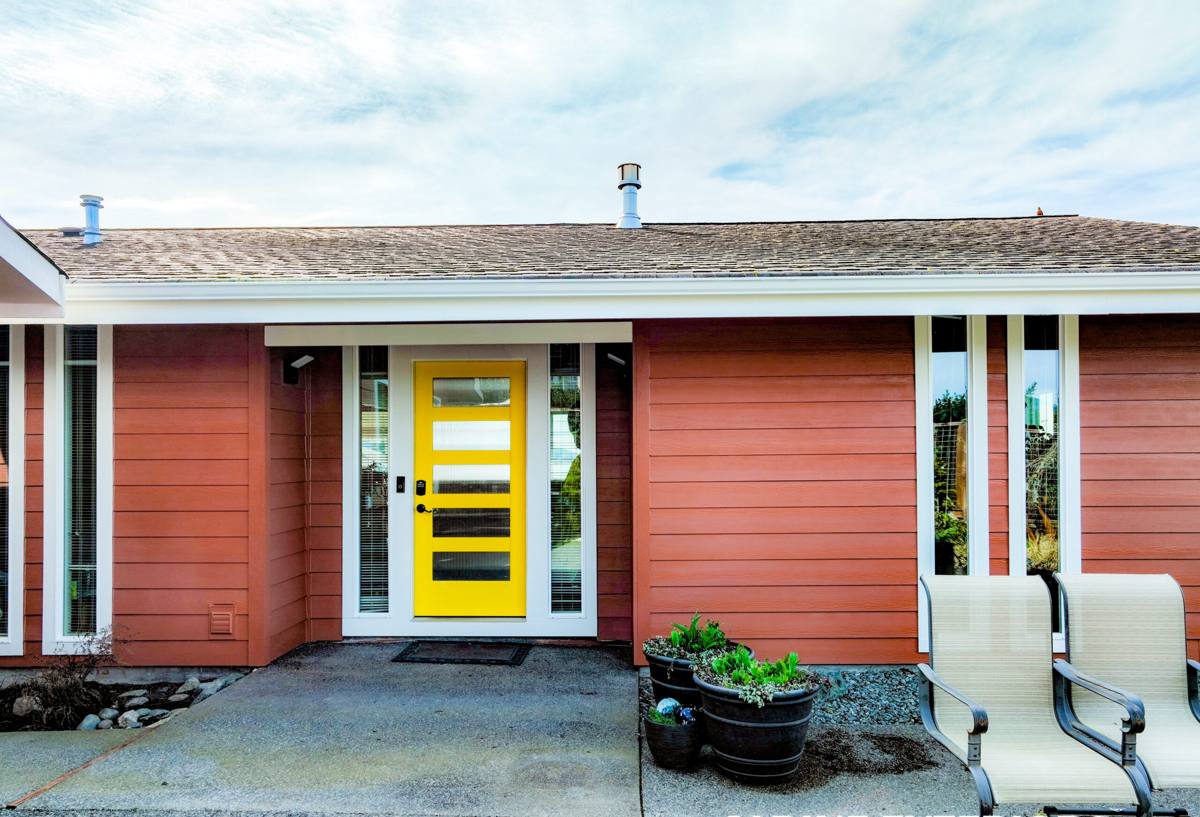
Why Countryside Siding Wears Differently Than Siding Inland Elsewhere
Homes in established Countryside neighborhoods were built across several different decades, which means the siding underneath a homeowner's current exterior could be original wood lap, older vinyl, an aging fiber cement product, or a patchwork of repairs layered over the years. Whatever the starting point, four regional stressors do the real damage over time:
- Wind-driven rain — Florida storms rarely fall straight down. Wind pushes rain sideways into seams, laps, and trim joints, and siding that isn't installed with the right clearances and flashing details lets that water find a way behind the surface.
- Hurricane-force gusts — Even homes that never take a direct hurricane hit see repeated high-wind events. Siding that isn't fastened to spec loosens gradually, and loose siding becomes flying debris in the next storm.
- Intense, near-constant UV — Central Florida sun degrades paint film and breaks down some siding substrates faster than almost anywhere else in the country. Products with weak factory finishes chalk, fade, and crack years ahead of their rated life.
- Salt air — Countryside isn't beachfront, but Gulf-influenced air still carries salt inland across the county. Salt accelerates corrosion of fasteners and trim and speeds up finish breakdown on siding that isn't engineered for coastal-adjacent climates.
None of these factors act alone — they compound. A fastener weakened by salt exposure is more likely to work loose in a wind event; a finish degraded by UV lets moisture in faster during the next wind-driven rain. Siding replacement here has to account for all four at once, not just the one that's most visibly failing.
What a Correct Siding Job Actually Involves
Replacing siding is not simply removing old panels and nailing up new ones. Done correctly, it's a full building-envelope job with several distinct stages, each of which matters as much as the siding itself.
Tear-Off and Substrate Inspection
Once the old siding comes off, we inspect the sheathing and framing underneath for rot, moisture staining, or insect damage — problems that are invisible until the wall is opened up. Any compromised wood gets addressed before anything new goes on. Installing new siding over a damaged substrate just hides the problem for a few more years.
Weather-Resistive Barrier and Flashing
A correctly detailed water-resistive barrier, properly lapped and taped, combined with flashing at every window, door, and penetration, is what actually keeps wind-driven rain out of the wall assembly. The siding itself is the second line of defense, not the first — most siding failures we see trace back to shortcuts at this stage, not the siding product itself.
Fastening and Clearances
James Hardie publishes specific fastener patterns, clearances above rooflines and decks, and gaps at trim and butt joints for a reason — these details are engineered for wind resistance and moisture drainage. Skipping them voids warranty coverage and shortens the real-world life of the installation regardless of how good the siding product is.
Finish and Trim Detail
Corner boards, window and door trim, and caulking at transitions are where a job looks finished — and where water intrusion most often starts if they're rushed. We treat trim as a functional detail, not just an aesthetic one.
Why We Only Install James Hardie
We standardized on James Hardie fiber cement for every siding replacement we do, including in Countryside, because it's the product system that holds up best against the specific combination of stressors described above:
- Non-combustible — fiber cement doesn't feed a fire the way wood-based products can.
- Engineered for humid, high-UV climates — Hardie's HZ5 product line is specifically formulated for Gulf Coast and Southeastern conditions, including moisture and pest resistance that generic siding products aren't built for.
- ColorPlus factory finish — baked-on, UV-cured color that resists the fading and chalking that plain-painted siding suffers under Florida sun, with touch-up product available for the rare repair.
- Dimensionally stable — fiber cement doesn't expand, contract, or warp with humidity swings the way wood and some composite products do, which matters when panels are exposed to Florida's daily heat-and-rain cycle.
- Strong, transferable warranty — backed by a manufacturer with decades of performance data in exactly this climate.
We don't install LP SmartSide, vinyl, Cemplank, Allura, or primed wood species like spruce or cedar. Some of these are reasonable products in the right context, and we're happy to talk through the honest trade-offs on request — but none of them match Hardie's combination of impact resistance, finish durability, and long-term performance in a climate this demanding. We'd rather install one product system extremely well than offer several and cut corners on any of them.
Comparing Siding Options Homeowners Ask About
| Factor | James Hardie Fiber Cement | Vinyl | Wood (Spruce/Cedar) |
|---|---|---|---|
| UV / fade resistance | ColorPlus factory finish resists fading and chalking | Can fade and become brittle under prolonged sun | Requires repainting/staining every few years |
| Moisture behavior | Engineered to resist swelling, rot, and moisture damage | Doesn't rot, but can warp and trap moisture behind panels if installed poorly | Prone to rot and moisture damage without diligent maintenance |
| Wind performance | Rated for high-wind installation when fastened to spec | Can crack or blow off in high winds if not rated for the region | Performance depends heavily on fastening and panel condition |
| Fire resistance | Non-combustible | Can melt or deform near heat sources | Combustible |
| Maintenance | Occasional caulk/paint touch-up at trim | Low, but damage often means full panel replacement | Regular painting/staining and rot inspection |
This isn't a claim that every alternative product fails — it's why, given everything we've seen installed and maintained in this climate over years of work, Hardie is the one system we're willing to put our name behind.
Our Countryside Siding Replacement Process
- Free on-site estimate — we walk the exterior, check for hidden moisture or substrate issues, and talk through product and color options.
- Detailed written proposal — scope, product line, timeline, and cost, so there are no surprises once work starts.
- Tear-off and inspection — old siding removed, sheathing checked, any repairs identified and addressed.
- Weather barrier and flashing installation — the moisture-management layer that protects the wall assembly long-term.
- Hardie panel installation — installed to manufacturer fastening, clearance, and flashing specifications.
- Trim, caulking, and final finish — the details that determine both appearance and long-term water resistance.
- Final walkthrough — we go over the completed work with the homeowner before calling the job done.
Signs Countryside Homeowners Shouldn't Ignore
- Soft, spongy, or discolored areas, especially near windows, doors, or roof lines
- Paint that keeps failing no matter how often it's redone
- Visible cracking, buckling, or gaps at seams and corners
- Siding that flexes or feels loose when pressed
- A musty smell or visible mold near exterior walls, which can indicate moisture behind the siding
- Rising energy bills that could point to a compromised building envelope
Any one of these is worth a look. Several together usually mean the wall assembly, not just the surface, needs attention.
Why Local Experience in Countryside Matters
Every Clearwater neighborhood has its own mix of home ages, orientations, and wind exposure, and Countryside is no exception. A crew that already works this area understands the typical construction of homes built in different eras locally, knows what Pinellas County permitting and inspection expects, and has seen firsthand how different products and installation details actually perform once a few Florida storm seasons have passed. That local track record is part of what a homeowner is paying for — not just materials and labor, but judgment shaped by doing this work, in this climate, repeatedly.
If your Countryside home's siding is showing its age or you're planning ahead of the next storm season, we're glad to come take a look. Reach out for a free, no-pressure estimate — we'll assess your home's actual condition and walk you through what a correct James Hardie installation would involve, with no obligation.