 Clearwater Window
 Why Coachman Ridge Roofs Wear Differently Than Roofs Inland
Coachman Ridge sits in the Clearwater area of Pinellas County, close enough to the Gulf that homes here take a different kind of beating than roofs 30 or 40 miles inland. It's not one big event that does the damage — it's the accumulation. Intense UV exposure runs almost year-round, breaking down asphalt shingle mat and oils faster than manufacturer charts assume. Wind-driven rain during summer storms and tropical systems finds its way under poorly sealed edges and worn flashing. And salt-laden air moving in off the Gulf slowly corrodes anything metal that isn't rated for coastal exposure — fasteners, flashing, vents, even cheap metal trim.
A roof that would hold up fine in a drier, cooler climate can start showing granule loss, curling, or soft spots well ahead of its rated life here. That's the case for metal roofing on a lot of Coachman Ridge homes: not because metal is trendy, but because it handles wind uplift, heat, and moisture in ways that suit this specific climate better than some alternatives.
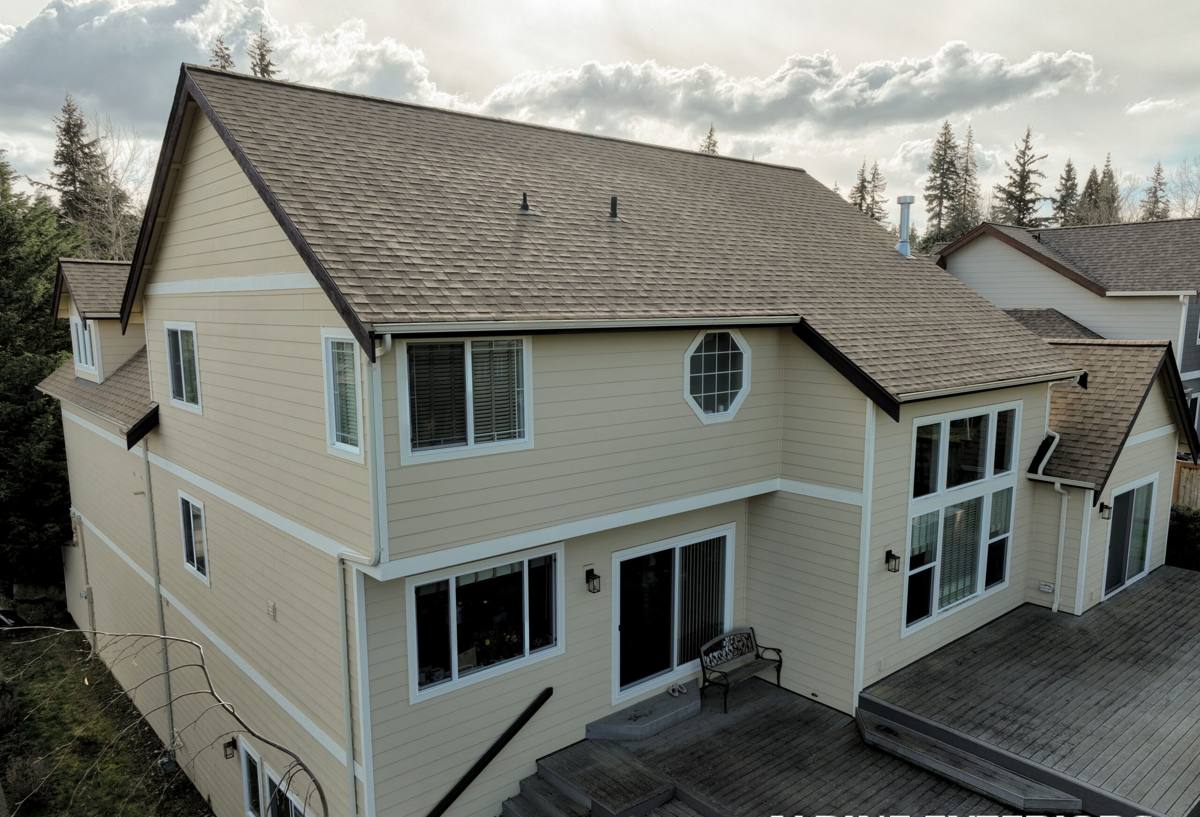
What a Correct Metal Roof Install Actually Involves
"Metal roofing" covers a range of systems, and the difference between a roof that performs for decades and one that leaks in three years usually comes down to details most homeowners never see once the job is done.
Panel Types
Standing seam panels — with raised, interlocking seams and hidden fasteners — are the standard for a fully watertight, low-maintenance roof. Exposed-fastener metal panels cost less up front but rely on screws through the panel face, which means gasket washers that degrade over time and need periodic inspection. We'll walk through which makes sense for your roof pitch, budget, and how long you plan to stay in the home.
Underlayment and Deck Prep
Metal panels are only as good as what's underneath them. A synthetic underlayment or self-adhered ice-and-water-shield-style membrane at eaves, valleys, and penetrations is what actually stops wind-driven rain from reaching the deck if wind ever forces water sideways under a panel. We also check the deck itself for soft spots, rot, or delamination before anything new goes down — covering a bad deck with a good roof just hides the problem.
Fastening and Wind Uplift
Clip spacing, fastener type, and panel-to-substrate attachment are what determine how a metal roof performs in a wind event, not the panel material alone. For coastal Pinellas County homes, we fasten to a wind-rated spec appropriate for local exposure, not a generic minimum.
Ventilation
Attic heat buildup under a metal roof without proper ridge and soffit ventilation can shorten the life of the underlayment and drive up cooling costs. We check existing ventilation as part of the roof, not as an afterthought.
Metal vs. Other Roofing Options for This Area
There's no single "best" roofing material for every home — it depends on budget, roof pitch, HOA rules, and how long you plan to own the house. Here's how metal stacks up against the two most common alternatives in Coachman Ridge.
| Factor | Standing Seam Metal | Architectural Asphalt Shingle | Tile |
|---|---|---|---|
| Typical lifespan (coastal use) | 40-60 years | 15-20 years | 30-50 years |
| Wind performance | Excellent when properly fastened | Good, but shingle tabs are the first failure point | Good, but individual tiles can dislodge |
| Heat reflectivity | High with reflective coatings, lowers attic heat gain | Absorbs and holds heat | Moderate, depends on color/finish |
| Maintenance | Low; occasional fastener/seam check | Moderate; granule loss, algae streaking | Moderate; cracked or slipped tiles, underlayment failure over time |
| Upfront cost | Higher | Lowest | Highest |
We install and stand behind more than one system — the table above is about trade-offs, not a sales pitch for one product. If your roof pitch, budget, or HOA guidelines point toward shingle or tile, we'll say so honestly during the estimate.
Our Process, Start to Finish
1. On-Site Inspection
We look at the existing roof from the deck up — not just the surface. That means checking for soft spots, prior repair patches, flashing condition around chimneys and vents, and how the current system is ventilated.
2. Honest Scope and Written Estimate
You get a written scope that spells out panel type, underlayment, flashing details, and fastening approach — not just a single line-item price. If a full replacement isn't warranted yet, we'll tell you that too.
3. Material Delivery and Deck Prep
Any damaged decking is identified and replaced before underlayment goes down. This is the step that gets skipped by crews trying to move fast, and it's the one that causes leaks two or three years later.
4. Installation
Panels, flashing, and trim are installed to spec, with particular attention to valleys, penetrations, and edge details — the places a metal roof is most likely to leak if rushed.
5. Final Walkthrough
We walk the completed roof and the property with you, cover care and maintenance, and answer questions about warranty coverage before we consider the job done.
Signs a Coachman Ridge Roof Needs a Closer Look
Most roof failures don't happen suddenly — there are usually warning signs first. Worth checking for, or having us check for you:
- Streaking, staining, or dark patches on the roof surface (often algae or trapped moisture)
- Granule buildup in gutters or at downspouts (a sign of shingle breakdown, relevant if you're comparing against a metal replacement)
- Visible rust or corrosion at metal flashing, vents, or fasteners
- Soft or spongy spots when walked (a sign of deck rot underneath)
- Daylight visible through the attic at eaves or ridge lines
- Loose, lifted, or missing panels or shingles after a windstorm
- Rising cooling bills with no other explanation, which can point to failing attic ventilation or radiant heat gain
Wind, Water, and Salt: What Coachman Ridge Specifically Needs
Every roofing job in Clearwater deals with the same broad climate pressures, but a few things matter more for a Coachman Ridge property specifically. Homes in this part of Pinellas County are close enough to the coast that salt air exposure is a real, ongoing factor even though the neighborhood isn't beachfront — corrosion-resistant fasteners and flashing aren't optional upgrades here, they're part of doing the job correctly. Tree canopy in established residential neighborhoods like this one also means more debris and organic buildup in valleys and gutters, which is worth factoring into your maintenance schedule regardless of what roofing material you choose.
Wind exposure for inland Clearwater neighborhoods is generally somewhat lower than immediate waterfront property, but Pinellas County-wide wind codes still apply, and hurricane-force gusts don't respect neighborhood boundaries. We fasten and flash to code minimums or better for the area, not to whatever the cheapest spec allows.
What Drives the Cost of a Metal Roof Here
| Cost Factor | Why It Matters Locally |
|---|---|
| Roof size and pitch | Steeper or more complex rooflines take longer to install and use more material |
| Panel type and gauge | Standing seam and heavier-gauge panels cost more but hold up better to coastal wind and salt exposure |
| Deck condition | Rot or soft decking found during tear-off adds material and labor before new roofing goes on |
| Underlayment upgrade | Self-adhered membrane at eaves/valleys costs more than basic synthetic felt but adds real wind-driven-rain protection |
| Flashing and penetrations | Chimneys, skylights, and multiple roof valleys all add detail work and time |
| Ventilation corrections | Adding or upgrading ridge/soffit venting during the reroof avoids a second project later |
We don't publish a flat per-square price because the honest number depends on all of the above — that's what the on-site estimate is for.
Why a Crew That Already Works This Neighborhood Matters
Roofing permits, wind-load requirements, and inspection expectations vary by municipality and county, and Clearwater/Pinellas County has its own process. A crew that already works in and around Coachman Ridge knows the local permitting steps, has already dealt with the HOA or deed-restriction paperwork some Clearwater communities require, and isn't learning the area's climate quirks on your roof for the first time. That familiarity shows up in fewer surprises during the job — not in a lower price, but in fewer change orders and less back-and-forth.
It also means someone local to call if a question comes up six months or two years after installation, rather than chasing down an out-of-town crew that's moved on to the next county.
Caring for a Metal Roof After Installation
Metal roofing is genuinely low-maintenance compared to shingle or tile, but "low-maintenance" isn't "no-maintenance." A yearly visual check — or after any major storm — for lifted panels, loose fasteners, or debris buildup in valleys goes a long way toward getting the full lifespan out of the system. Keeping gutters clear and trimming back overhanging branches also reduces the organic debris and moisture that can sit against a roof surface in a tree-canopied neighborhood like this one.
If you're planning a reroof, comparing options, or just want a straight answer about what your current roof needs, we're happy to take a look. Reach out for a free, no-pressure estimate using the form below.