 Clearwater Window
 Board & Batten Siding for Countryside Homes
Countryside is one of Clearwater's larger established residential areas, built out mostly during a period when single-story ranch and split-level homes with block walls and framed gable ends were the standard. That mix of construction shows up in a lot of the siding problems we see today: a stucco or block exterior that's held up fine structurally, paired with a wood or aging composite gable end, dormer, or garage accent that's been repainted more times than the owner can count. Board and batten siding — wide vertical boards with narrower strips covering the seams — is one of the most requested upgrades for exactly those areas, because it gives a clean, defined look to gables, entryways, and accent walls without re-siding an entire block home.
Pinellas County's climate is not gentle on any exterior material, and Countryside is not exempt just because it sits a bit inland from the beach. Hurricane-force wind events, intense year-round UV, wind-driven rain during summer storm season, and salt-laden air that travels well past the immediate coastline all work on siding continuously, not just during a named storm. Board and batten's vertical seams and exposed board edges make material choice and installation detail more important here than on a flat lap-siding wall, which is the main reason we're picky about both.
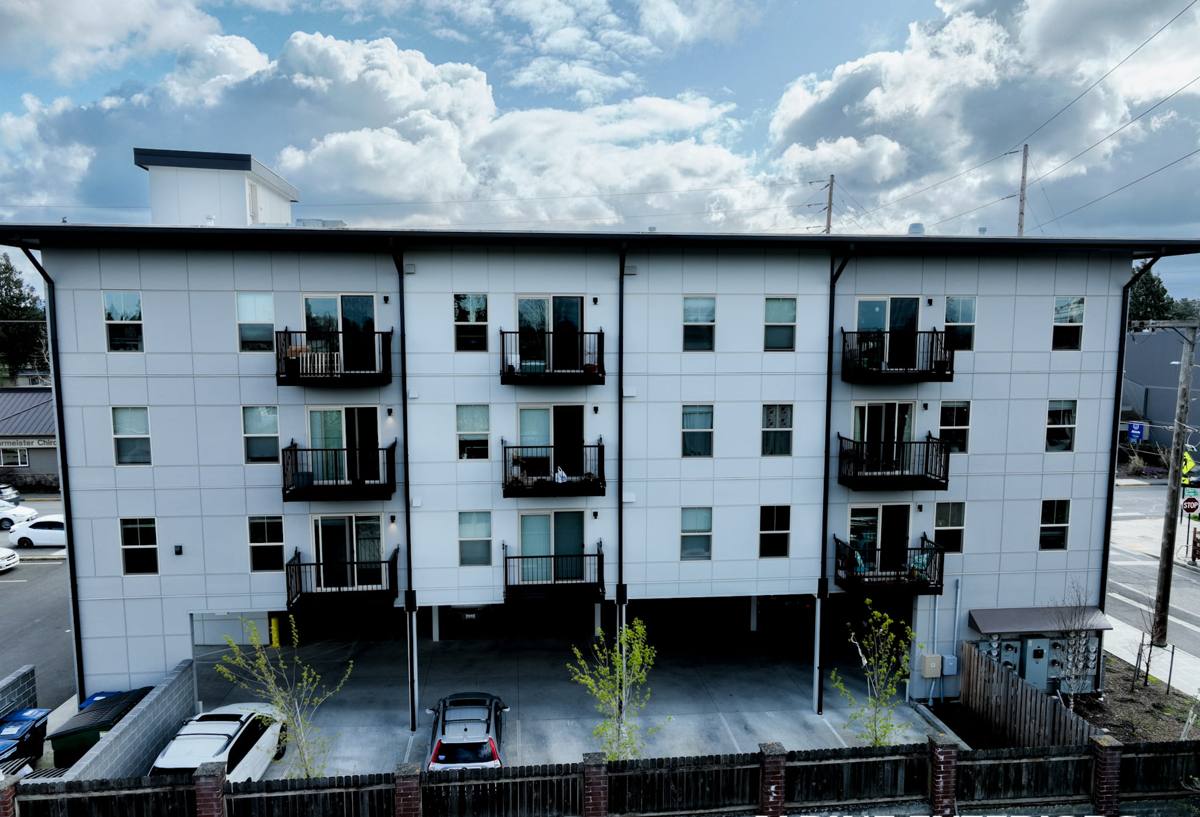
What Correct Board & Batten Installation Actually Involves
Board and batten looks simple — wide boards, narrow battens over the joints — but the assembly hides most of the work that determines whether it lasts. Underneath the visible boards there needs to be a proper weather-resistive barrier, correctly lapped and sealed at every penetration, plus furring or strapping in many configurations to create a drainage gap behind the panel. Skip that gap, and any moisture that gets past the battens — which it eventually will, given our storm patterns — has nowhere to go and sits against the wall sheathing.
Fastening and Spacing
Every board needs fasteners sized and spaced to the manufacturer's published wind-load tables, not a generic "looks secure" standard. In a wind zone like ours, under-fastened board and batten is one of the more common failure points we get called to fix on other people's work — boards that flex, pop nails, or peel off in gusts well under full hurricane strength.
Batten Placement Over Seams
The batten's entire job is to shield the vertical seam between boards from wind-driven rain. That means batten width, centering, and fastening pattern all have to be right — a batten that's slightly off-seam or under-caulked defeats the purpose of the whole system.
Trim, Corners, and Terminations
Where board and batten meets a window, door, roofline, or corner is where most leaks start on any siding job. Correct flashing at heads and sills, proper corner trim, and starter strips at the base all need to be detailed before the first board goes up, not patched in afterward.
Where Board & Batten Fits Best on Countryside Homes
Most of the board and batten work we do in this part of Clearwater falls into a few categories rather than full-house re-siding:
- Gable ends on ranch and split-level homes where the original wood or composite has weathered out
- Front entry accent walls to modernize a plain block or stucco facade
- Garage face accents, a very common upgrade request in older subdivisions
- Dormer and porch gable details on homes with more architectural articulation
- Full-elevation siding on frame-built sections of a home, where board and batten replaces old lap siding entirely
The vertical lines read well against the horizontal rooflines common in this area's ranch-style housing stock, and it pairs cleanly with block or stucco walls left as-is elsewhere on the same house — which keeps a project's cost and scope proportional to what actually needs replacing.
James Hardie Board & Batten: The Only System We Install
We install James Hardie fiber cement exclusively — no vinyl, no LP SmartSide, no Cemplank, no Allura, no primed spruce or cedar board and batten. That's a deliberate standard, not a sales preference, and it matters more on a vertical-seam product like this one than almost anywhere else in siding.
Wood and engineered-wood board and batten depend on the integrity of a factory coating or field-applied paint to keep water out of exposed end grain and seams. In Florida's UV and moisture load, that coating is under constant stress, and board and batten's many vertical joints multiply the number of places a coating failure can let water in. Vinyl board and batten is lightweight and low-maintenance, but it's a poor match for hurricane wind zones — it flexes, can crack in impacts, and its color is baked into a thinner material that fades and chalks faster under intense UV than a factory-cured cement finish.
James Hardie fiber cement is non-combustible, dimensionally stable in heat and humidity swings, and finished with the ColorPlus factory baked-on finish, which holds color and resists fading far longer than field-applied paint on wood. Hardie's HZ5 product line is engineered specifically for high-humidity, high-moisture climates like ours, and the company backs it with a strong transferable limited warranty — but only when installed to their published specifications, which is the entire reason installation detail gets so much attention on this page.
Board & Batten Material Comparison
| Material | Wind/Impact Resistance | Moisture Behavior | Maintenance Burden |
|---|---|---|---|
| James Hardie Fiber Cement | Strong, engineered for high-wind zones | Dimensionally stable, HZ5 formulated for humidity | Low — factory finish holds color for years |
| Vinyl Board & Batten | Flexes and can crack under wind/impact loads | Doesn't rot, but seams and panel edges can allow water intrusion | Low, but fades and chalks under intense UV |
| LP SmartSide / Engineered Wood | Moderate, sensitive to installation and edge sealing | Vulnerable at cut edges and seams if coating fails | Moderate — coating maintenance is critical |
| Primed Spruce/Cedar | Moderate, depends on fastening and species | Prone to swelling, cupping, rot at exposed seams | High — repainting and caulk maintenance ongoing |
Our Process for a Countryside Board & Batten Project
Assessment and Scope
We start by identifying exactly which walls, gables, or accents actually need replacement versus what can stay — most Countryside homes are a mix of block, stucco, and framed sections, and there's no reason to re-side surfaces that aren't failing.
Substrate Check
Before any board goes up, we inspect the sheathing and framing behind the old siding for hidden moisture damage. This is a routine step here given how much wind-driven rain this region sees over a building's lifetime, and it's far cheaper to catch and repair rot now than after new siding is already installed over it.
Weather Barrier and Drainage Gap
We install a code-compliant weather-resistive barrier and, where the assembly calls for it, furring to create a drainage gap behind the boards — the detail that separates board and batten that lasts from board and batten that traps moisture.
Installation to Spec
Boards, battens, fasteners, and trim all go in per James Hardie's published specifications for our wind zone, which is also what keeps the manufacturer's warranty intact if you ever need it.
Final Inspection
We walk every seam, corner, and penetration before calling a project done — the small stuff (a missed caulk line, a slightly proud fastener) is what turns into a callback two years later if it's skipped.
What to Check Before You Hire Anyone for Board & Batten Work
- Do they specify the exact fiber cement product line and HZ zone rating, not just "Hardie siding" generically?
- Will they detail the weather barrier and drainage plan in writing, not just verbally?
- Do they follow manufacturer fastening schedules for our wind zone, and can they show you the spec sheet?
- Are they James Hardie Preferred or Elite Preferred contractors, which affects warranty coverage?
- Do they have ongoing work or a track record specifically in Clearwater and Pinellas County, where local wind and moisture conditions are well understood?
- Will corner trim, batten spacing, and termination details be spelled out before work starts, not decided on the fly?
A crew that already works regularly in Countryside and the surrounding Clearwater neighborhoods knows the housing stock — the typical wall assemblies, the common trouble spots on 1970s- and 1980s-built homes, and what Pinellas County's permitting and inspection process actually requires. That local familiarity shows up in fewer surprises once the old siding comes off.
Maintenance and Long-Term Care in This Climate
Even the right material benefits from basic upkeep in a coastal-influenced climate like ours. Rinsing accumulated salt air residue and pollen off the siding periodically, keeping gutters clear so water doesn't sheet down the batten seams, and doing a visual check after major storms for any loose boards or trim are all reasonable habits. James Hardie's ColorPlus finish is designed to minimize repainting, but it's not a substitute for basic exterior maintenance — no siding product is.
Get a Straight Answer for Your Countryside Home
If you're dealing with a tired gable end, a garage face that's due for an update, or you're planning a fuller re-side and want board and batten worked into the design, we're happy to take a look and give you a straightforward assessment — no pressure, no inflated scope. Use the form below to request a free estimate.