 Clearwater Window
 Seminole sits in Pinellas County just a few miles from the Gulf beaches and the Intracoastal waterway, and that location puts nearly every home here inside the same demanding weather pattern: hurricane-force wind events for a good stretch of the year, some of the most intense year-round UV exposure in the country, wind-driven rain that tests every seam in a building's exterior, and salt-laden air that never really lets up. A window opening takes more of that stress than almost any other part of a house, because it's where the building envelope has the most seams, the most moving hardware, and the most chances for water or wind to find a weakness if the installation wasn't done right the first time. This page is specifically about what correct window installation looks like for a Seminole home, not window installation in general.
What Pinellas County Weather Demands From a Window Installation
Hurricane-Force Wind Loads
Seminole falls within Florida's wind-borne debris region under the Florida Building Code, which means window installations here have to meet wind-pressure and, in most cases, impact-resistance standards that a lot of the country never has to think about. That's not a suggestion or an upgrade — it's a baseline requirement tied to the property's location and exposure, and it affects which window products are even eligible for the job before installation quality ever enters the picture.
Intense, Year-Round UV
Florida's sun angle and day length mean windows here absorb far more cumulative UV exposure per year than windows almost anywhere else in the country. Lower-grade vinyl, weatherstripping, and sealants degrade faster under that load, showing up as chalking, brittleness, and early seal failure years before they should. A frame and glazing package rated for sustained high-UV exposure holds its color, flexibility, and seal integrity far longer than one that wasn't built with this climate in mind.
Wind-Driven Rain
Vertical rain is easy for almost any window to shed. Rain pushed sideways by a tropical system or even a strong afternoon storm is a different problem — it finds gaps at the frame perimeter, fastener penetrations, and sill details that would stay dry in a calmer climate. Once a system like that arrives a few times a year, marginal flashing or aging sealant around a window starts showing water intrusion at exactly those points.
Salt Air
Being a few miles from the Gulf and close to Boca Ciega Bay and the Intracoastal means airborne salt settles on every exterior surface in Seminole, windows included. Salt accelerates corrosion on exposed hardware, fasteners, and lower-grade frame components, and it's a slow, cumulative effect rather than a dramatic one. It's part of why hardware grade and frame material matter more here than they would on a comparable inland home.
Retrofit vs. New Construction Installation
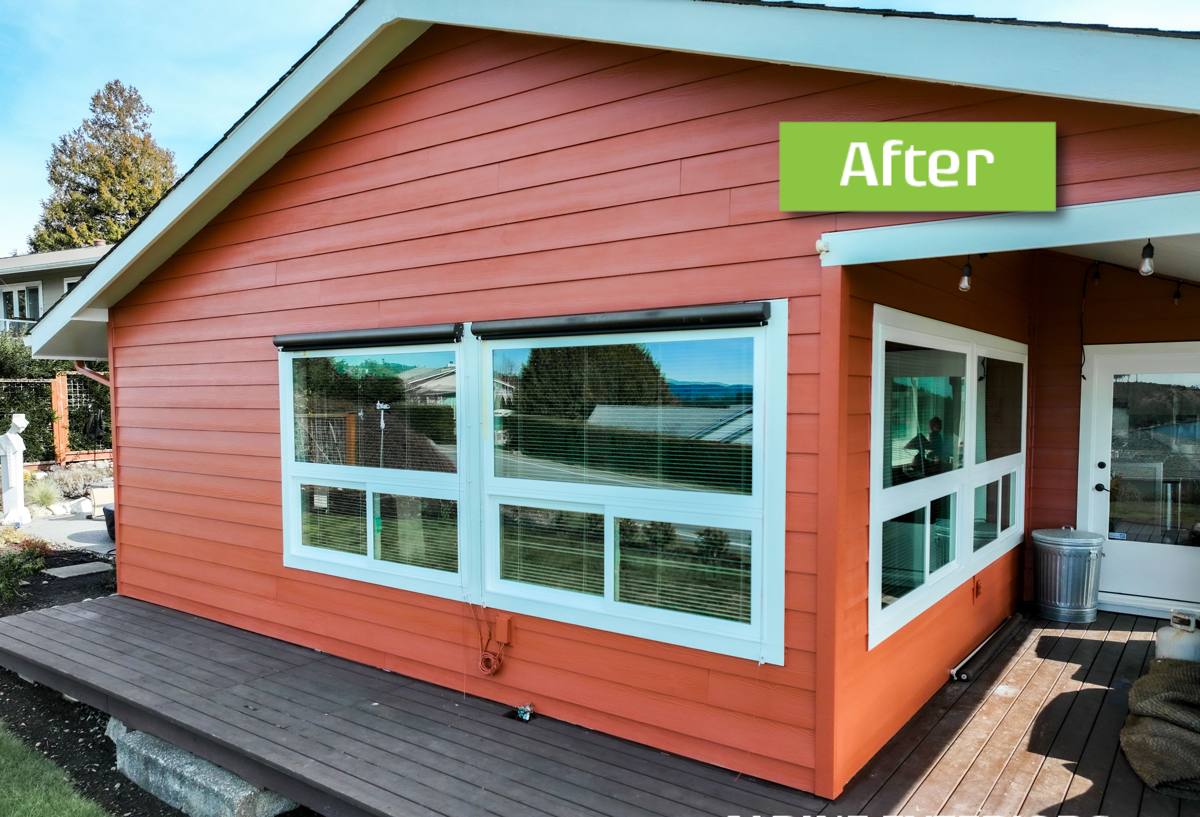
There are two fundamentally different ways to install a window, and the right one depends on the home and the opening, not personal preference. A retrofit (sometimes called a pocket or block-frame) installation sets the new window inside the existing frame or masonry opening, which is the common approach on Florida's block and stucco construction where the original opening is sound. A new construction installation removes the window down to the rough opening and installs a unit with a nailing fin that fastens directly to the framing, which is the right call when the existing frame is damaged, out of square, or when a project is a true addition or new build. Each method has its own flashing sequence, and using the wrong one for the situation is a common source of long-term leaks.
| Factor | Retrofit / Block-Frame Install | New Construction Install |
|---|---|---|
| Best for | Sound existing masonry or frame opening | Damaged framing, additions, or new builds |
| Disruption | Lower — exterior stucco and interior finishes usually stay intact | Higher — often involves removing surrounding stucco or siding |
| Flashing approach | Sealant and flange integration against the existing opening | Full flashing tie-in with the weather-resistive barrier and cladding |
| Typical timeline | Faster per window | Longer, more labor-intensive per window |
| Cost | Generally lower | Generally higher, reflecting the added framing and finish work |
What a Correct Window Installation Involves
Meeting Florida Building Code Wind Requirements
Every window we install in Seminole has to meet the wind-pressure and, where applicable, impact-resistance rating that applies to that specific property based on its location and exposure category. That means confirming the product itself carries the correct rating and that it's being installed with the fastening schedule and anchoring the manufacturer's approval actually requires — a code-rated window installed with the wrong fasteners or spacing doesn't perform like a code-rated window once a real storm arrives.
Flashing and Weatherproofing
This is the detail that determines whether an installation holds up in this climate. Flashing has to lap correctly with the weather-resistive barrier and stucco or siding around the opening, water has to be directed out and away from the rough opening rather than trapped behind it, and every seam needs sealant rated for sustained UV and moisture exposure. On repair calls in this area, water damage almost never traces back to the window unit itself failing — it traces back to flashing that was never lapped correctly, or caulk that was asked to do a flashing detail's job on its own.
Sealing, Fastening, and Finish
Once the unit is set and shimmed level, plumb, and square, fastening follows the manufacturer's approved schedule for the wind rating involved — this isn't a place to save time with fewer or shorter fasteners than specified. Exterior sealant and trim integration come last, matched to the surrounding stucco or siding so the finished opening looks intentional rather than patched.
Signs a Seminole Home Needs New Windows
- Fogging or visible moisture trapped between the panes of a double-pane window
- Noticeable drafts, whistling, or air movement near the frame even when fully closed and locked
- Chalky, faded, or brittle frames and weatherstripping, especially on sun-facing elevations
- Sills or surrounding stucco that show staining, soft spots, or visible water intrusion
- Windows that stick, won't stay open, or are difficult to lock the way they used to
- Hardware showing corrosion, pitting, or stiffness from years of salt air exposure
- Uncertainty about whether the current windows actually carry a valid wind or impact rating for the property
Our Installation Process
- On-site assessment — we check each opening's condition, confirm the required wind and impact rating for the property, and determine whether retrofit or new construction installation is the right approach
- Honest recommendation and quote — a written scope covering the window products, the installation method, and what's included, explained in plain terms
- Permitting — window installation in Pinellas County generally requires a permit and inspection, which we handle as part of the job rather than leaving it to the homeowner
- Removal and opening prep — the old unit comes out carefully, and any hidden rot, corrosion, or prior flashing failures get addressed before the new window goes in
- Installation, fastening, and flashing — the new unit is set, anchored to the fastening schedule that satisfies its wind rating, and flashed in the sequence appropriate to the installation method
- Sealing, trim, and inspection — exterior sealant and trim are finished to match the surrounding wall, and the work is ready for the required inspection
A Quick Checklist Before You Commit
- Confirm the quoted window carries a wind-pressure and, if required, impact rating that matches your property's exposure category
- Ask whether the job is a retrofit or new construction installation, and why that's the right call for your openings
- Verify the contractor pulls the required permit and schedules the inspection rather than skipping it
- Get a written scope that separates the manufacturer's product warranty from the installer's labor warranty
- Ask about realistic lead times — impact-rated windows are often built to order and can take several weeks to arrive
Installation Cost Factors
| Factor | Why It Matters |
|---|---|
| Impact rating | Laminated impact glass and reinforced frames cost more than non-rated equivalents but are required in many configurations here |
| Installation method | New construction installs generally involve more labor and finish work than a retrofit into a sound existing opening |
| Number of windows | A whole-house project typically has better per-unit economics than one or two replacements |
| Opening condition | Rot, corrosion, or prior flashing failures add repair work before the new unit can go in |
| Size and configuration | Larger units, sliders, and multi-panel configurations cost more to manufacture and install than a standard single or double hung |
| Frame material | Vinyl, aluminum, and fiberglass differ in upfront cost and long-term maintenance in a coastal, high-UV climate |
We won't quote a number without seeing the openings in person, but these are the factors that consistently move price on a Seminole installation, whether it's one window or a full-house project.
Choosing the Right Frame and Glass for This Climate
There isn't one correct window product for every Seminole home — the right choice depends on the property's exposure, budget, and how the homeowner wants the finished window to look and perform. Vinyl frames built for coastal, high-UV exposure hold up well with low maintenance and are widely available in impact-rated configurations. Aluminum frames are common on Florida homes, tend to be slimmer in profile, and pair well with impact glass, though they conduct heat more than vinyl or fiberglass. Fiberglass frames cost more upfront but resist warping and expansion through Florida's heat cycling especially well. On the glass side, laminated impact glass is the most common way to meet code without relying on shutters or panels that have to be installed before a storm and removed after. We'll walk through the honest trade-offs for your specific home rather than defaulting to whichever product is easiest to install.
Why a Crew That Works Seminole Regularly Matters
Manufacturer installation instructions are written for average conditions, and Seminole's combination of hurricane-force wind exposure, intense UV, wind-driven rain, and salt air isn't average. A crew that installs windows throughout this part of Pinellas County regularly knows which details in that guidance are non-negotiable here — the fastening schedule that actually satisfies the wind rating, the flashing lap that holds up through a real storm, the sealant that won't chalk out in two summers of direct sun — and where it's worth spending extra time even when a shortcut wouldn't be obvious on installation day. That experience is also what keeps a project moving smoothly through Pinellas County's permitting and inspection process instead of hitting delays partway through.
Ready When You Are
Whether you're replacing aging, storm-worn windows or handling a full-house project, it's worth having someone look at your specific openings before you start comparing quotes. We offer free, no-pressure estimates for window installation in Seminole and throughout Pinellas County — use the form below to get a time on the schedule.