 Clearwater Window
 Indian Rocks Beach Is a Different Kind of Siding Job
Indian Rocks Beach sits on a narrow barrier island in Pinellas County, with the Gulf of Mexico on one side and the Intracoastal Waterway on the other. That geography is what makes the town beautiful, and it's also what makes siding here work harder than siding almost anywhere else in the region. Homes on this island take on salt-laden air from two directions instead of one, sit fully exposed to Gulf wind with little tree cover to break it, and absorb a level of direct UV that inland Pinellas County neighborhoods simply don't see.
None of that is a reason to avoid fiber cement siding — it's the reason to be exact about which product goes up and how it's installed. We install James Hardie exclusively, in large part because its ColorPlus finish, moisture-resistant core, and climate-engineered product lines are built to hold up under exactly this kind of exposure. But the material only performs as well as the install underneath it. On a barrier island home, sloppy flashing or the wrong fastening schedule shows up as a problem in a fraction of the time it would inland.
What "Correct" Looks Like in a Barrier Island Installation
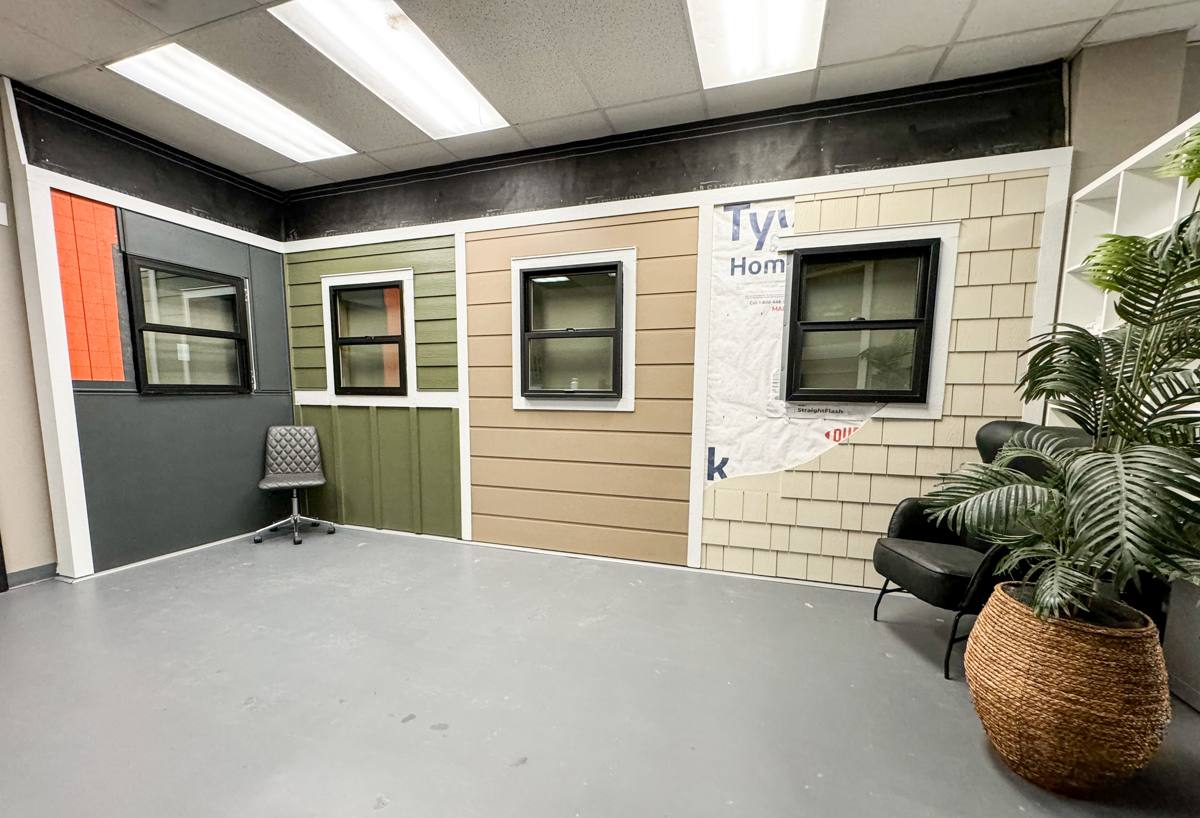
A James Hardie installation that's rated for hurricane-prone coastal Florida and one that's actually installed to hold up in that environment are not always the same thing. The material is only as good as the water management, fastening, and flashing details underneath it.
Moisture Management Comes First
Wind-driven rain on an exposed barrier island doesn't fall straight down — it gets pushed sideways and upward into laps, joints, and penetrations that would stay dry in a calmer climate. A correct install starts with a weather-resistant barrier behind the siding, properly lapped and taped, with a drainage plane that lets any water that does get past the cladding find its way back out instead of sitting against the sheathing. Skipping or shortcutting this layer is the single most common reason siding fails early near the water, and it's invisible once the siding goes up — which is exactly why it matters who's doing the work.
Fastening for Wind Load
James Hardie publishes specific fastener types, spacing, and embedment requirements tied to wind zone, and coastal Pinellas County falls under some of the stricter wind-load and wind-borne-debris provisions in the Florida Building Code. That means the right nail or screw, in the right pattern, driven correctly — not overdriven, not underdriven, not just "close enough." Under-fastened siding is one of the most common causes of panels lifting or rattling loose in sustained wind, long before a named storm ever makes landfall.
Flashing and Penetrations
Every window, door, vent, and utility penetration is a place water is trying to get behind the siding. Correct step flashing, kick-out flashing at rooflines, and properly sealed penetrations matter more here than in a low-wind, low-salt climate because wind-driven rain actively pushes water into any gap that exists. We treat flashing detail as part of the siding job, not an afterthought handled by whoever happens to be nearby.
Choosing the Right James Hardie System for This Location
James Hardie makes climate-specific product lines, and for a home this close to the Gulf, that distinction is not marketing — it's engineering. HZ5 products are formulated and warrantied for humid, high-moisture Southern climates like ours; HZ10 products are built for freeze-thaw Northern climates. Every board we install on an Indian Rocks Beach home is the HZ5 formulation, and the factory-applied ColorPlus finish is what carries the real UV and salt resistance, since it's baked on under controlled conditions rather than brushed on in the field.
| Climate Stressor | What It Does to Siding | How the Hardie System Addresses It |
|---|---|---|
| Salt air (Gulf + Intracoastal) | Corrodes fasteners and trim, degrades cheap finishes, accelerates fading | Fiber cement core doesn't corrode; ColorPlus finish is engineered for coastal fade resistance; corrosion-resistant fastener specs |
| Constant UV exposure | Chalks and fades field-applied paint, breaks down some synthetic sidings over years | Factory-baked ColorPlus finish holds color and gloss far longer than site-applied paint |
| Wind-driven rain | Forces water sideways and upward into laps and joints | Correct lap, flashing, and weather-barrier detailing manage water intrusion at the assembly level |
| Hurricane-force wind | Lifts, cracks, or tears loose improperly fastened siding | Engineered fastening schedule tied to Florida Building Code wind-load requirements |
| Humidity / moisture cycling | Swells, rots, or delaminates moisture-sensitive materials over time | Fiber cement doesn't swell or rot the way wood or wood-based products can |
How the Job Actually Runs, Start to Finish
The process on an Indian Rocks Beach home follows the same core sequence we use anywhere, but every step accounts for the site conditions of a barrier island property.
- Assessment and measurement — we walk the home, check the existing siding and sheathing condition, and note anything specific to the lot: elevation, setbacks, proximity to the water, and access constraints common on narrow island streets.
- Product and color selection — HZ5 James Hardie boards, panels, and trim, with ColorPlus color selected on-site so you can see it against your roof, windows, and neighboring homes rather than guessing from a swatch.
- Permitting — siding replacement on a home in coastal Pinellas County typically requires a permit and inspection, and we handle that process rather than leaving it to the homeowner.
- Tear-off and substrate check — old siding comes off and we inspect the sheathing underneath before anything new goes up. This is often the first real look anyone's had at that layer in years, and it's where hidden moisture damage from a previous installation gets caught.
- Weather barrier and flashing — the moisture-management layer described above goes in before a single piece of visible siding is installed.
- Installation — Hardie boards and trim installed to the manufacturer's fastening and clearance specifications, including proper gaps at grade, roofline, and other siding-to-material transitions.
- Final walkthrough and inspection — we review the finished work with you and coordinate the final building inspection.
Why the Crew's Local Experience Matters Here
Indian Rocks Beach isn't a hard place to work, but it's a specific one. Streets are narrow, lots are tight, and many homes are elevated or have limited staging space, which changes how material gets delivered, stored, and moved during a project. A crew that already works this stretch of the coast knows how to plan around that instead of discovering it mid-job.
There's also a code and inspection side to it. Wind-load requirements, flashing details, and fastening specs that apply to a barrier island home aren't identical to what's required a few miles inland, and a crew that regularly does this work in Clearwater and the surrounding beach communities isn't learning those requirements for the first time on your house. That familiarity shows up in fewer surprises during inspection and a tighter, more consistent install overall.
Living With Fiber Cement Near the Gulf: Maintenance Reality
One reason we recommend James Hardie over lower-maintenance-sounding alternatives is that its actual upkeep, once installed correctly, is modest — but "modest" isn't "none," especially this close to salt water. A little routine attention keeps the finish and the caulking doing their job for the long haul.
- Rinse the exterior periodically with a garden hose to clear accumulated salt residue, especially on Gulf-facing walls.
- Avoid pressure-washing directly at the siding's joints and caulk lines — a gentle rinse is enough and won't force water behind the boards.
- Walk the exterior once or twice a year and check caulking around windows, doors, and trim for cracking or gaps.
- Keep an eye on anything mounted to the siding — light fixtures, hose bibs, vents — since penetrations are where water problems start.
- After a significant storm, do a visual check for loose panels, trim, or fasteners rather than waiting for the next one.
What It Costs to Reside a Home Here
Every home is different, and we won't quote a number without seeing yours, but the factors that move the price on an Indian Rocks Beach project are fairly consistent.
| Factor | Why It Matters |
|---|---|
| Square footage and home shape | More wall area and more corners, angles, and trim transitions add material and labor |
| Existing siding type | Tear-off and disposal effort varies by what's coming off, and old substrate condition affects prep work |
| Elevation and access | Stilt homes, tight lots, and limited staging space on narrow island streets affect logistics and labor time |
| Trim and architectural detail | Dormers, multiple rooflines, and decorative trim take more time to flash and finish correctly than a simple rectangular wall |
| Underlying moisture or wood damage | Sheathing repair, if needed, is usually found during tear-off and adds scope beyond the siding itself |
Get a Straight Answer for Your Home
If your siding is showing its age, or you're planning ahead of the next storm season, we'll come take a look, tell you honestly what condition your home is in, and walk you through what a correct James Hardie installation would involve — no pressure, no inflated numbers. Use the form below to request a free estimate.